
Prioritization Games
In Brief
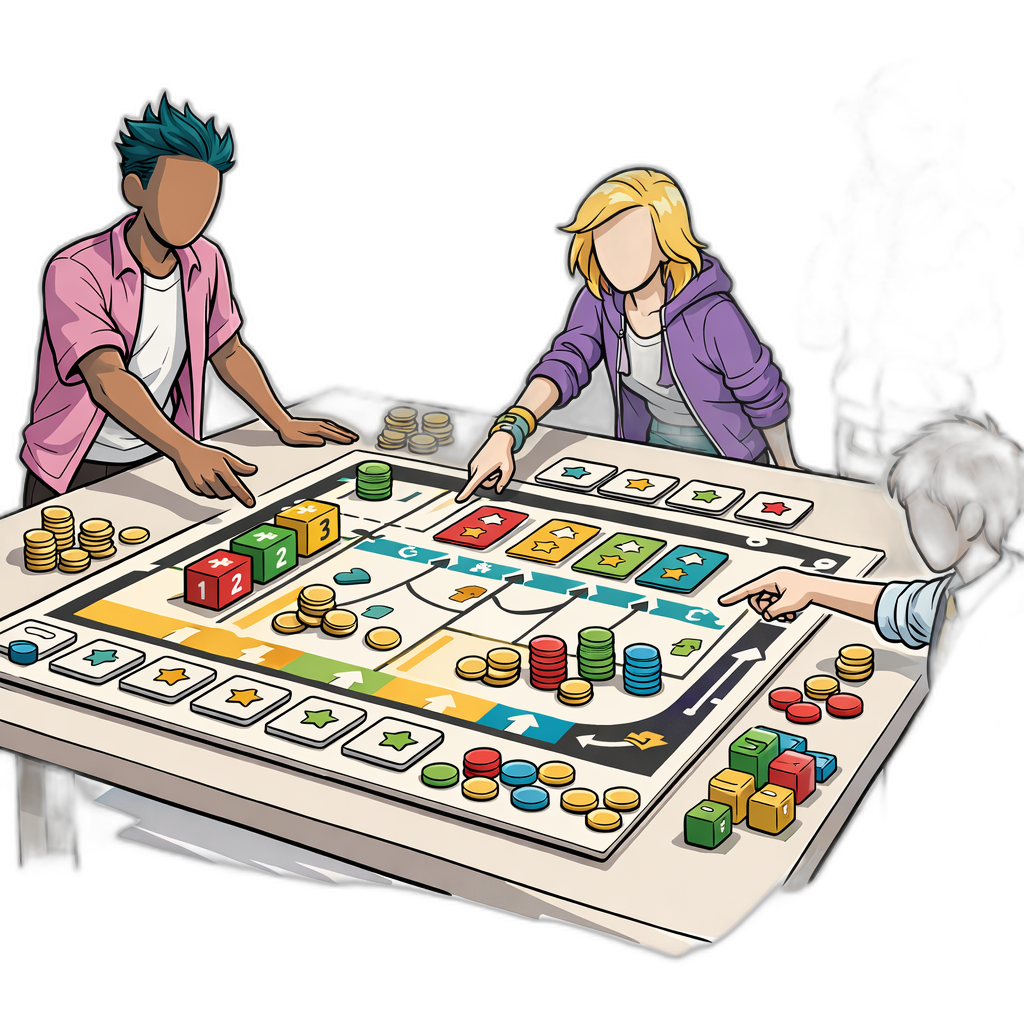
Prioritization games are structured exercises that force customers to make trade-offs between features, capabilities, or product attributes. By introducing constraints — limited budgets, forced rankings, or spatial metaphors — these games bypass the tendency for participants to say “everything is important” and reveal what they value most when they cannot choose everything. The conversations that emerge during gameplay are often more valuable than the final rankings themselves, because the reasoning behind a ranking is what transfers to product decisions.
Unlike surveys or interviews where customers can rate every feature as “important,” prioritization games make trade-offs unavoidable. This produces a stronger preference signal than unconstrained ratings — closer to how customers will actually trade off — though still stated rather than revealed behavior.
Common Use Case
A product team has a backlog of candidate features and needs to decide what to build first. The team convenes a small group of target customers (typically 4–8) for a 60–90 minute session and runs a prioritization game to force trade-offs that surveys can’t capture. The output is a ranked list plus the reasoning customers used to rank — which is the part that informs product decisions.
Helps Answer
- Which features do customers value most?
- What should we build first?
- Where are the biggest pain points in our current product?
- Which capabilities do customers consider must-haves versus nice-to-haves?
- What messaging resonates most with customers?
- Are there features customers would pool resources to obtain?
Description
Prioritization games work because constraints force genuine prioritization. When a customer can only pick 5 features out of 20, or has only $100 of play money to distribute across 15 options, they must make the same kind of trade-offs they make with real purchasing decisions. This produces stronger signal than asking customers to rate features on a 1-to-5 scale, where everything clusters around 4 — though it remains stated-preference data from a small group, not statistically representative measurement. For that, use conjoint analysis or MaxDiff.
Three of the four games here (Buy a Feature, Product Box, Speed Boat) come from Luke Hohmann’s Innovation Games (2006); Card Sorting comes from the broader information-architecture and UX-research tradition. Like all stated-preference methods, the signal is sensitive to who is in the room and who speaks first — facilitation matters, and each game has its own group-dynamics risks (anchoring, dominant voices, social-desirability bias) that are addressed on the individual method pages.
These methods assume you have already validated that demand exists for your product category. They answer “what should we build?” not “should we build it?” For market-level research on which problems matter most, see Card Sorting - Pain Points. For internal team-side scoring frameworks (RICE, ICE, MoSCoW, Kano), this page is the wrong tool — those rank options using team estimates, not customer behavior.
Choosing the Right Prioritization Game
Each game uses a different constraint to force trade-offs. Pick the one that matches the decision you need to make and the group size you can convene. Two or three sessions per game produce stronger signal than one.
AI Prompt
I need to prioritize for [DECISION — ONE SENTENCE, e.g. "v1 feature scope" / "what to cut" / "pain points to address first"].

What I have:        [LIST OF FEATURES / PAIN POINTS / OPTIONS]
Group size I can convene: [NUMBER]
Format I prefer:    [IN-PERSON / REMOTE / EITHER]
Time I can budget:  [MINUTES PER SESSION]
[CONSTRAINTS]:      [B2B vs B2C, distributed team, technical vs non-technical participants, etc.]

Recommend 1-2 prioritization games from this family that fit my situation. For each:
1. Name the game and why it fits the decision shape.
2. Name the riskiest assumption it would NOT validate.
3. Suggest a complementary game to pair it with if a single game won't be enough.- Card Sorting - Features Customers rank a known list of feature cards to reveal what they value and in what order. Best used as a first session when you have a defined backlog and need fast, low-prep ranking.
- Product Box Customers design the packaging for their ideal product, revealing aspirational features and the language they use to describe value. Best used when you need to discover features and messaging you might not have thought of.
- Speed Boat Customers map pain points as “anchors” slowing a boat in a visual metaphor that makes negative feedback easy to give. Best used when you need to surface frustrations before deciding what to fix or remove.
- Buy a Feature Customers allocate play money across priced features, forcing economic trade-offs and collaborative negotiation. Best used when you need to see willingness-to-pay signal and how customers reason about cost.