
Comprehension Test
In Brief
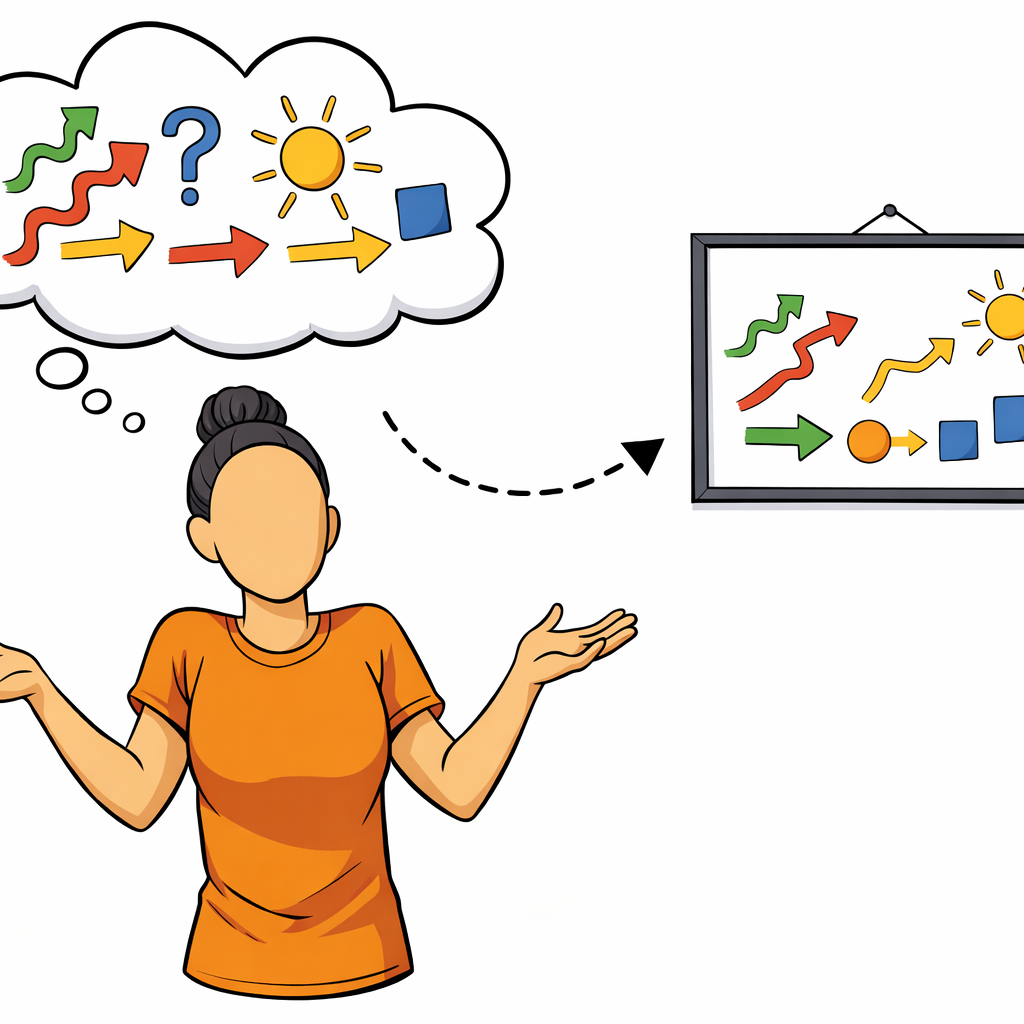
A comprehension test is a quick exercise that evaluates whether customers actually understand your value proposition messaging. You show your headline or tagline to participants for a few seconds, remove it, and ask them to explain what you offer in their own words. The output is a pass/fail comprehension rate that reveals whether low conversion on smoke tests is caused by a messaging problem rather than a lack of demand — eliminating false negatives before you give up on an idea.
Common Use Case
You ran a landing page test and the conversion rate was low. Before concluding that nobody wants your product, you want to check whether visitors actually understood what you were offering. You show your headline and tagline to 20 people for a few seconds, then ask them to explain it back. Half of them get it wrong, telling you the problem is your messaging, not your idea.
Helps Answer
- Does the customer understand what we are offering?
- How could we explain our product more clearly?
- Which version of our messaging is easiest to understand?
- What do people think we do after reading our headline?
Description
A comprehension test is a diagnostic tool, not a demand test. It answers one question: when people see your messaging for the first time, do they understand what you’re offering?
The classic format is a five-second test: show your headline, tagline, or landing page for a brief exposure (typically 5 seconds, though some platforms allow up to 20), remove it, and ask the participant to explain what the product does in their own words. If they can’t, your messaging has a clarity problem — and no amount of traffic or ad spend will fix a value proposition people don’t understand.
Comprehension tests are most valuable as a checkpoint before or alongside other smoke tests. If your landing page converts at 1%, a comprehension test tells you whether that’s because nobody wants the product (demand problem) or because nobody understands the product (messaging problem). The distinction changes your next move entirely: a demand problem means rethink the product; a messaging problem means rewrite the headline.
Don’t use comprehension tests to measure desire, interest, or willingness to pay. A participant can perfectly understand your value proposition and still not want it. Comprehension is necessary but not sufficient.
How to
Prep
1. Define what you are testing.
A comprehension test answers: “Do people understand what we’re offering?” It does not test whether they want it — only whether they get it. Use this before or alongside other smoke tests to separate messaging failures from demand failures. If your landing page converts at 1%, a comprehension test tells you whether that’s because nobody wants the product or because nobody understands the product.
2. Prepare the stimulus.
Write out the messaging you want to test. This can be:
- A headline and tagline (most common)
- A landing page screenshot
- A product description paragraph
- A pitch deck slide
- An ad mock-up
Keep it to what a real user would see in a real context. If your landing page headline is “Smart scheduling for busy teams,” test that exact phrase — don’t rewrite it into a polished explanation.
3. Choose your test format.
- In-person (5-second test): Show the messaging on a screen or printed card for 5 seconds, then remove it. Ask the participant to explain what the product or service does. Best for quick iteration — you can test 10 people in an afternoon.
- Online (5-second test platform): Use a tool like Lyssna or Maze to show the stimulus briefly and collect open-ended recall responses. Best for reaching more people or testing across geographies.
- AI pre-screen (optional): Before testing with real people, paste your messaging into an AI tool and ask it to explain it back as if it were a first-time reader. This catches obvious clarity problems and saves you a round of iteration — but it is not a substitute for human testing, because AI has far more reading comprehension than a real person scanning your page for 5 seconds.
4. Set your sample size.
- Minimum: 10 participants for a directional signal.
- Ideal: 20 participants for a reliable comprehension rate.
- Participants don’t need to be your exact target customers, but they must have a similar vocabulary and context level. A junior marketing manager can stand in for a CMO; a software engineer cannot stand in for a retail store owner.
5. Set your success threshold.
Comprehension should be high — this is not a conversion test where 5% is normal. Benchmarks:
- 80%+ comprehension: Your messaging works. Move to conversion testing.
- 50–80%: Messaging is partially landing. Identify which parts confuse people and rewrite.
- Below 50%: Fundamental clarity problem. Don’t run any other smoke tests until you fix the messaging.
6. Write your test questions.
Keep questions neutral — don’t lead toward the correct answer. Core questions:
- “In your own words, what does this product or service do?” (primary recall question)
- “Who do you think this is for?”
- “What would you expect to happen if you signed up or bought this?”
- “What, if anything, was confusing or unclear?”
Don’t ask “Did you understand it?” — people will say yes even when they didn’t. Ask them to demonstrate understanding by explaining it back.
Execution
1. Run the test.
- In-person: Show the stimulus for 5 seconds. Remove it. Ask your questions immediately. Don’t explain, correct, or react to their answers — nod and move on. If a participant says “I have no idea,” that’s valid data, not a prompt for you to clarify.
- Online: Set up the 5-second exposure in your testing platform. Include the open-ended recall question as the first follow-up. Keep the total test under 3 minutes — longer tests get abandoned or attract careless responses.
2. Record answers verbatim.
Write down exactly what participants say, not your interpretation. “It’s like a calendar thing for teams” and “It schedules meetings automatically” are very different responses to a scheduling product, and that difference matters.
3. Test one variant at a time.
If you’re comparing multiple messaging options, show each participant only one version. Don’t show all variants to the same person — exposure to the first one contaminates their reading of the second.
Analysis
1. Score each response as pass or fail.
A response passes if the participant correctly identifies what the product does and who it’s for. They don’t need to use your exact words — a rough paraphrase in their own language counts. Grade generously on specifics but strictly on the core concept: “It helps teams schedule stuff” passes for a scheduling tool; “It’s some kind of business software” does not.
2. Calculate the comprehension rate.
Comprehension rate = passes ÷ total participants × 100. Compare against your pre-set threshold (target 80%+).
3. Look for patterns in the misunderstandings.
If participants fail, how do they fail? Common patterns:
- Wrong product category: They think you do something completely different → your headline is misleading.
- Right category, wrong specifics: They get the general idea but miss the key differentiator → your tagline or sub-headline isn’t doing its job.
- Partial understanding: They get half the value proposition → the messaging is trying to say too much at once. Simplify.
4. Mine participant language for messaging ideas.
If several participants use the same phrase to describe your product, that phrasing may work better than your original. Participants who “get it” often explain it more clearly than you do — because they strip away your insider knowledge and describe what actually landed.
5. For small samples (under 10 participants): Treat the comprehension rate as directional. Focus on whether the misunderstandings cluster around the same issue. If 3 out of 7 people misunderstand the same thing, that’s a clear signal regardless of sample size.
- Confirmation bias Don’t explain, correct, or prompt participants. If you find yourself saying “well, what I meant was…” you’ve stopped testing and started pitching. Nod, write down what they said, and move on.
- Online distraction bias Online 5-second tests have higher failure rates than in-person tests because participants are distracted, multitasking, or clicking through carelessly. If your online comprehension rate is 60%, your in-person rate would likely be higher. Don’t panic — but do verify with a few in-person tests before rewriting everything.
- Expertise blind spot You’ve seen your messaging hundreds of times. You can’t judge its clarity anymore. What seems obvious to you may be jargon to a first-time reader. Test with people who have never seen your product before.
- Vocabulary mismatch Participants don’t need to be your target customers, but they need the same vocabulary level. Testing technical B2B messaging on your non-technical friend won’t tell you anything useful. A junior product manager can stand in for a VP of Product; your neighbor who doesn’t use software cannot.
- Run a comprehension test before a landing page test — otherwise you won’t know whether low conversion is a demand problem or a messaging problem.
Learn more
Case Studies
Hamona Premium Coconuts
Apple
When Steve Jobs unveiled the original iPhone at Macworld on January 9, 2007, he opened the keynote by compressing three product categories into one mental model: “an iPod, a phone, and an Internet communicator.” He then repeated the three ideas until the audience visibly registered the punchline — “These are not three separate devices. This is one device.” The reveal models the comprehension-test principle: before you ask whether people want the thing, make sure they can explain back what the thing is.
Got something to add? Share with the community.