
Value Proposition Test - Pop-Up Store
In Brief
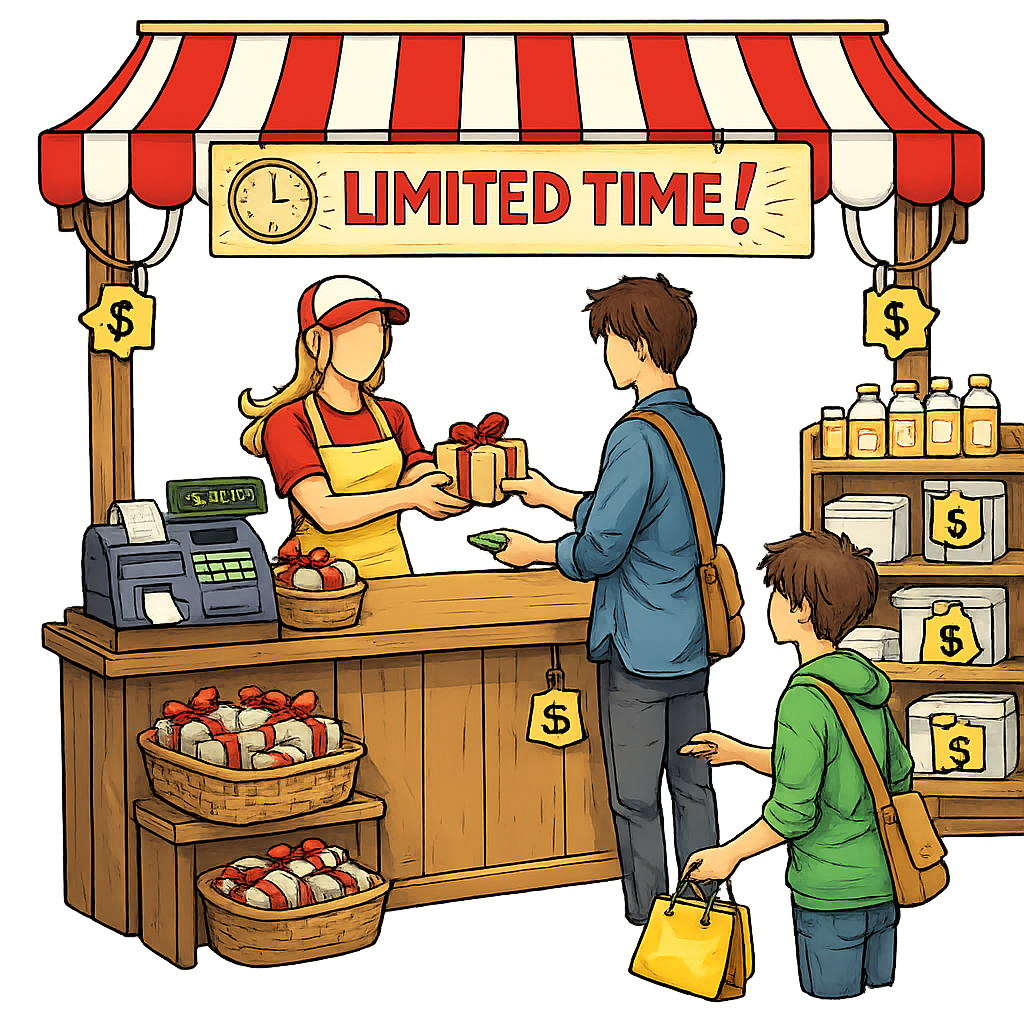
A pop-up store smoke test is a temporary retail location — lasting anywhere from a single day to several weeks — used to test whether customers will buy a product in a real-world physical setting. Whether the product is fully built or represented by prototypes and mockups, the core data point is the same: are people going to buy it when they can see it, touch it, and talk to the person selling it?
A pop-up adds physical dimensions that digital tests cannot capture: body language, real-time customer questions, sensory reactions, and the full in-person purchase experience. It is particularly valuable for physical products, food and beverage concepts, and any business where the in-store experience is part of the value proposition.
Common Use Case
You have early evidence of demand from interviews or a digital smoke test, and now you need to see whether intent translates into purchase behavior in person. You want to observe how customers physically react to the product, what objections come up face-to-face, and whether geography or context changes who is willing to pay. A short, real-world retail presence is cheaper than a launch and richer than another survey.
Helps Answer
- Will customers buy this product when they encounter it in person?
- How do customers physically interact with the product?
- What questions and objections come up in face-to-face selling?
- Is there demand in this specific geographic area or neighborhood?
- Does the in-person experience change willingness to pay?
Description
Pop-up store smoke tests are part of the Value Proposition Test family — methods that test demand for a promise by asking participants to commit money, time, data, or actions. The pop-up combines in-person commitment with the urgency of a limited time window.
A pop-up store is one of the oldest forms of market testing — setting up shop and seeing if people buy. What makes it a smoke test rather than just “selling things” is the intent: you’re not trying to build a sustainable retail operation. You’re using a temporary physical presence to collect evidence about demand, pricing, product-market fit, and the customer experience.
The pop-up format provides data that no digital test can match:
- Real-time customer reactions: You see facial expressions, body language, and hesitation. You hear unprompted comments and questions.
- Sensory experience: Customers can touch, hold, taste, or try the product. For physical goods, this often dramatically changes purchase behavior.
- Objection discovery: Face-to-face selling reveals objections that surveys and landing pages miss. “I love it but I’d need it in blue” or “This is great but I’d never pay that much” are gold.
- Geographic validation: Digital tests tell you about online demand. A pop-up tells you about demand in a specific location, which matters for any business with a physical component.
- Price testing in real time: You can adjust pricing between days or even between customers and observe the effect on purchasing behavior.
The product doesn’t need to be finished. You can run a pop-up with prototypes, samples, mockups, or even just a compelling display and order form. The question isn’t “is the product perfect?” — it’s “will people pay for what this represents?”
How to
Prep
1. Choose a location that matches your target customer.
The location is your targeting mechanism. Options ranked by cost and commitment:
- Farmers markets / flea markets / craft fairs: $50-200/day. Lowest risk. Good for consumer products, food, and artisan goods. Pre-built foot traffic.
- Shared retail spaces: $200-1,000/week. Platforms like Appear Here or Peerspace offer short-term retail leases. More professional setting.
- Partner locations: Free to low cost. Set up inside a complementary business (a coffee shop, gym, bookstore) that serves your target audience.
- Standalone pop-up: $1,000-5,000/month. Rent a vacant storefront. Maximum control, highest cost and effort.
2. Define what you’re measuring.
Before opening, write down your hypotheses and success thresholds:
- Units sold per hour/day
- Conversion rate (purchases / people who engaged)
- Average transaction value
- Most common questions and objections
- Price sensitivity observations
3. Create an experience, not just a display.
Your pop-up should allow customers to interact with the product. For food, offer samples. For physical products, let people handle them. For services, do live demonstrations. The interaction is the test — passive browsing tells you much less than active engagement.
4. Staff with the founder (or someone who can learn).
The person selling should be someone who can absorb customer feedback, notice patterns, and adapt the pitch in real time. The founder is ideal. Don’t outsource this to someone who will just ring up transactions.
Execution
1. Track everything systematically.
Keep a simple log:
- Number of people who entered / approached
- Number who engaged (asked a question, touched the product)
- Number who purchased
- What they said (especially objections and praise)
- Time of day patterns
Use a tablet or notebook. Don’t rely on memory at the end of the day.
2. Test pricing in real time.
If feasible, try different price points on different days or with different customer segments. “What would you expect to pay for this?” asked after someone has handled the product is more reliable than the same question in a survey.
3. Follow up with buyers.
Collect email addresses or phone numbers from customers who purchase. Follow up within a week to ask about their experience. These early customers are invaluable for product development feedback.
Analysis
1. Compare results against the thresholds you wrote down before opening.
The thresholds (units per hour, engaged-to-buyer conversion, average transaction value) tell you what counts as a hit. Without them, every result feels like “interesting data” and no decision gets made.
2. Read the result patterns:
- Strong sales, enthusiastic reactions: Clear demand signal. Proceed to scale — whether that means more pop-ups, a permanent location, or an online launch backed by physical evidence.
- Strong interest but low conversion: People are attracted to the product but something stops them from buying. Listen carefully to what they say. Is it price? Timing? A missing feature? “I love it but…” is the most informative phrase you can hear.
- Low foot traffic, low engagement: The location may not match your audience, or your display doesn’t attract attention. Before concluding there’s no demand, try a different location or a more engaging display.
- Sales from unexpected segments: Pay attention to who actually buys. If your target was young professionals but parents are the ones purchasing, you may have discovered a better market.
- Questions you didn’t anticipate: The questions customers ask reveal gaps in your value proposition communication. If everyone asks the same question, the answer should be prominently displayed.
3. Cluster the qualitative data.
Pull every objection, question, and unprompted comment from the day’s notebook. Group them. The five most-repeated objections matter more than the one most clever piece of feedback. Repetition is the signal.
4. Separate demand signal from novelty signal.
A pop-up’s time-limited frame creates urgency that won’t survive a permanent launch. Look at how many buyers asked when you’d be back, signed up to be notified, or referred someone — those are demand-pull signals. Single-transaction impulse buys with no follow-on interest are weaker evidence.
- Novelty effect Pop-ups attract curiosity buyers who purchase because the experience is new and time-limited. “I better get it now” is urgency-driven, not demand-driven. Track repeat interest (email signups for “when you have a permanent store”) alongside impulse purchases.
- Founder selling bias A passionate founder can sell almost anything face-to-face. If the founder is the only one who can close sales, the demand signal is partly about the founder’s charisma, not the product.
- Location-specific results Strong sales at a farmers market in one neighborhood don’t guarantee demand elsewhere. Test multiple locations if possible.
- Small sample size A single weekend pop-up might produce 20-50 transactions — too few for statistical confidence. Treat results as directional and supplement with qualitative observations.
- Weather and timing A rainy Saturday or a holiday weekend can dramatically affect foot traffic. Don’t draw conclusions from a single day of bad results.
- Survivorship bias in pop-up case studies You hear about Warby Parker’s successful pop-ups, not the thousands that flopped. Expect modest results and be pleasantly surprised.
Learn more
Case Studies
Warby Parker tested physical retail through pop-ups before opening 90+ permanent stores
Warby Parker, originally an online-only eyewear brand, used a series of pop-up shops and a converted school bus (“the Warby Parker Class Trip”) to test whether customers wanted a physical retail experience. The pop-ups validated that in-person try-on dramatically increased purchase rates, leading to a permanent retail strategy.
Got something to add? Share with the community.