
Value Proposition Test - Mock Sale
In Brief
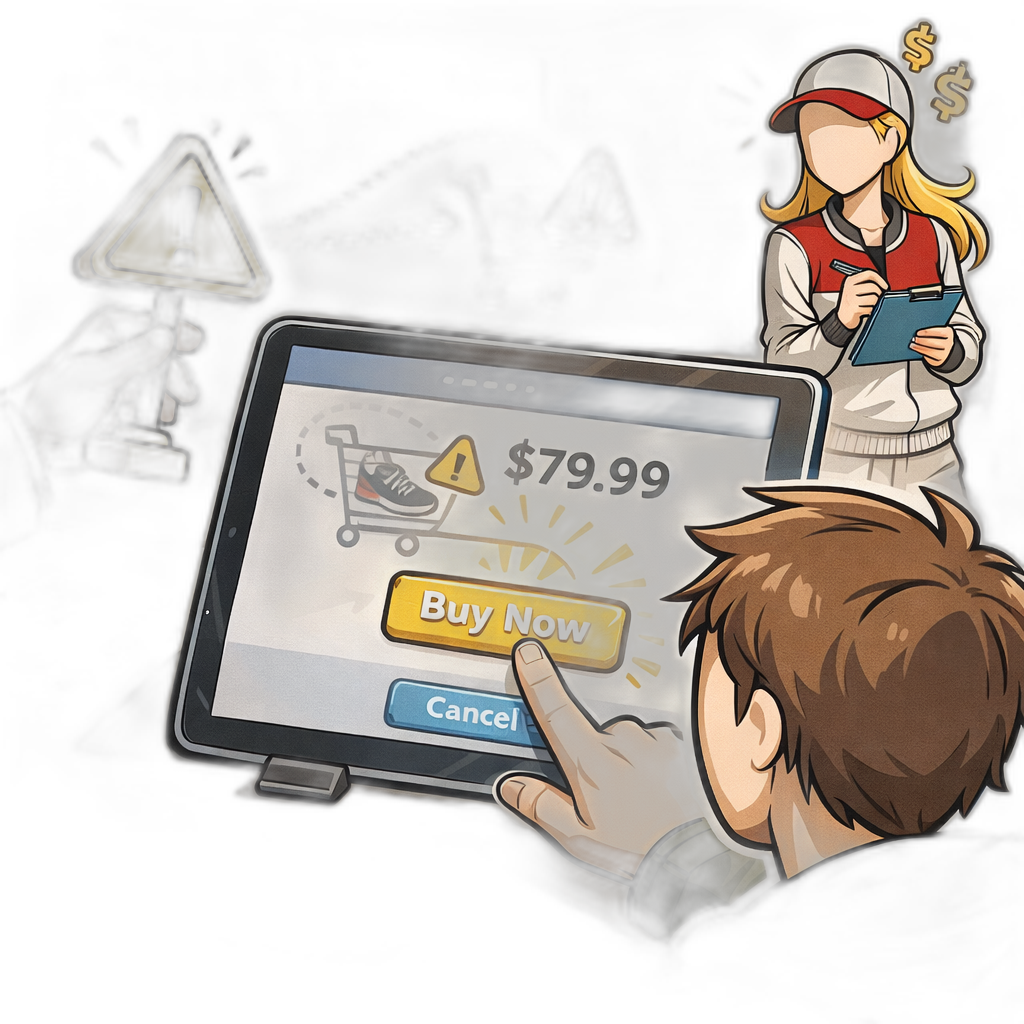
A mock sale is a simulated purchase experience where customers believe they are buying a real product, but the transaction is not completed. The customer clicks “Buy Now,” enters a checkout flow, and then encounters an “out of stock,” “coming soon,” or “join the waitlist” message before any money changes hands. Because the customer does not know it’s a test, their behavior reflects genuine purchase intent — making this one of the strongest signals of willingness to pay short of actually collecting money.
The key distinction: in a mock sale, the customer does NOT know it’s a test. This separates it from a Landing Page Test (where you capture emails with a stated value proposition) and from a Pre-Sales Test (where real money changes hands). The mock sale sits between these two in commitment level — further down the funnel than a landing page, but without the ethical and logistical complexity of handling real payments.
Common Use Case
You have a value proposition that has cleared lighter tests (interviews, landing page signups, ad CTR) and now you need behavioral evidence of purchase intent before you commit to building the product or to handling real payments. You want to see how far down a checkout flow people are willing to go when they believe the offer is real, and you want that signal segmented by audience and price point. The mock sale gives you that data in days rather than weeks, with no inventory risk and no revenue to refund.
Helps Answer
- Will customers actually attempt to buy this product?
- Is the price point acceptable enough to trigger a purchase action?
- How deep into the purchase funnel will customers go before abandoning?
- Does purchase intent differ across audience segments?
Description
Mock sale smoke tests are part of the Value Proposition Test family — methods that test demand for a promise by asking participants to commit money, time, data, or actions. The mock sale captures simulated purchase intent — strong behavioral signal — without taking real money.
A mock sale takes the customer further into the purchase funnel than any other smoke test that doesn’t involve real money. The customer sees a product page, decides to buy, clicks the purchase button, and may even begin entering payment information — only to learn the product isn’t available yet. This sequence of actions represents genuine purchase behavior because the customer believed the transaction was real.
The strength of this test comes from the deception: because the customer doesn’t know they’re in a test, their behavior is uncontaminated by the knowledge that “this isn’t real.” A customer who clicks “Add to Cart” and proceeds to checkout is demonstrating real willingness to pay in a way that a survey response or even an email signup cannot match.
However, this strength is also its primary ethical consideration. Customers who go through a purchase flow only to be told the product doesn’t exist may feel frustrated or misled. The reveal message must be handled with care — it should be honest, respectful, and ideally offer something of value (early access, a discount when the product launches, or a genuine explanation of what you’re building).
This test is stronger evidence than a Fake Door Test (which only measures a click) because the customer progresses further through the commitment funnel. It produces weaker evidence than a Pre-Sales Test (where real money changes hands) but is simpler to execute and avoids the legal and operational complexities of handling payments for unbuilt products.
How to
Prep
1. Create a realistic product page.
The page must look like a real product listing. Include a product name, description, price, images (renderings or mockups are fine), and a prominent “Buy Now” or “Add to Cart” button. Use an e-commerce platform (Shopify, WooCommerce) for authenticity.
2. Design the checkout interruption.
Decide where in the funnel to stop the customer:
- After “Add to Cart”: Lowest friction reveal. Customer clicks the buy button and immediately sees a “coming soon” message. Tests whether the price and product description are compelling enough to trigger a purchase action.
- After entering the checkout page: Medium friction. Customer clicks buy, sees a checkout form, and then encounters a “currently unavailable” message. Tests willingness to commit to the checkout process.
- After entering partial payment info: Highest friction (and highest ethical risk). Only do this if the reveal is immediate and the messaging is very clear. Tests the deepest level of purchase commitment.
Choose the option that gives you the data you need without crossing ethical lines you’re uncomfortable with.
3. Craft the reveal message carefully.
The message the customer sees instead of a completed purchase is critical. Good examples:
- “Thanks for your interest! [Product] is coming soon. Leave your email to be first in line and get 20% off at launch.”
- “We’re currently sold out. Join the waitlist to be notified when we’re back in stock.”
- “We’re putting the finishing touches on [Product]. Sign up for early access.”
Avoid messages that make the customer feel tricked. Offer something real in exchange for their interrupted experience.
4. Set up tracking at each funnel stage.
Track every step: page views, “Add to Cart” clicks, checkout page views, form field interactions, and reveal page engagement (email signups from the reveal). The drop-off between each step tells you where commitment breaks down.
5. Set a success threshold before launching.
Define what “enough” purchase intent looks like: “At least 5% of visitors click Buy Now” or “At least 2% reach the checkout page.” Without a pre-set threshold, you’ll rationalize any result.
Execution
1. Drive targeted traffic.
Use the same traffic sources you would for a real product launch. Paid ads, social media, or email outreach to your target audience. The traffic source must match your actual go-to-market plan for results to be meaningful.
2. Track every funnel stage in real time.
Watch the page-view → add-to-cart → checkout drop-offs as the test runs. If add-to-cart is healthy but checkout collapses, the issue is the form, not the value proposition — note it but don’t kill the test early; you may still hit your overall threshold.
3. Capture and follow up on reveal-page emails.
Every email left on the reveal page is a high-intent lead. Send the promised follow-up (early-access list, launch discount, or genuine update) within 24 hours. The follow-up open and click rates are a second-order signal of demand strength.
4. Run for 1-2 weeks, then stop.
Don’t run a mock sale indefinitely. The longer it runs, the more customers encounter the disappointing reveal, and the greater the risk of negative word-of-mouth. Collect enough data to make a decision and shut it down.
Analysis
1. Compare results against the thresholds you wrote down before launching.
The pre-set threshold (“at least 5% add-to-cart” or “at least 2% reach checkout”) is the bar. Without it, you’ll rationalize any result.
2. Read the result patterns.
- High “Add to Cart” rate, high checkout progression: Strong purchase intent. The value proposition and price point work. Proceed toward building or collecting real pre-sales.
- High “Add to Cart” rate, low checkout progression: People like the product at the listed price but something about the checkout process deters them. May indicate trust concerns or friction in the flow rather than lack of demand.
- Low “Add to Cart” rate: The product page isn’t compelling enough to trigger a purchase action. The problem is likely the value proposition, the price, or the product presentation — not the checkout flow.
- High reveal-page email capture: Even though the purchase didn’t complete, customers who leave their email after learning the product isn’t available yet are demonstrating strong interest. Follow up with these people.
- Different rates across price points: If you ran multiple prices, the gap between rates tells you elasticity. A 5% add-to-cart at $29 dropping to 1% at $49 is a clearer signal than either rate in isolation.
3. Segment buyers from browsers.
Pull whatever audience attribution your traffic source provides (ad audience, referrer, UTM) and re-cut the funnel rates by segment. A healthy aggregate rate hiding two segments — one that’s enthusiastic and one that’s flat — points you at the audience to keep targeting and the audience to drop.
4. Discount the mock-context inflation.
Mock sales overstate willingness to pay because no money actually leaves the customer’s account. Treat the headline rates as upper bounds, not point estimates. The honest read is “this is the ceiling on what real-money behavior could look like — we still have to validate against actual payment.”
- Ethical backlash Some percentage of customers will be annoyed by the experience, regardless of how well you handle the reveal. Factor this into your brand risk assessment, especially if you plan to sell to the same audience later.
- Price insensitivity in mock context Customers who click “Buy” but would have abandoned at payment processing are counted as purchase-intent positive. The mock sale slightly overstates willingness to pay because no money actually leaves the customer’s account.
- Traffic quality dependence If your paid ads attract bargain hunters or curiosity clickers rather than genuine prospects, your mock sale data will understate real demand. Ensure targeting matches your actual customer profile.
- Reveal message influence A compelling reveal message (20% discount, exclusive early access) can inflate email capture rates on the reveal page, making results look better than organic demand warrants.
- Single-session bias A mock sale measures impulse purchase intent. Customers who would have bought after researching competitors or sleeping on it won’t be captured.
- Sample-size hubris A 5% add-to-cart rate over 200 visitors is not the same evidence as 5% over 2,000. Resist scaling the result before you have enough events to support it.
Learn more
Case Studies
Buffer — Two-page mock pricing test before writing code
Joel Gascoigne built a two-page test for Buffer. The first page described the product; the second page presented pricing tiers, and any plan click led to a “we’re not quite ready yet” page that captured emails. The test validated both interest and price sensitivity before any product code was written, and is one of the most-cited founder write-ups of the mock-sale pattern.
Zappos — Founder-run mock storefront before holding inventory
Nick Swinmurn photographed shoes at local stores and listed them online; when an order came in, he bought the pair at retail and shipped it. The “store” worked as a covert demand test before any inventory was held — a physical-world analog to the mock sale’s “click Buy, then we figure out fulfillment” pattern. The test became the foundation of Zappos.
Got something to add? Share with the community.