
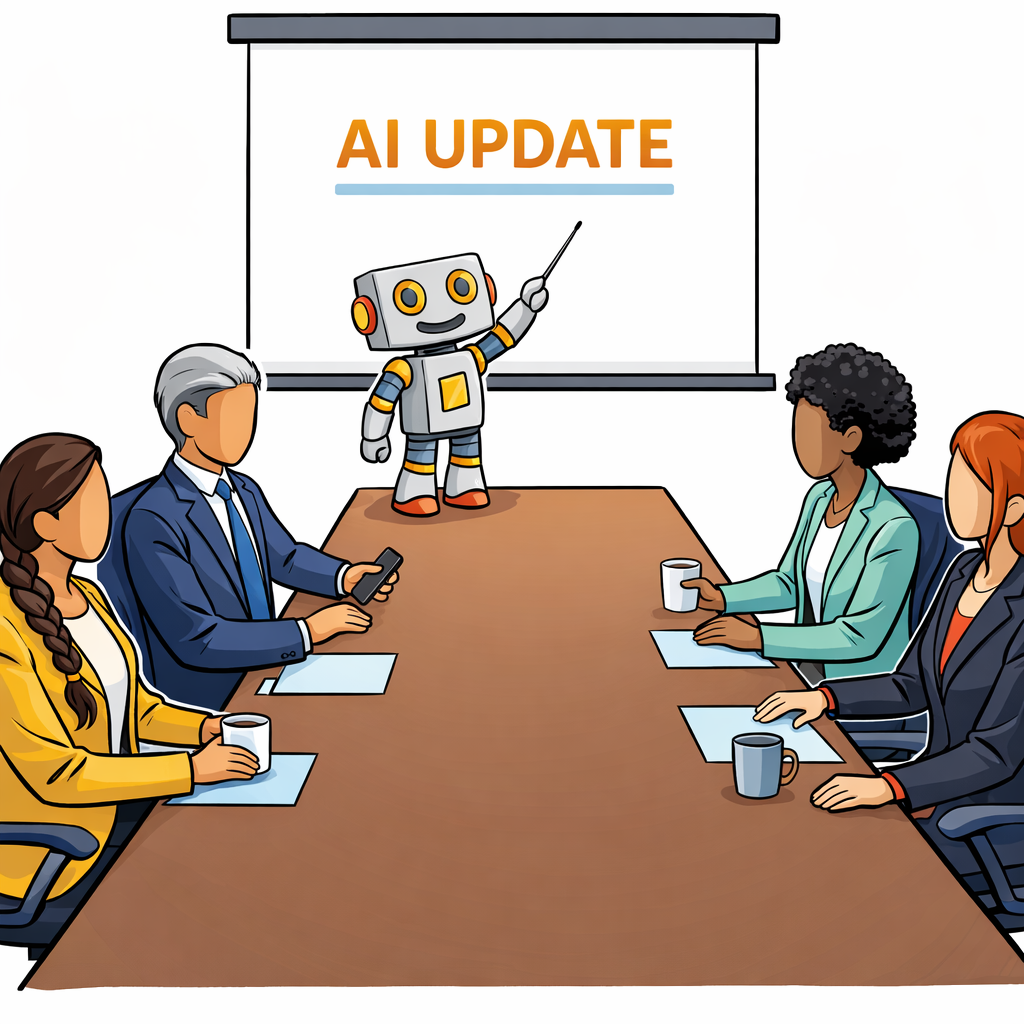
Stop Putting AI on Your Board Agenda
 By Tristan Kromer·
Quick Answer: Boards that add “AI” as a standing agenda item are accidentally marginalizing it. AI isn’t a topic to discuss for 20 minutes between the financial review and the talent update — it’s a lens that should reshape every strategic question the board already asks about pricing, competitive positioning, headcount, and organizational speed. Instead of a separate AI update, embed “how does AI change the answer here?” into every existing agenda item. The test for CEOs: if you’re still reporting on AI as a standalone initiative, it hasn’t permeated how your company actually operates.
Public company boards are recognizing AI as a disruptive force and adding AI as a standing agenda item.
It feels responsible. It feels proactive.
It’s also the wrong move and missing the point.
The moment AI becomes its own line item on the board agenda it becomes a 20-minute update between the financial review and the talent discussion, instead of the lens through which every one of those discussions should be filtered. The board ends up asking “what’s our AI strategy?” when the real question is, “how does AI change the answer to every strategic question we’re already asking?”
The AI Agenda Item Trap
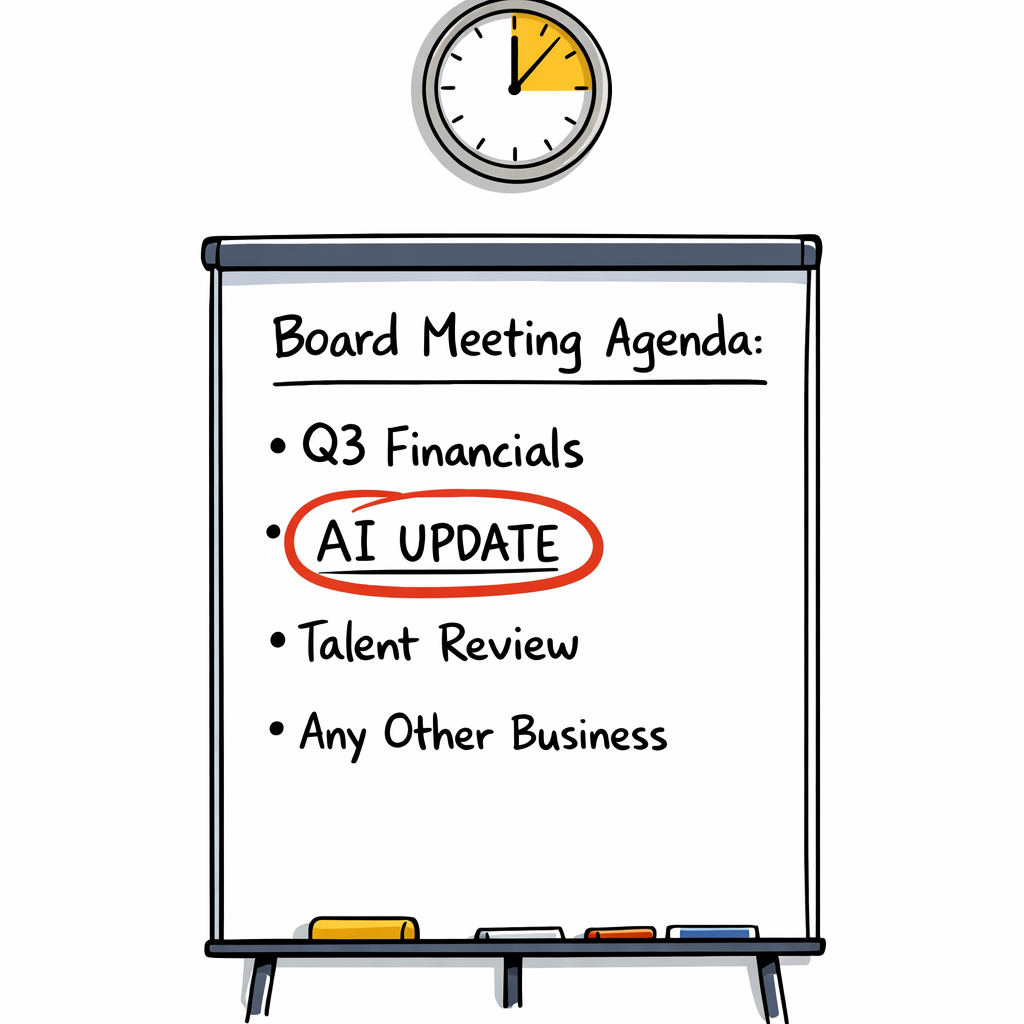
Putting AI on the agenda as a standalone topic feels like governance. It’s the conventional wisdom. Protiviti’s 2026 Global Board Governance Survey recommends establishing AI as a standing agenda item for every board meeting. But it creates a subtle, dangerous dynamic: AI becomes the responsibility of whoever presents the update (usually the CTO or head of product), and everyone else gets to listen, nod, and move on.
This is the same pattern that made “innovation” a buzzword rather than a capability in most large companies. We created Chief Innovation Officers, gave them a budget, and let the rest of the organization off the hook. The result? Innovation became a department instead of a discipline. (I’ve seen enough VPs of innovation with a playbook but no mandate to change the org.)
AI is heading down the same path. A dedicated board session on AI can produce an impressive deck, a competitive analysis, and a list of pilot projects. What it rarely produces is a change in how the board thinks about talent, pricing, competitive risk, or organizational speed.
What Boards Actually Need: A “How We Win” Lens

Instead of a standalone AI topic, boards need a permanent strategic lens applied to every agenda item. Call it “How We Win” or “Strategic Adaptation” or whatever fits the culture. The point is that AI, data infrastructure, talent readiness, and competitive positioning are not separate topics. They’re sub-questions of strategy.
When the board discusses customer retention, the question should include: “How does AI change the way customers expect to interact with us? Are we designing for human users, AI agents acting on behalf of humans, or both?”
When reviewing headcount, the question should include: “Are we hiring people who can transform how we work, or are we adding capacity to a model that AI-native competitors will run with a fraction of the staff?”
When looking at a new market opportunity, the question should include: “Can we ship an MVP in a quarter and test it, or are we writing strategy memos about 2028?”
AI isn’t the agenda item. It’s the question that reshapes every agenda item.
For the Board: Stop Measuring Activity, Start Measuring Velocity
Boards that do engage on AI often ask for the wrong metrics. They want dashboards tracking the number of AI initiatives, the percentage of employees using AI tools, or the count of features shipped with AI in the description. These are vanity metrics dressed up in enterprise clothing.
The data backs this up. Harvard and Microsoft’s Frontier Firm Initiative recently studied a dozen global organizations (companies with hundreds of active AI deployments and near-universal AI productivity tool adoption) and found that individual productivity gains “remain trapped inside individual workflows” unless leadership intentionally redesigns roles and budgets. The bottleneck isn’t technology. It’s organizational design. A KPMG study of 2,500 employees tells the same story from the individual level: nearly 90% used AI regularly, but only about 5% used it with any sophistication. Activity isn’t impact.
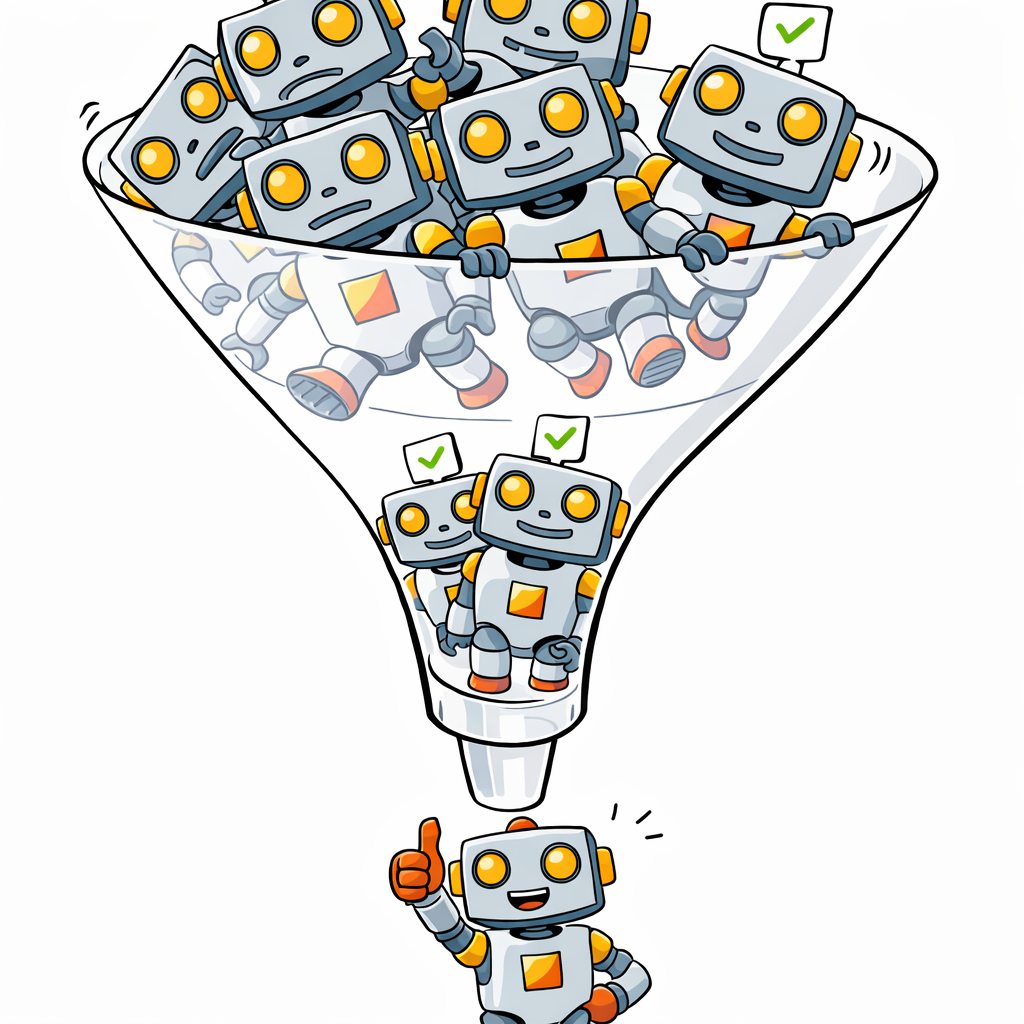
AI projects are not fundamentally different from any other innovation project. The board should be tracking leading indicators, not lagging ones. Tracking “number of AI products launched” won’t flag a broken innovation process until it’s too late. Having a lot of AI projects is great, but it’s less important than the throughput of those ideas into production. What we should see is a funnel of projects where bad ideas are being killed in flight before consuming too many resources.
- How many AI projects have real Job-to-be-Done use cases?
- How many of those projects have complete teams assigned to them?
- How many of those use cases have actually been validated by customers?
- How many experiments are in progress?
- How fast are ideas moving from experiment to production? What is the velocity?
- What’s the cost per experiment or insight?
- What percentage are delivering repeatable, scalable value (not one-off gains)?
If those numbers are healthy, the outputs will follow.
The board also needs a portfolio view of how those AI initiatives map to actual strategic goals. The critical strategic questions are always, “Why are we doing all this? How does this activity map to our goals?”
Are the AI initiatives in your funnel solving for efficiency (cost savings, productivity gains) or for strategic growth (new products, new markets, new customer experiences)? Do those initiatives actually correspond to company goals?
If the goal is growth, a portfolio skewed entirely toward efficiency is a company optimizing its way into a commoditized market with thin margins.
Board members need to ask:
- How are these initiatives mapped to our strategic priorities?
- How are we measuring innovation velocity?
- How, for every single topic, how do advances in AI effect our thinking here?
For the CEO: If You’re Reporting on AI Separately, You’ve Already Lost

When the CEO presents AI as a standalone update to the board, it sends an unintentional signal: AI hasn’t permeated how the company actually operates. It’s still a special project, not a way of working.
Ask every functional leader on your team: “How is AI changing your area?” Not “what AI projects are you running?” but “how is AI changing the work?” If the answer involves looking at someone else in the room, or citing a partner’s timeline, or promising a plan by next quarter… the team is just reacting to change, not driving it.
The real red flag isn’t a lack of AI features shipped. It’s a lack of ownership. When no single leader can confidently explain why something can (or can’t) move faster, the problem isn’t strategy. The organization is too tightly coupled and can’t create autonomous units capable of moving quickly. Ownership is impossible because everything requires a committee meeting. There is a gap between acknowledging that the world is changing and actually operating differently because of it.
CEOs who take AI seriously don’t report on it. They demonstrate it in every decision they present: hiring plans that reflect AI-driven productivity, product roadmaps with aggressive experimentation timelines, pricing models being pressure-tested for an AI-native future.
The Real Board Question

The question boards and CEOs should be asking isn’t “do we have an AI strategy?” It’s “are we building an organization that can continuously adapt to a world being reshaped by AI?”
That’s a question about culture, speed, and willingness to cannibalize what’s working today in pursuit of capabilities for the future. Is your organization willing to put aside short-term profits to reallocate resources for long-term gains? Are you willing to take a hit on the stock price to stay relevant?
I’ve seen teams running ten BaU (Business-as-Usual) projects simultaneously with zero capacity to adopt new ways of working. They want to do cool, new things. But they need the time to do it. What are you willing to cut to make room for the necessary transformation?
The default assumption for every board and every CEO should be that a one-person startup with an army of agents and nothing to lose is coming for your market share. That startup doesn’t have legacy models, infrastructure, and people to protect. They can iterate daily and fly under the radar until they have their CAC and unit economics dialed in with none of the CapEx or fixed cost overhead.
To compete against that, your company has to ship and learn in quarters, weeks, or days… not in 18-month roadmaps.
Answering these questions starts by taking AI off the agenda and putting it into every conversation the board already has.
Frequently Asked Questions
Should boards have AI as a standing agenda item?
No. A dedicated AI slot turns AI into a 20-minute update owned by the CTO and lets everyone else off the hook. Boards get better governance by folding AI into every existing topic — pricing, retention, headcount, competitive risk — and asking “how does AI change the answer here?” on each one.
What AI questions should a board ask in executive session?
Three force AI operationalization to surface. First, how are our AI initiatives mapped to strategic priorities — growth or efficiency? Second, how are we measuring innovation velocity, not activity? Third, for every functional leader: “How is AI changing the work?” — not “What AI projects are you running?”
How should boards measure AI progress?
Stop tracking the number of AI initiatives, the percentage of employees using AI tools, or features shipped with “AI” in the description. Those are vanity metrics. Track throughput instead: validated use cases, experiments in progress, time from experiment to production, cost per insight, and the percentage of initiatives delivering repeatable value.
What’s the difference between AI as a topic and AI as a lens?
A topic is a 20-minute agenda slot with a slide deck. A lens is a question — “how does AI change the answer here?” — applied to every board discussion you already have. The topic produces pilot projects; the lens produces strategic realignment.
Why does putting AI on the board agenda backfire?
The same reason “innovation” became a buzzword rather than a capability at most large companies. We created Chief Innovation Officers, gave them a budget, and let the rest of the organization off the hook. Innovation became a department, not a discipline. A standalone AI agenda item is the same trap — one owner, everyone else nodding along.
So how are you talking about AI with your board? Reply below and let me know.

Comments
Loading comments…
Leave a comment