

How Innovation Teams Can Contribute to ROI in Tough Times
Disruption is great, but someone's gotta pay the bills.
 By Tristan Kromer ·
 Quick Answer: In tough economic times, innovation teams must tie every effort back to measurable financial impact. As product managers, we should focus on three things: aligning projects with clear goals and constraints using a structured project briefing, deeply understanding customers through persona development, and quantifying impact with innovation accounting practices. Whether for-profit or nonprofit, we need a coherent financial model hypothesis that demonstrates how our disruptive work contributes to the bottom line.
By Tristan Kromer It’s June, and the challenging economic conditions are making the job of innovators much harder. We are not only expected to disrupt our industry, but we’re also expected to deliver to the bottom line. 
So what should we do?
Get Focused and Aligned
Make sure your project briefing is clear and to the point, with a coherent goal, metrics, constraints, and resources you have to execute. You can use our beta Project Briefing Template to get started.
Know Your Customers
Build a Customer Persona to test your assumptions by empathizing with your end users and creating customer segmentations.
Quantify Your Impact
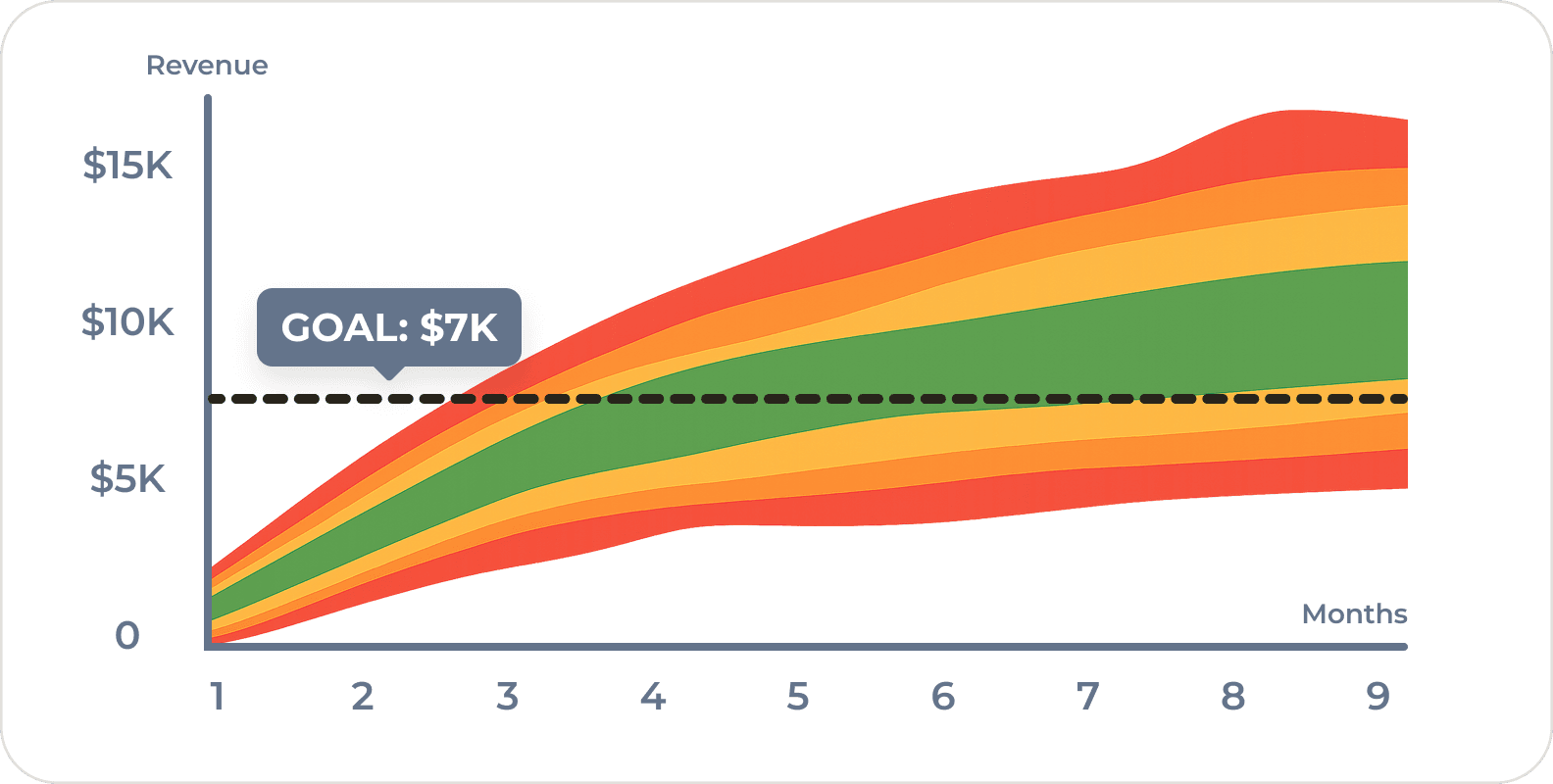
Make sure you understand your financial model hypothesis by using proper innovation accounting practices. Whether you are a for-profit, government, or impact-focused nonprofit, you need to know how all your efforts can add up to something worthwhile. If you’ve taken our innovation accounting program, you’ve used our Example Distributions in your modeling to visualize each distribution and choose the one that works for each variable.
What’s Next for Kromatic
We’re in “build mode” and working on some new and improved tools!
- Plinkromatic - A simple game to teach innovation management principles, updated with three new lessons.
- Ants! - Learn good strategy and disciplined resource allocation as an ant colony looking to expand in a changing environment.
- Experiment Calculator - Calculate the sample size and Margin of Error you need to get useable results on a survey or A/B test, updated with an improved UI.
Are you already using these tools? Are you looking for something you just can’t find in our Kromatic resources? Let us know! If we don’t have it, we’ll make it.
Frequently Asked Questions
How can innovation teams contribute to ROI during tough economic times?
Innovation teams can contribute to ROI by getting focused and aligned with clear project briefings, deeply understanding customers through persona development and segmentation, and quantifying impact using innovation accounting practices. As product managers, we need to ensure every innovation effort ties back to a coherent financial model hypothesis that demonstrates how our work adds up to something worthwhile for the bottom line.
What is a project briefing template and why do innovation teams need one?
A project briefing template helps innovation teams define a coherent goal, metrics, constraints, and available resources before executing on a project. In challenging economic conditions, we can’t afford to pursue unfocused initiatives. A clear briefing ensures alignment across the team so that every effort is directed toward measurable outcomes that contribute to organizational ROI.
What is innovation accounting and why does it matter?
Innovation accounting is a set of practices that helps teams quantify the financial impact of their innovation efforts. Whether we work in for-profit, government, or nonprofit contexts, we need to understand our financial model hypothesis and how individual efforts add up to meaningful results. This includes modeling variables using data distributions to visualize and validate assumptions.
How do customer personas help innovation teams deliver better results?
Customer personas help innovation teams test assumptions by empathizing with end users and creating meaningful customer segmentations. By deeply knowing our customers, we can focus innovation efforts on problems that actually matter to real people — which directly increases the likelihood that our work drives measurable business impact rather than producing solutions nobody wants.
How should innovation teams balance disruption with bottom-line contribution?
As innovators, we’re expected to both disrupt our industry and deliver financial results — especially in tough economic conditions. The key is combining focused project alignment, validated customer understanding, and rigorous innovation accounting. This ensures that our disruptive ambitions are grounded in quantifiable impact, so we can pursue bold ideas while still demonstrating clear value to the organization.

Comments
Loading comments…
Leave a comment