

Customer Analysis: Why Causality Matters for Product/Market Fit
Your persona is useless if it can't explain why the problem exists.
 By Tristan Kromer ·
 (Customer Analysis- This is part of a series of posts about testing product/market fit. You can download the Product/Market Fit Storyboard here.)  When looking for product/market fit, we start with the customer analysis. That’s the “market” part of product/market fit. Everything starts and ends with the customer. Sometimes we start with the product or the friggin’ awesome technology. Sometimes we might fool ourselves into starting with what we can get funding for. But at some point, we always backtrack to the customer analysis. Having a clear customer hypothesis is the first part of an MVP. Our value proposition is a value proposition for a specific customer segment. Our channels are channels to reach a specific customer segment. Our relationship with our customers, depends how a specific customer segment prefers to communicate (customer analysis). So what makes a customer a customer?
Personas, Maps, & Descriptions
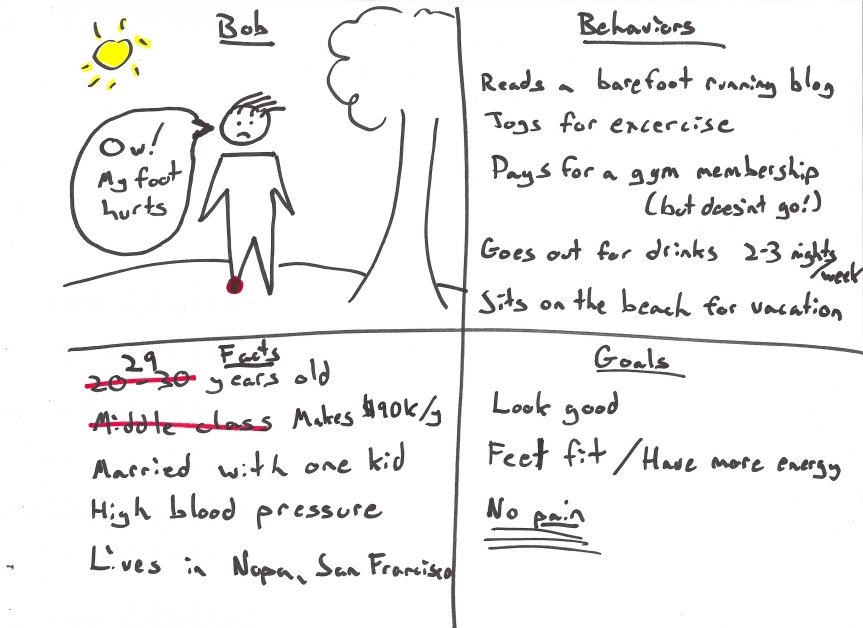 There are many ways to describe your customer including the Empathy Map, Moves the Needle’s Customer Focus Tool, or Luxr style personas. Personally I favor the Luxr format, but anything will do. (To dig in to the Luxr appraoch, read my post on customer personas, Spike Morelli’s post, or signup for the Luxr curriculum.) The most important thing about a persona is that it should be useful. A description written on a txt file unseen & buried on our hard drive is wasteful_._ In lean, we try to avoid waste. We strive to answer, w_hy do our customers have a problem?_
Quick Answer: Customer analysis means going beyond demographics to understand the causal relationship between your customer and their problem. As product managers, we should define our customer segment using the format “As a [customer], when I [situation], I want/need [goal]” — connecting observable behaviors to specific triggers. This causality shapes everything: our value proposition, marketing channels, and messaging. If we define our segment narrowly enough around the actual cause, we approach 100% relevance instead of pitching a great solution to the wrong market.
100% Conversion
Our customers are 25-40 year old men with Hummers. Our market research shows that 10% of the market has a need for erectile dysfunction medication.
Why 10%? Why not 100%? Clearly the 90% that don’t have the need aren’t in the market for a solution. Remember, this is about product/market fit. A landing page with a low conversion rate means either:
- we’re presenting the market with a bad solution,
- or we’re presenting a great solution to the wrong market.
Probably both.
Cause & Effect
 We need to grasp the causal relationship between this person and their problem. What situation always results in a problem for our customer? As a (customer) , when I (situation) , I want/need (goal) .
- As a graphic design team member, when I am working remotely, I need to transfer files larger than email will handle. (Dropbox)
- As a diabetic, when I have low blood sugar, I want to take my medication without pain. (mhi-500 needle free injection)
- As a 17 year old boy, when I have an acne breakout, I want to look good. (soap)
(This is like a user story which has a similar format: As a (user) , I want (need/goal) .) By detailing the cause of the problem, we can understand and target only those customers who truly need our product, exactly when they have the problem.
From Bad to Better Personas
Thinks about cars a lot.
This is not a helpful description in a persona. (Unless we can read minds.)
Reads Car & Driver magazine.
Better. We can look for people buying Car & Driver in a book store. (Those still exist, right?) But surely lots of people read that magazine. Are all of them our customer?
Asks on Car & Driver’s forum if there is a better way to increase MPG instead of filling their tires with air regularly.
Even better. This is not only observable but indicates they are spending effort to cobble together an unsatisfactory solution.
Asks on C&D’s forum for a good mechanic that can improve their MPG by changing their gear differential for under $1k
Nice! A customer who is not only looking for a solution, but has allocated a significant budget towards one. This is a great description that’s useful for marketing and indicates a real need.
Customer Causality
But why? Why are they trying to change their gear differential? Why not just buy a car with a better MPG? Let’s add a causal relationship.
As a car enthusiast who likes to show off, when I install 22” rims, I want to avoid paying an extra $200 a month at the pump.
This customer isn’t improving their MPG because of environmental concerns. They’re not looking to buy a Prius. The MPG consideration is the result of tweaking their car for appearances and wrecking their fuel efficiency. This casual statement is not a replacement for a good description, it is in addition to that description. The causal statement effects everything. We can’t market in environmental magazines. That channel is a bust. Our bright green tailpipe that looks terrible but miraculously improves MPG, is a no go. Our value proposition is completely wrong!
Starting the Product/Market Fit Storyboard
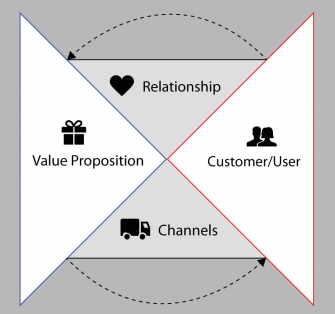 If you’re following along with the Product/Market Fit Storyboard, the story starts with the customer. Make sure your persona has a observable behaviors and a causal relationship. Then place the persona in the customer section. Once we have a basic customer hypothesis, we can go on to the Value Proposition. If you’d like feedback as you go, you can tweet me an image of your board. Any issues you have, I’ll use to make the instructions better. (To be continued…) (Illustration credit for the good ones goes to Emily Chiu)
Frequently Asked Questions
What is customer analysis in the context of product/market fit?
Customer analysis is the process of deeply understanding who your customer is, why they have a specific problem, and what situation causes that problem. As product managers, we need to define the “market” side of product/market fit by identifying a specific customer segment, their observable behaviors, and the causal relationship between their situation and their need — not just demographics.
Why should customer personas focus on observable behaviors instead of demographics?
Demographics like “25-40 year old men” don’t tell us who actually needs our product. Observable behaviors — like someone asking on a forum for a mechanic who can improve their MPG for under $1k — reveal real intent, active problem-solving, and even willingness to pay. As product teams, we need personas that are actionable for marketing and product decisions, not just descriptive.
How does understanding causality improve customer analysis?
Understanding why a customer has a problem changes everything — from our value proposition to our marketing channels. For example, a car enthusiast losing MPG because of oversized rims isn’t motivated by environmental concerns, so marketing in green magazines would be wasted effort. The causal statement “As a [customer], when I [situation], I want [goal]” ensures we target customers at exactly the moment they need our solution.
What does 100% conversion have to do with defining your customer segment?
If your landing page only converts 10% of visitors, you’re likely showing your solution to people who don’t actually have the problem. We should define our customer segment narrowly enough that virtually everyone in it recognizes the need. A well-defined customer segment based on causal relationships should approach 100% relevance — otherwise, we’re targeting the wrong market.
What format works best for creating useful customer personas?
Formats like the Luxr-style persona, Empathy Map, or Moves the Needle’s Customer Focus Tool all work — the key is that the persona must be useful and actively referenced. The most important addition is a causal statement: “As a [customer], when I [situation], I want/need [goal].” This connects the customer to their problem in a way that directly informs our value proposition, channels, and messaging.

Comments
Loading comments…
Leave a comment