
How to Complete a 2x2 Risk Prioritization Matrix the Right Way
Stop debating sticky notes for hours — start making binary decisions.
 By Tristan Kromer · · 7 min read
 Quick Answer: To properly complete a risk prioritization matrix, use relative axes (e.g., More Important vs. Less Important, not absolute labels), place sticky notes fast using instinct rather than debating one by one, and keep quadrants balanced. Focus only on the upper-right quadrant (More Important and Easier), then deprioritize from the bottom up to narrow down to ONE priority. As product managers, we should practice this regularly — the goal isn’t perfect positioning within quadrants but clear, binary decisions about which risk deserves our team’s full attention first.
Risk mapping is one of the most important activities an entrepreneur should conduct when laying out a potential business model. A 2x2 matrix is a common technique used in lean startup, design thinking, and agile. It’s simple. It’s elegant. It’s also easy to screw up. 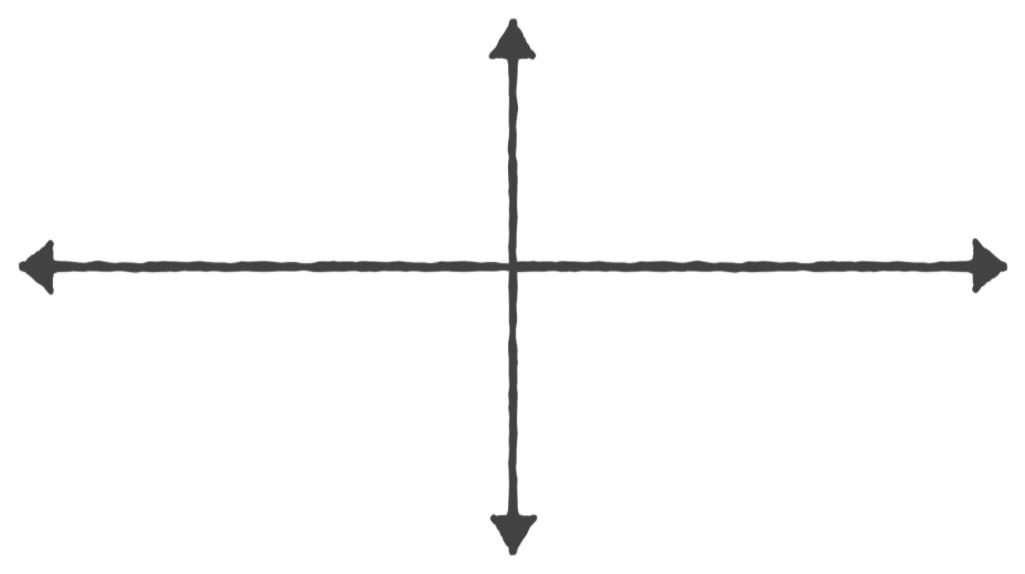 The 2x2 has a lot of benefits — it’s quick, it helps avoid protracted discussion in lean prioritization, and it’s a clear way to get team members to buy in next steps. Granted, it relies on the fuzzy logic of humans to achieve its goals — not exactly objective — but for breaking down important decisions, its ease and clarity is hard to beat. This is a quick reference guide on how to properly use a 2x2 prioritization matrix to analyze your risks and figure out which ones to focus your energy on. (Click here for Dan Toma’s five-step process.)
Remember the Goal
Lean prioritization is…well…for prioritizing. There should only be ONE priority at the end for your team to focus all your activity around. If you’re using 2x2 prioritization when working with 20-40 sticky notes, this process will narrow it down to the 5-10 most relevant risks. You will still need to use dot voting, stack ranking, or — if necessary — a coin toss to help narrow your options down to that one critical priority. 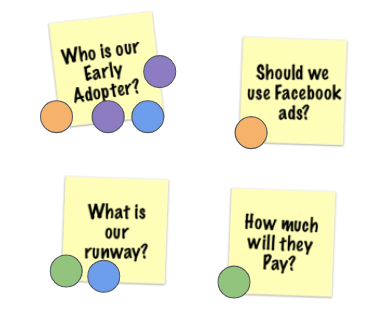
Use the Terms That Fit Your Goal
Our 2x2 prioritization matrix balances the terms More Important and Less Important with Harder and Easier. But you need to determine the terms that fit each axis best for your purposes. Some people use axis of Importance vs. axis of Difficulty. Others use Importance vs. Uncertainty. One of our clients uses Importance vs. Uncertainty on their main 2x2, then they create another 2x2 in the top right quadrant for Importance vs. Difficulty. Pick the terms that best help you achieve your objective. But regardless of your terminology, the general rules remain the same.
Choose Your Axes Well
Don’t get excited — I’m not talking about a battle to the death or suggesting you go all lumberjack. Axes is the plural of axis. You have a choice.  The 2x2 technique lends itself to a variety of decision-making purposes, including the Eisenhower Matrix (also known as the Urgent-Important Matrix) for prioritizing tasks, and Assumptions Mapping for challenging the premises behind your innovation project. There are countless versions of these matrices out there, and generally, the vertical axis is some form of More Important vs. Less Important. The horizontal axis, however, is more flexible. We like to use Easier vs. Harder in our horizontal axis because we coach teams to produce a good experiment velocity before worrying about running perfect tests or even testing the right thing. Our focus is to get teams to build lean mindset for the long run. But if the project is critical and a must-win (lives are on the line!), focusing on the most unknown project assumption makes more sense. Just make sure the axes are relative rather than absolute. In other words, they should be More Important vs. Less Important, not Important vs. Unimportant. If it’s unimportant, you wouldn’t have bothered writing it down on a sticky.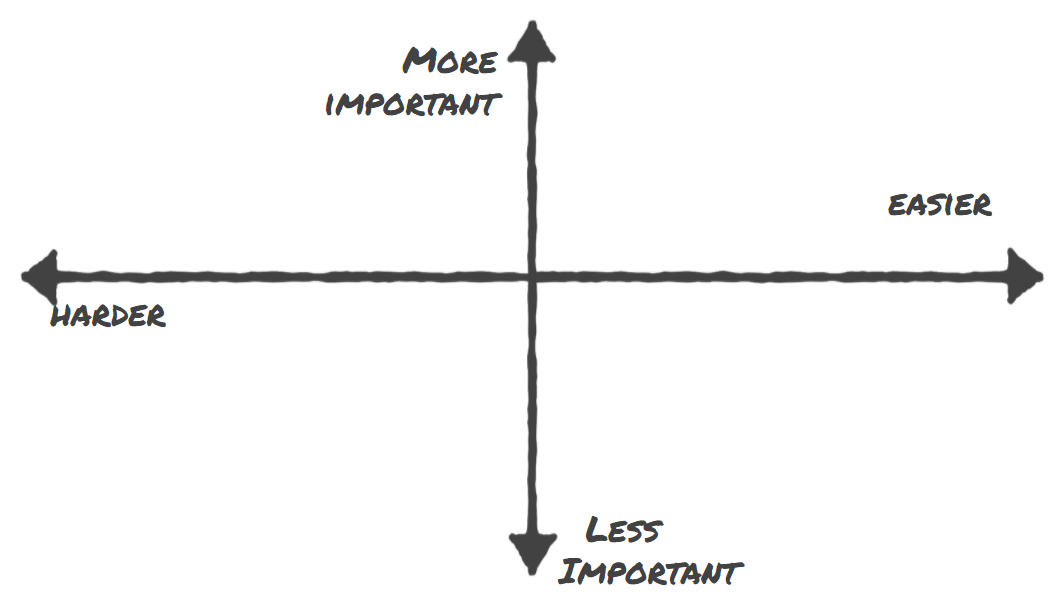
Go Fast!
Don’t place sticky notes one by one with long explanations of why they should be in each quadrant. Use your instincts. Put the notes down fast and sort them out later. Doing this should prevent everyone trying to put their sticky notes in the “top right” quadrant (or wherever your most critical quadrant is), which can lead to hours of arguing over them one at a time. Even better, it helps sidestep that awkward moment when the last person feels like they are being redundant after everyone else already put their ideas down.
Think Binary, Not Analog
It’s not necessary to make sure every sticky note within a quadrant is exactly positioned in some sort of complex cloud relative to the sticky notes that surround it. Limit your decision-making to yes/no answers. Should I move this sticky to another quadrant? Is Sticky A more important than Sticky B? Is Sticky C harder to accomplish than Sticky D? 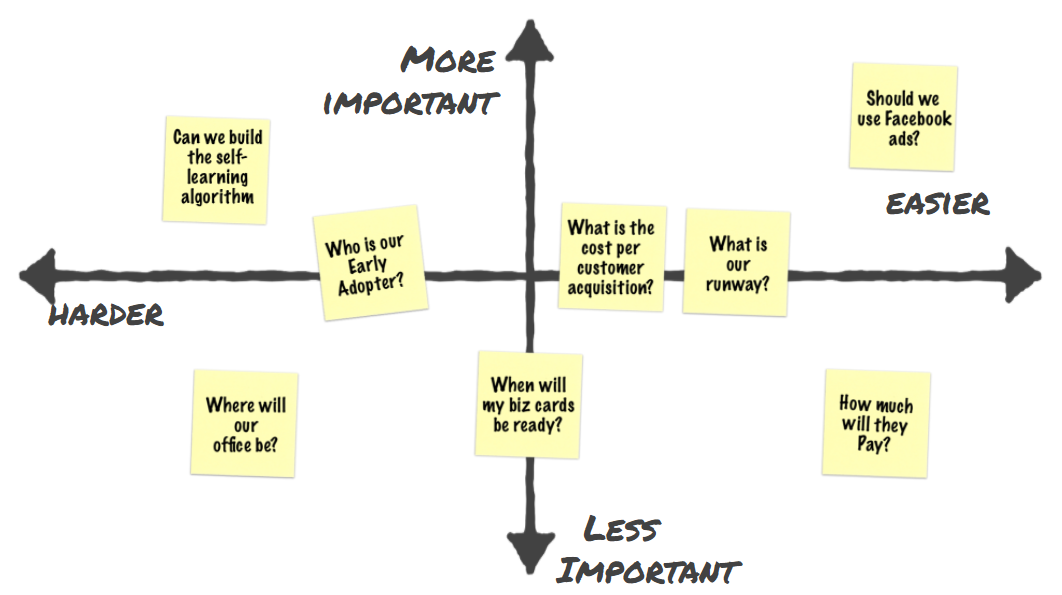 Make sure no sticky notes are straddling a line. Make a choice.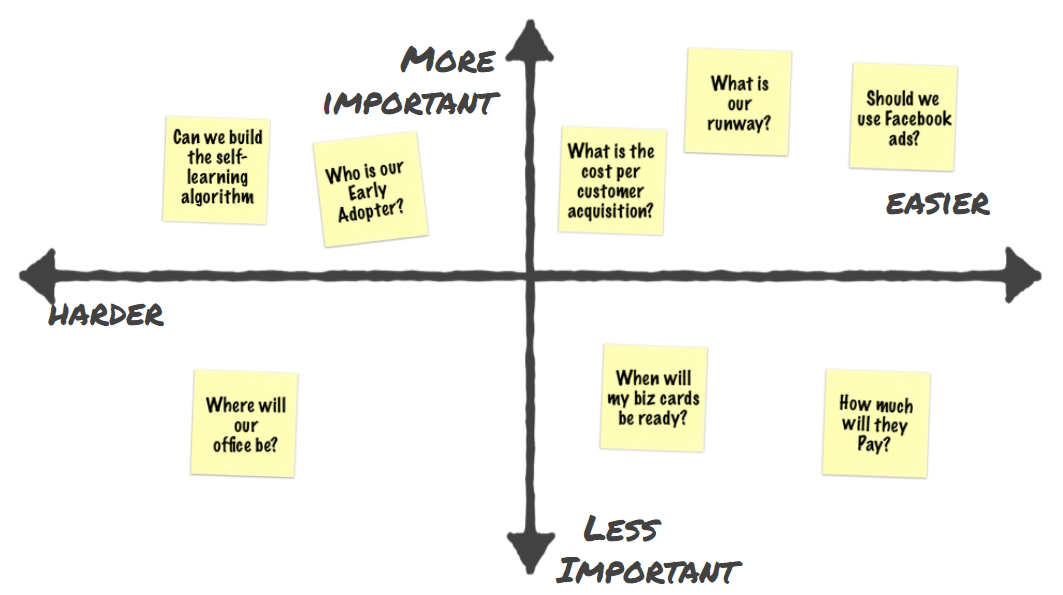
Balance the Quadrants
Take a step back and look at the big picture. Are all of the sticky notes in the “important” half of the 2x2? As I’ve stated, the axes should be relative, not absolute. This property naturally transfers to the quadrants themselves. If the axes are relative, then in order for something to be more important, something must be less important. Prioritization means putting one thing ahead of another. Repress your entrepreneurial instinct to treat everything as critical. 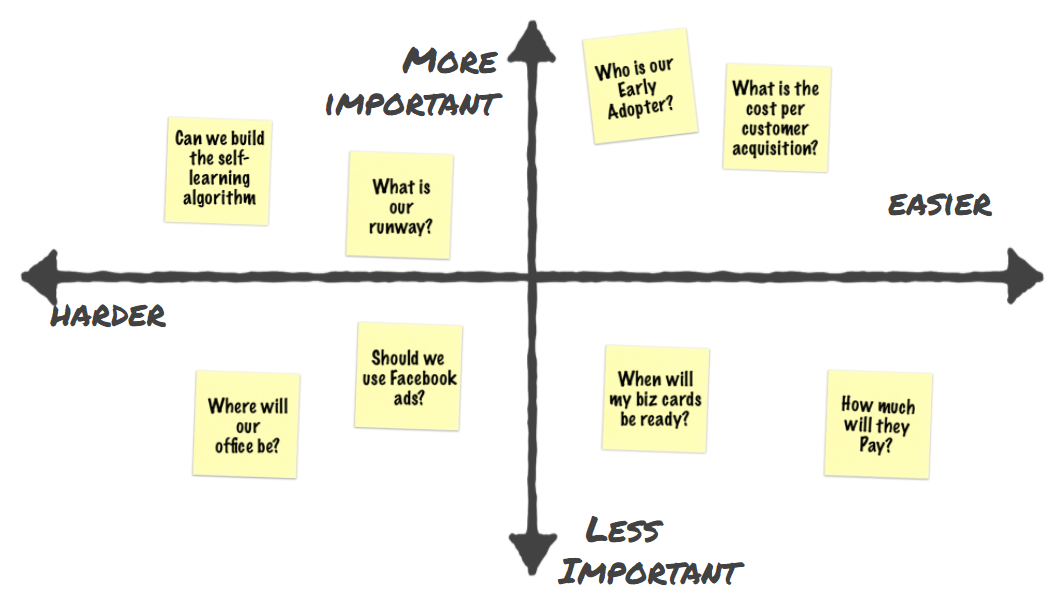
Deprioritize
Teams can get stuck trying to prioritize 10 sticky notes. Sometimes it’s easier to fight a war of attrition. By flipping the question, looking for the least important things rather than the most important, it’s easier to narrow down your choices so your full focus is on the options that matter. No one wants to get into a 20 minute discussion about the least important thing, so get it off your list quickly. Now you have 9; deprioritize another! Now 8, 7, 6, 5, 4, 3…ok now you can debate. 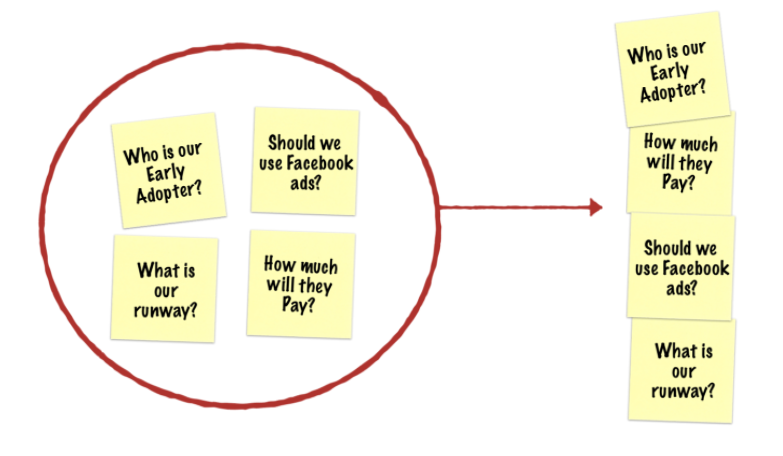
Focus on One Quadrant
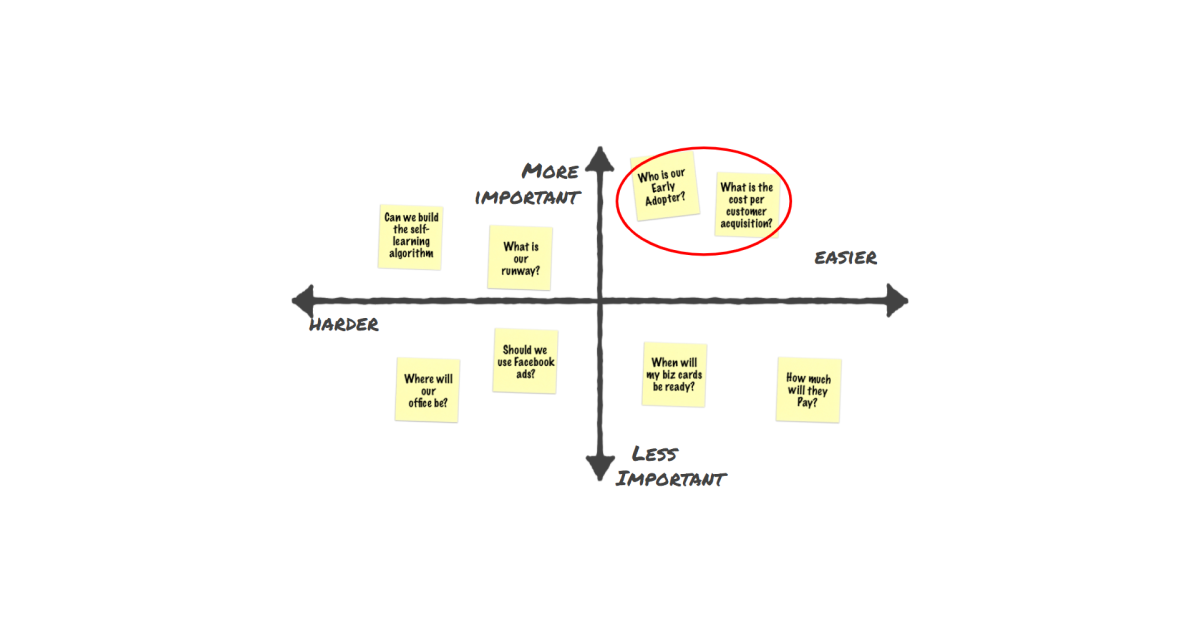
Don’t debate the wrong quadrant! The whole point of the exercise is to determine what you should be spending your time on. Don’t waste your time sorting out the 10 sticky notes in the bottom left quadrant, Less Important and Harder. That’s why that quadrant is marked “Delay.” The obvious quadrant to prioritize is the upper right, More Important and Easier. If you’re wrong about that one, then the other stuff won’t matter. 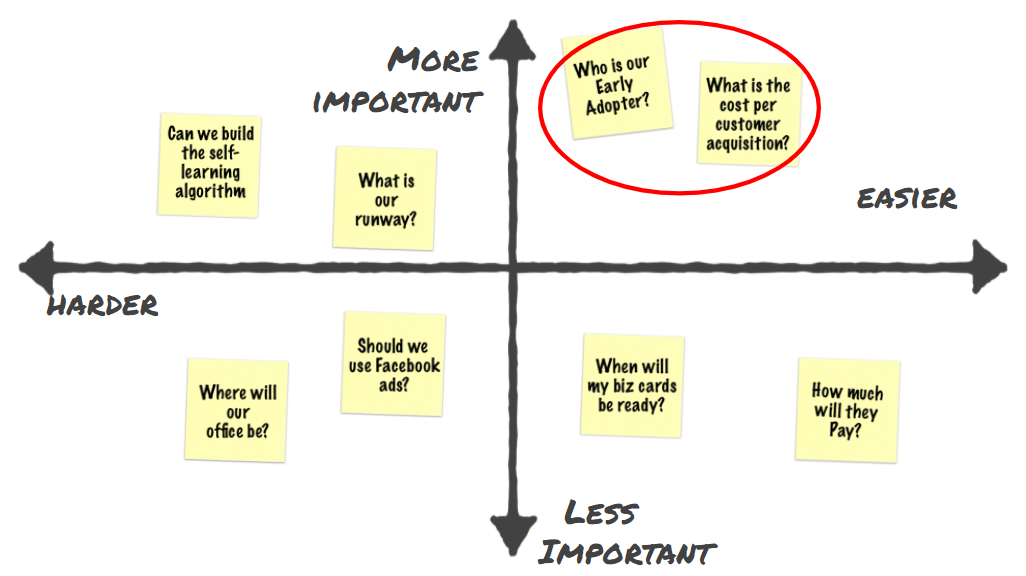
Practice
Don’t wait until your business depends on it to practice risk prioritization. You can create a 2x2 for pretty much any decision-making adventure. If you’ve got a prioritization matrix (or any kind of decision-making matrix) you’d like some feedback on, we’d be happy to give it a look. Download our matrix, plot something, and tell us what’s most challenging about the process for you.
Download 2x2 Risk Mapping Template
Lessons Learned
- Remember the goal is to find ONE priority to focus on.
- Name your axes and quadrants in a way most helpful to your situation.
- Go fast, focusing on getting something done as much as getting something right.
Frequently Asked Questions
What is risk prioritization and why does it matter for startups?
Risk prioritization is the process of ranking your business model risks so you can focus your limited resources on the most critical one first. As entrepreneurs, we need to identify which risks deserve immediate attention rather than treating everything as equally urgent. A 2x2 matrix is one of the simplest and most effective tools for doing this quickly with your team.
How do you choose the right axes for a 2x2 prioritization matrix?
The vertical axis is typically some form of More Important vs. Less Important, but the horizontal axis is more flexible. We can use Easier vs. Harder if our goal is building experiment velocity, or Importance vs. Uncertainty if the project is high-stakes. The key is to keep axes relative — More Important vs. Less Important, not Important vs. Unimportant — since everything on the board should matter to some degree.
Why do teams end up with all their sticky notes in one quadrant?
This happens when we treat the axes as absolute rather than relative. If something is more important, something else must be less important — that’s how prioritization works. We need to resist the entrepreneurial instinct to treat everything as critical and force ourselves to balance the quadrants, ensuring each one has a roughly proportional share of sticky notes.
What’s the fastest way to narrow down priorities when your team is stuck?
Instead of debating what’s most important, flip the question and deprioritize. Start by identifying the least important item — no one wants to argue over that for 20 minutes, so it comes off the list quickly. Then remove the next least important, and the next, until you’re down to a small enough set to have a meaningful debate about your single top priority.
Which quadrant should you focus on in a 2x2 risk matrix?
Focus on the upper right quadrant — More Important and Easier. Don’t waste time sorting out the sticky notes in the Less Important and Harder quadrant; that’s why it’s marked “Delay.” If you’re wrong about the most important and easiest risks, the rest won’t matter anyway. From the upper right quadrant, use dot voting or stack ranking to narrow down to your one priority.

Comments
Loading comments…
Leave a comment