

Innovation Methods: Which Lean Startup Experiment Should You Run?
A Pocket Test with Picnic in the Graveyard, or would you prefer a lemon twist?
 By Tristan Kromer · · 11 min read
 How do we run lean startup experiments for continuous innovation methods? When I was studying marketing I had an arms length list of research techniques like conjoint analysis, surveys, and focus groups. After I read Four Steps to the Epiphany, there was only one: Get out of the building and talk to customers! At LUXr, Janice Fraser introduced me to a whole new host of tools to gain insight such as hallway usability testing, contextual inquiry, and mental models. Add this to lean startup standards like smoke tests and the list gets pretty overwhelming. Should we run a Pocket Test with Picnic in the Graveyard to follow up? Should we do a Wizard of Oz or a concierge approach? Would you like a lemon twist with that? So what type of experiment should you run for innovation methods? And when? If you’d like to cut to the chase, you can download the list and index: Real Startup Book
Qualitative vs. Quantitative
 Many, many people have weighed in on which is superior. Ash Maurya recommends using qualitative research and then validating it with quantitative. Laura Klein’s post When to Listen & When to Measure does the battle the most justice. As Laura points out in her post, it’s not a question of better. A hammer is not inherently better than a screwdriver. A hammer is better than a screwdriver for hammering in nails.
Generative vs. Evaluative
 Janice Fraser introduced me to the distinction of Generative vs. Evaluative techniques for innovation methods:
Quick Answer: To choose the right lean startup experiment, use a 2×2 framework: Generative vs. Evaluative crossed with Market vs. Product. If we lack a clear hypothesis, we need generative research (e.g., customer interviews, data mining) to discover problems and ideas. If we have a specific, falsifiable hypothesis, we run evaluative experiments (e.g., smoke tests, usability testing). Running an evaluative test with a vague hypothesis—like a landing page without a defined customer segment—leads to misleading results. Match the method to your current level of certainty.
- Generative - Research techniques which don’t necessarily start with a hypothesis, but result in many new ideas. e.g. Customer Discovery Interviews
- Evaluative - Testing a specific hypothesis to get a clear yes or no result. e.g. Landing Page a.k.a Smoke tests
This distinction explains why we often get crappy results from experiments conducted for innovation methods. We might run a smoke test with the hypothesis:
Some people will sign up to a “coming soon” landing page featuring 100% compostable shoes.
We advertise via twitter and come back with a paltry 1% conversion rate to email sign up. Good idea? Bad idea? We confirmed our hypothesis…“some people” did indeed sign up! But is our conversion rate low because no one is interested? Or because we advertised via the wrong channel? Does no one want our value proposition? Or does no one understand it? There are a hundred reasons why we might get a false negative result from this test. There are also quite a few reasons why we might get a false positive! In this case our hypothesis is incredibly vague and flawed.
Some people will sign up to a “coming soon” landing page featuring 100% compostable shoes.
Who are these people? People on twitter? Who are they following? Are they eco-friendly dads who bike to work? Or are they professional runners who care more about durability than being environmentally friendly? When our hypothesis is specific and falsifiable, we can run an Evaluative Experiment such as a smoke test. When our hypothesis is vague or we don’t even have a hypothesis, we need to do Generative Research such as getting out of the building and talking to potential customers to get new ideas or refine our hypothesis.
Market vs. Product
 The other obvious distinction among tools and methods in the Real Startup Book is between Market and Product. Some methods tell us a lot about customers, their problems, and how to reach them. For example, we can talk listen to our customers and this will help us understand their situation and what their day to day problems are. Other methods tell us about the product or solution that will help solve that problem. We can do usability testing on a set of wireframes and see if our interface is usable. However, this won’t tell us anything about whether or not anyone will buy it in the first place. These methods generally don’t overlap.
What type of lean startup experiment should I run?
If we combine the useful distinctions of Generative Research vs. Evaluative Experiments and Market vs. Product we have four nice boxes which we can use to help us determine what we should do next to optimize the innovation methods: 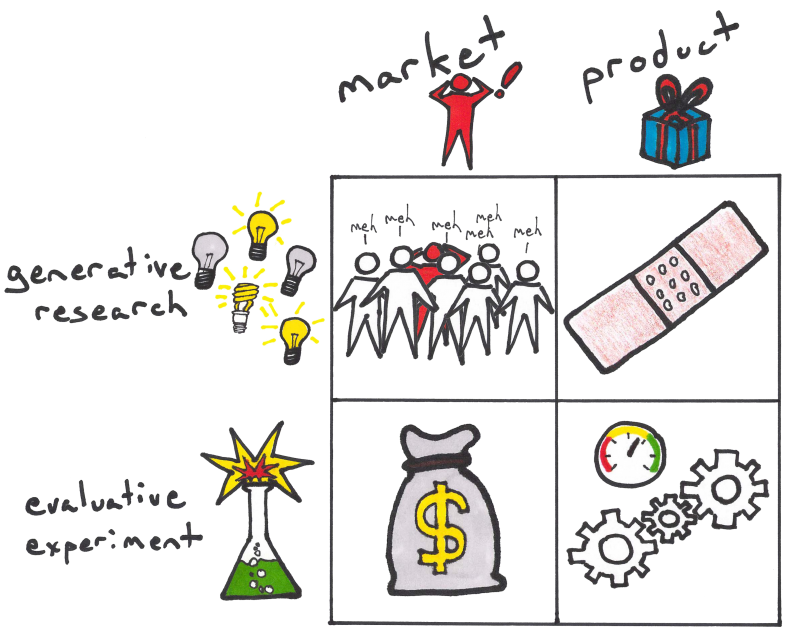 Each of these boxes helps us answer different questions.
Generative Market Research

- Who is our customer?
- What are their pains?
- What job needs to be done?
- Is our customer segment too broad?
- How do we find them?
If we can’t answer these questions yet, we’re doing what Steve Blank would call Customer Discovery (The first Step to the Epiphany.) We need to to understand the basis of the problem before testing a solution. If we’re not sure what our hypothesis is, we need to generate ideas. We could talk to customers and see what’s bothering them (Steve’s advice and always a good idea) or we might try data mining if we happen to have access to a large set of data. We could even do a broad survey with open ended questions.* Some of these research methods are qualititative (e.g. talking listening to customers) and some are quantitative (e.g. data mining). That distinction is not important. Data mining is quantitative but helped identify problems such as food deserts in the United States. We couldn’t have done that by talking listening to customers! Both tools can discover problems. Here are some of Generative Market Research methods:
- Customer Discovery Interviews
- Contextual inquiry / ethnography
- Data mining
- Focus groups*
- Surveys* (open ended)
* Don’t do this. Surveys and focus groups generally suck.
Evaluative Market Experiments
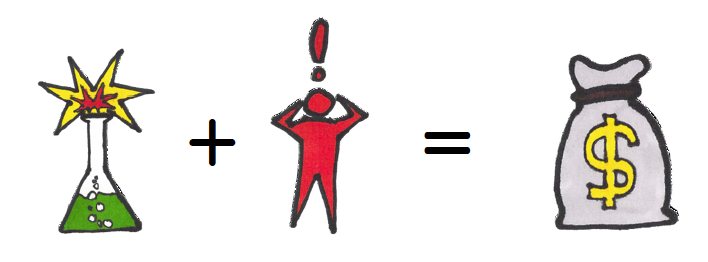
- Are they really willing to pay?
- How much will they pay?
- How do we convince them to buy?
- How much will it cost to sell?
- Can we scale marketing?
To evaluate a specific hypothesis, we might run a landing page test to see if there is demand. We might run a sales pitch if you were doing B2B enterprise product. We could even run a conjoint analysis to understand the relative positioning of a few value propositions. Here are a few Evaluative Market Experiments to discover innovation methods, if we have a clear, falsifiable hypothesis:
- 5 second tests
- Comprehension - link to tool
- Conjoint Analysis
- Data mining / market research
- Surveys* (closed)
- Smoke tests
- Video
- Landing page
- Sales pitch
- Pre-sales
- Flyers
- Pocket test
- Event
- Fake door
- High bar
* Again, don’t use these. They generally suck.
Warning: Here be False Positives
 Before we move on from here, we must remember: we’re probably wrong. Even if we have tens of thousands of users signed up to our landing page, that doesn’t mean we have a validated problem. If the customer didn’t have to commit to anything aside from their email address or they misunderstood the value proposition, then those signups don’t signify true customer demand. It just means we make awesome landing pages. Remember:
Generative Product Research

- How can we solve this problem?
- What form should this take?
- How important is the design?
- What’s the quickest solution?
- What is the minimum feature set?
- How should we prioritize?
Once we’ve validated the market and value proposition sufficiently, we need to understand what the solution would look like. If we truly have a validated Customer with a clear Problem and a Value Proposition, then we can start asking how. Unfortunately, while our market hypotheses tend to be overly vague, our solution hypotheses tend to be overly specific and way too comprehensive. To simplify our solution and help us prioritize which features to build first, we can use methods like concierge testing or solution interviews to help us generate ideas about what our MVP should be. Here are some methods for Generative Product Research:
- Solution interview
- Contextual inquiry / ethnography
- Demo pitch
- Concierge test / Consulting
- Competitor Usability
- Picnic in the Graveyard
Evaluative Product Experiments
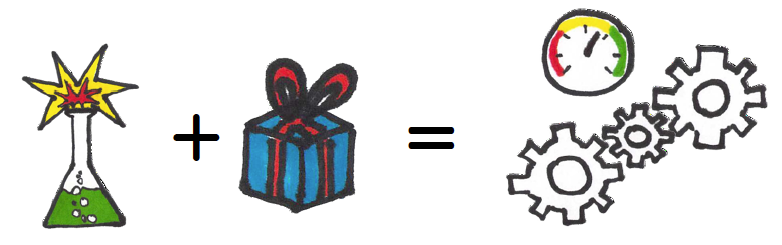
- Is this solution working?
- Are people using it?
- Which solution is better?
- How should we optimize this?
- What do people like / dislike?
- Why do they do that?
Fortunately, there are a list of well defined tools that have been around for decades to figure that out. We can do user testing to look for usability issues that might prevent the solution from working. We can A/B test two alternatives to see what works better. We can use a Net Promoter Score survey (one of the few surveys that I like) to see overall satisfaction. All of these Evaluative Product Experiments tell us if our solution is doing the trick.
- Paper prototypes
- Clickable prototypes
- Usability
- Hallway
- Live
- Remote
- Wizard of Oz
- Takeaway
- Functioning products
- Analytics / Dashboards
- Surveys*
- Net Promoter Score
- Product/Market Fit Survey
* These aren’t quite as bad as most surveys, but be sure you understand them before you use them to measure Product / Market Fit.
The Real Startup Book
 One last tip: The Real Startup Book is an arbitrary framework. Any idiot with an MBA knows how to make a 2x2 grid that will look impressive in a powerpoint when doing a consulting gig. That doesn’t mean reality fits neatly into those boxes. A lot of research/experiments will blur the lines. It’s rare that we’ll do generative research without having a hypothesis in the back of our mind about who our customer is. We may inadvertently evaluate (and invalidate) that hypothesis. That’s ok. This is just a framework to get ourselves headed in the right direction and make it more likely that we use the right tool for the job. Choose wisely. You can download the Real Startup Book for quick reference:
Last note: Contribute!
This book isn’t finished and never will be. Lots of people have suggested the innovation methods listed and maybe you can suggest one that isn’t there yet. We’ll list all contributions and the whole thing is creative commons licensed. Got something to add? Add something in the comments or let me know.
Frequently Asked Questions
What are the main types of lean startup experiments I can run?
Lean startup experiments fall into a 2×2 framework based on two distinctions: Generative vs. Evaluative and Market vs. Product. Generative research helps us discover new ideas when we lack a clear hypothesis, while evaluative experiments test a specific, falsifiable hypothesis. Market methods tell us about customers and their problems; product methods tell us whether our solution works. Choosing the right quadrant keeps us from using the wrong tool for the job.
How do innovation methods differ between generative research and evaluative experiments?
Generative innovation methods—like customer discovery interviews, contextual inquiry, and data mining—help us explore when we don’t yet have a clear hypothesis. Evaluative methods—like smoke tests, landing pages, conjoint analysis, and sales pitches—require a specific, falsifiable hypothesis and give us a clearer yes-or-no answer. As product managers, we need to match the method to our current level of certainty about the problem and customer.
Why do lean startup smoke tests sometimes give misleading results?
Smoke tests often produce false negatives or false positives because our hypothesis is too vague. If we test “some people will sign up for compostable shoes” without specifying who those people are, what channel reaches them, or what the value proposition means to them, a low conversion rate could reflect a bad channel, unclear messaging, or genuine lack of interest. We need a specific, falsifiable hypothesis before running evaluative experiments, or we should start with generative research instead.
When should I use qualitative vs. quantitative methods in lean startup?
It’s not about which is superior—it’s about using the right tool for the situation. As Laura Klein points out, a hammer isn’t better than a screwdriver; it depends on the task. Qualitative methods like customer interviews help us understand why people behave a certain way, while quantitative methods like data mining or analytics help us measure how much or how many. Ash Maurya recommends starting qualitative and then validating quantitatively.
What experiments should I run after validating my market hypothesis?
Once we’ve sufficiently validated our customer, problem, and value proposition, we move to generative product research to figure out what the solution should look like. Methods like concierge testing, solution interviews, and demo pitches help us prioritize features and define an MVP. After that, we use evaluative product experiments—usability testing, A/B tests, Wizard of Oz tests, and clickable prototypes—to determine whether the solution actually works for users.

Comments
Loading comments…
Leave a comment