

Why Your Startup Team Is Incomplete (And How to Fix It)
You've got the hacker and the hipster. But who's working the sales channel?
 By Tristan Kromer ·
 By Tristan Kromer Building a Complete Team is not easy. Talent is in short supply. In Silicon Valley, the common sense wisdom used to be that engineers were the most critical team members. The good ones were rare and hard to come by. Sometimes we called them ninjas or 10Xers.  More recently, the proliferation of consumer web apps made design a key differentiator. Designers became the scarce resource and salaries skyrocketed. Everyone who knew photoshop was suddenly rebranding themselves as a UX designer. No one really knew the difference between UX and UI, but we called them unicorns anyway and started the hunt. The ideal team is often described as Hacker, Hustler & Hipster. Articles have made it into Forbes and Steve Blank posted his version back in 2011. Even corporate teams have bought into the dogma to the degree that every innovation team must have a designer, hacker, and business person. No more than that and definitely no more than two pizzas worth of people! (Except the pizza part. That’s true from Dunbar’s number.)
The Balanced Team
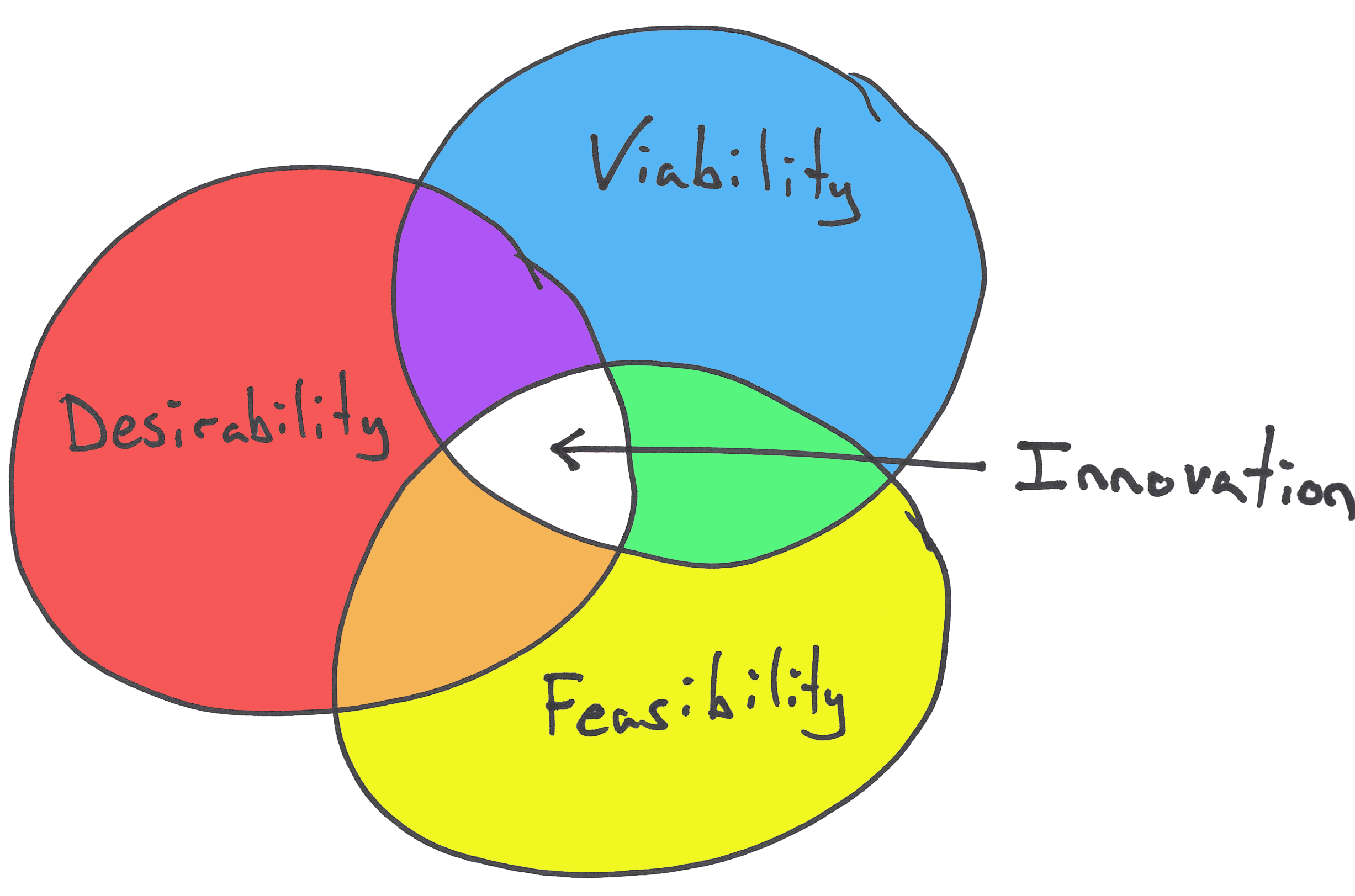 Some of this perfect team concept comes from the Balanced Team paradigm and perhaps IDEO, who even gives a nice Venn diagram showing the origin of it on their about page. (We don’t know who came up with it.) The Balanced Team works great in many situations. We love how Janice Fraser explained it:
Quick Answer: A startup team needs more than the classic “hacker, hustler, hipster” — it must cover every skill required to complete the Build-Measure-Learn loop, including channel and customer relationship capabilities. As product managers, we should assess whether our team can build the sales channel and measure customer progress, not just design and code the product. Fill gaps with part-time staff, outsourcing, or shared services, and reassess team composition regularly since the skills needed change at each stage.
 The designer is responsible for desirability of the product. Talking with customers, understanding their needs, making sure the experience doesn’t suck.
- The engineer is responsible for the feasibility. S/he must determine if the product can actually be built, how, and for how much.
- The business person is responsible for the viability of the business model. S/he acts as the scales of justice when feasibility conflicts with desirability. The business person also takes care of the profit & loss statement and often manages the personalities involved.
Incomplete Teams
The balanced team paradigm falls short when it is directly translated from concept to person. The important thing is the role. Tech folks assume that feasibility belongs to the engineer. Not always. 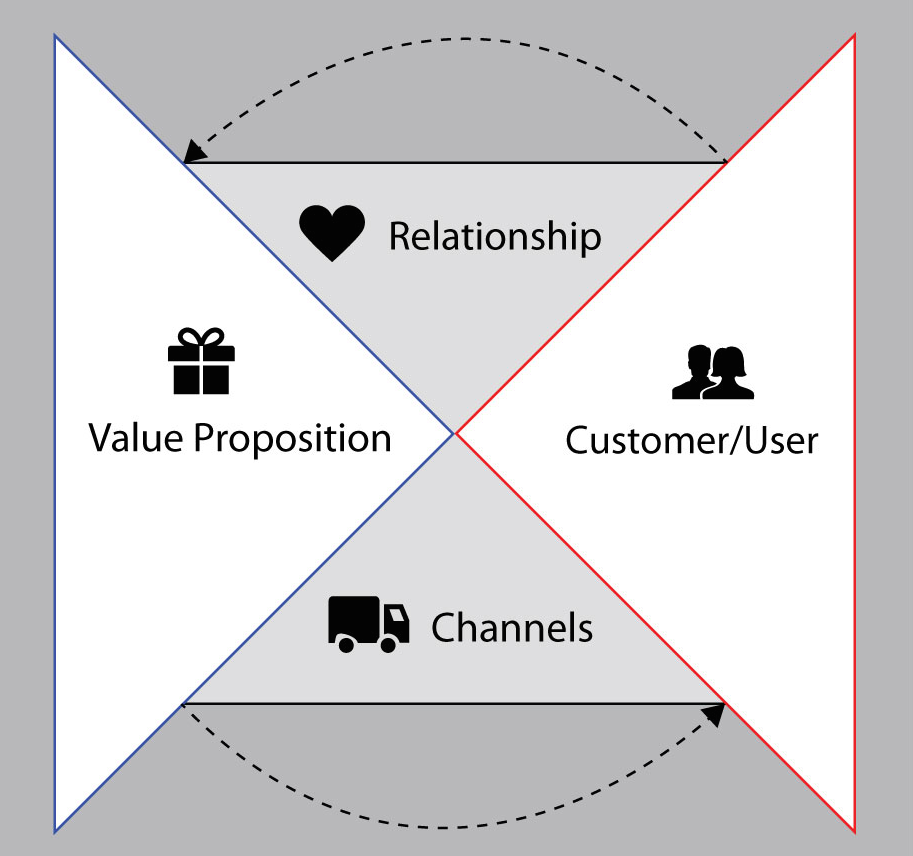 (If this sounds weird, read our post of the Four Parts of a Minimum Viable Product) The MVP is not just about building the product. What about the feasibility of the channel? If we’re selling an enterprise CRM, the feasibility of building that channel belongs to our enterprise B2B sales person. The person with the big rolodex and crazy hustling skills. Don’t have one? Then we have an incomplete team.
Tristan’s Incompleteness Theorem
 Incomplete Zebra[/caption] That is to say, if we’re missing a key skill or role, we’re stuck. We will be unable to learn or make any progress in experimenting until members of our team are able to acquire that skill. OR…you can hire someone to fill in a gap. That gap might be a team that is:
- Selling an enterprise CRM with no sales person.
- In Ukraine selling to the German market with no one who speaks fluent German.
- From Vietnam creating an eCommerce site for American consumers where the designer has no experience with U.S.
(Note: Truthfully, this happens. We’ve changed the countries to protect the innocent/guilty.)
The Complete Team
The complete team is able to complete the Build-Measure-Learn loop, including all Four Parts of the Minimum Viable Product. They will have to build the sales channel and measure product progress via the customer relationship.  Often the Hustler (a.k.a., Guy Who Can’t Code) takes on these other responsibilities and wears many hats. Sometimes, others can perform more than one role, playing designer half the time and managing to get some sales calls in on the side.
No Constant
 At the beginning of a project, we might not need an engineer. We just need to go talk to customers. We might not need a designer for a backend B2B application. We may need an outbound marketer to run a Google AdWords campaign, but we only need a few hundred visits to run our landing page test, so it’s hardly a full time job!
Temporary Completeness
Often the solution to these gaps is part time staff. It’s often a dissatisfying level of quality, but better than nothing!  One of the great advantages that large corporations have over startups is a vast reserve of human capital. Which is what makes it even funnier when they fail to utilize it. Many corporations are underfunding their startups by insisting they “be scrappy” instead of just giving them the budget to hire someone to run a Google AdWords campaign. There are certain skills that every team member in every startup should learn. Everyone should be able to talk to customers and have an insightful customer discovery conversation. But does everyone in a startup need to learn AdWords from scratch? Is that a critical skill? No. This is where more advanced accelerator programs like 500 Startups (who, unlike most accelerators, have an actual business model) have a massive advantage. With a specialized “Distribution” growth hacking team available to help their portfolio companies, they are able to complete teams, filling in notable skill gaps in marketing, user acquisition, and channel strategy. In addition, their “Distro” growth hacking team gets to hone their craft at a radically accelerated rate with the experience of working with literally hundreds of startups. So, sorry Y-Combinator, you’re awesome in many ways, but we know where we’d bet our money.
Key Takeaways
- The team needs complete skill sets to go around the Build-Measure-Learn loop quickly
- A complete team composition will change over time
- Geographic boundaries affect team needs in terms of sales, marketing, design, and language ability
- Startups: Consider outsourcing for completeness
- Corporations & Accelerators: Consider shared services for completeness
Frequently Asked Questions
What skills does a startup team actually need to be complete?
A complete startup team needs the skills to execute the entire Build-Measure-Learn loop, including all Four Parts of the Minimum Viable Product — not just building the product, but also creating the sales channel and managing customer relationships. This goes beyond the classic “hacker, hustler, hipster” formula. As product managers, we need to assess whether our team can handle channel feasibility and customer measurement, not just product design and engineering.
Why is the “hacker, hustler, hipster” startup team model incomplete?
The balanced team model of designer, engineer, and business person focuses on desirability, feasibility, and viability of the product itself but often overlooks channel and relationship skills. For example, if we’re selling an enterprise CRM, we need someone who can actually build and work that sales channel — a person with the rolodex and hustling ability. Without that role filled, the team gets stuck and can’t validate its business model.
How do you fill skill gaps in an early-stage startup team?
Part-time staff, outsourcing, or shared services are common solutions. Not every skill gap requires a full-time hire — we might only need a few hundred ad-driven visits to test a landing page, so a part-time marketer works fine. Accelerators like 500 Startups solve this with specialized “Distro” teams that fill marketing and growth gaps across their portfolio. Corporations can leverage their existing human capital as shared services instead of forcing teams to “be scrappy.”
Does a startup team need the same people throughout the entire project?
No — the complete team composition changes over time. At the beginning, we might not need an engineer at all; we just need to go talk to customers. We may not need a designer for a backend B2B application. The skills required depend on where we are in the Build-Measure-Learn loop, so as product managers, we should regularly reassess what roles are critical for the current stage of experimentation.
How do geographic boundaries affect what a startup team needs?
Geography can create critical skill gaps that aren’t obvious. A team in Ukraine selling to the German market needs someone fluent in German. A Vietnamese team building an eCommerce site for American consumers needs a designer with U.S. consumer experience. These cultural and language gaps are just as much a completeness problem as missing a developer or salesperson, and ignoring them will stall progress.

Comments
Loading comments…
Leave a comment