
How to Choose the Right Lean Startup Experiment to Run
An 8-minute guide to stop guessing and start learning
 By Kenny ·
 Figuring out which experiment or research we should run starts by laying out our assumptions and learning priorities. The Real Startup Book helps us organize our assumptions and learning priorities by asking two key questions:
- Which type of information are we gathering: Generative or Evaluative?
- What are we learning about: Market (aka, Customer) or Product?
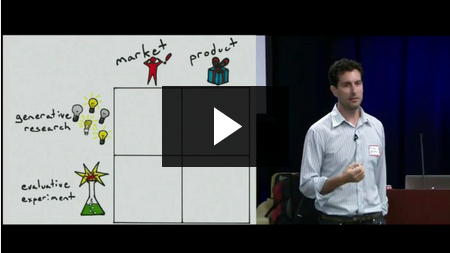
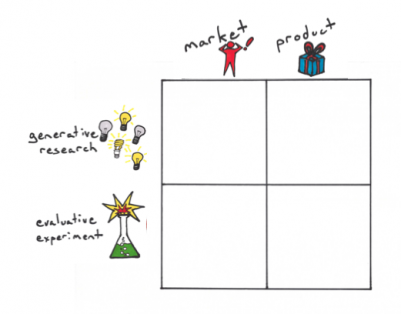 Here’s a short 8-minute video where we walk through the different parts of the Real Book and list out relevant experiment and research techniques: You can download a copy of The Real Startup Book here. Note: If you’re looking for some guidance on how to design lean experiments, download our Learn SMART Experiment Template.
Quick Answer: To choose the right experiment, start by mapping out your assumptions and learning priorities, then ask two questions: Are we gathering generative (exploratory) or evaluative (validating) information? And are we learning about the market/customer or the product? The Real Startup Book framework uses these two dimensions to create a quadrant that narrows down which specific experiment or research technique fits our current stage, so as product teams, we stop guessing and start running the most relevant experiment for what we actually need to learn.
Frequently Asked Questions
How do I choose which experiment to run in lean startup?
Start by laying out your assumptions and learning priorities. The Real Startup Book framework helps by asking two key questions: Are we gathering generative or evaluative information? And are we learning about the market (customer) or the product? Answering these questions narrows down which experiment or research technique fits our current needs.
What’s the difference between generative and evaluative research in lean startup?
Generative research helps us explore and discover new insights — we use it when we don’t yet know enough about a problem space. Evaluative research helps us test and validate specific assumptions we’ve already formed. Knowing which type of information we need determines which experiment we should prioritize.
What is the Real Startup Book framework?
The Real Startup Book is a free resource that organizes lean startup experiments along two dimensions: the type of information (generative vs. evaluative) and what we’re learning about (market/customer vs. product). It lists relevant experiment and research techniques for each quadrant, making it easier for product teams to pick the right approach.
How do I design a lean startup experiment once I’ve chosen one?
After selecting the right type of experiment using a framework like the Real Startup Book, we can use structured templates — such as the Learn SMART Experiment Template from Kromatic — to define our hypothesis, metrics, and success criteria before running the experiment.


Comments
Loading comments…
Leave a comment