
Customer Discovery Interviews: Why Stories Beat Scripts
Your customer's last vacation story is more useful than their predictions.
 By Tristan Kromer ·
 Quick Answer: In customer discovery interviews, the key is to ask customers about past experiences, not future predictions. When we ask “When was the last time you did X?” instead of “Would you use this product?”, customers naturally tell stories that reveal real behavioral patterns, frustrations, and needs. Use a note-taking template as a guideline — not a rigid script — and remember that the most important part of the interview is the part where we’re not talking.
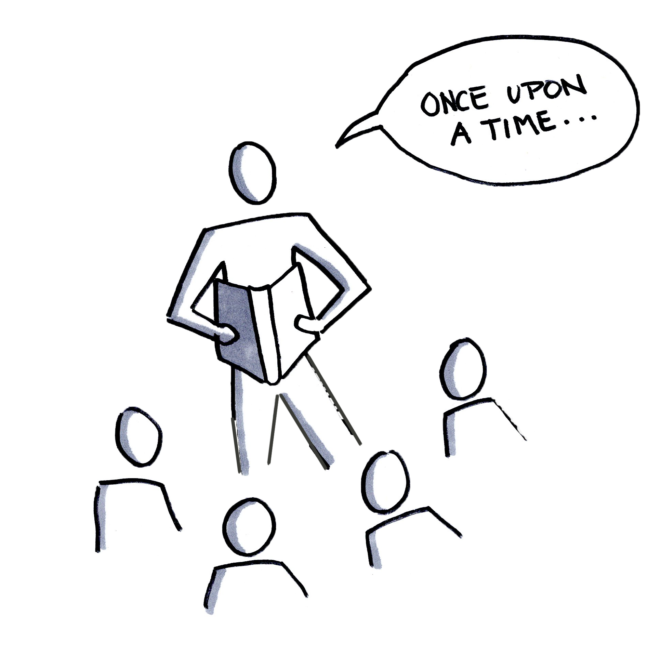
Customer Discovery Interviews By Tristan Kromer Every product has a brand story. Whether it’s a slick campaign cooked up by a PR agency to help build a connection with buyers, or just the history and aesthetics of a product that hasn’t been released yet, when we think of products we think of stories. You know who else has a story? Our customer. And we mean that in the singular, not the plural. Every customer has their own unique tale to tell. What we’re trying to find in our customer discover interview is the element of their story that intersects with a need for our product.  Storytelling is our natural language, the root of human communication. If we’re looking for a customer’s needs, we will find it in their stories.
Every Memory Is a Novel
There’s a very simple rule for customer discovery interviews: Ask about the past, observe the present, forget about the future. 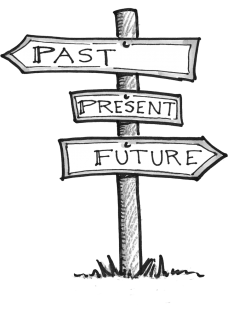 We want to keep our customers talking in the past tense, not asking them to predict what’s coming. Never ask a speculative question like Would you like to have this service to plan your next vacation? As soon as they go into future-think mode, we’ve lost the one thing we need from them — their actual behavior. Humans are comically bad at understanding our own behavior. Predicting how we’ll plan our next vacation draws on improvisational skills, not memory. We may plan to visit a certain country or not take work with us or pack a lighter suitcase, but we are far more likely to make the same mistakes and copy the same patterns as the last time we planned a vacation. Who among us hasn’t gone to the grocery store for a gallon of milk and returned with bread, cheese, and a one-month trial gym membership? Asking someone to predict their future behavior is a recipe for a failed discovery process.
 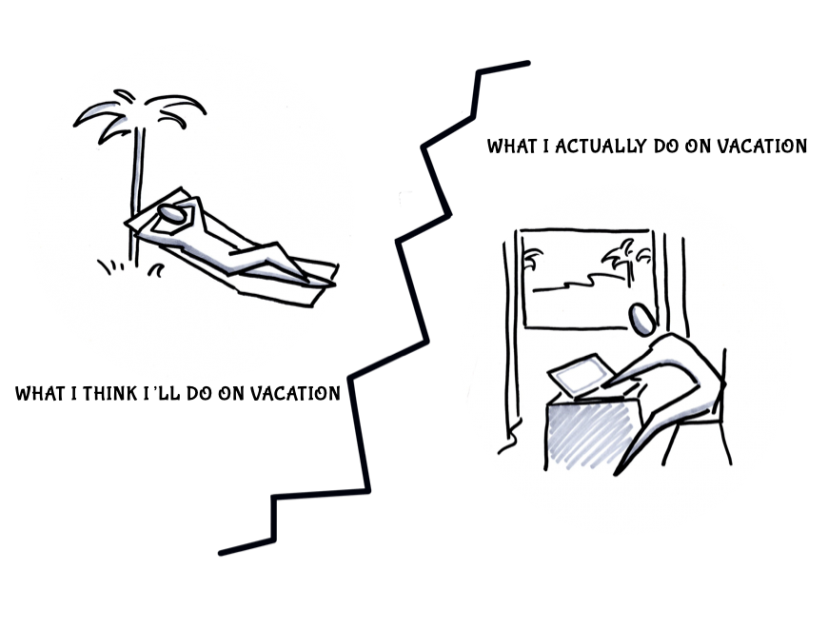 But if we ask someone When was the last time you planned a vacation? it’s unlikely they will respond with a direct answer like October of 2017, and then just sit there in awkward silence. They will answer all sorts of questions we didn’t ask — where they traveled to, why they were going, a roster of family members that accompanied them, the most memorable thing about the trip (being detained at customs for 12 hours or an endless sunset over a white, sandy beach). In other words, they will tell us a story. With very little prodding, they will share with us characters, a setting, a conflict, a resolution, and even a denouement. These are the same elements that provide us with the data we need from the discovery process, the commonalities between the people who would be willing to pay for our product: they like to vacation at ski resorts, or they always travel spur-of-the-moment when discount tickets pop up, or they never travel with kids, or the most memorable thing about their trip always somehow involves tequila. Interviewers are trained to ask people about their past — not their plans — for this very reason. Plans are wishful thinking. Memories are lived behaviors that tell the stories of our daily lives, the stories that reflect our true behavior, not behavior we aspire to or predict for ourselves. Encourage your customer to give you details, to go on tangents, to provide you with a thick, juicy story.
To Script or Not to Script
This is why we should keep our scripts open-ended (at least at first), allowing them to pursue the most interesting line of thinking. Often the most insightful parts of an interview come from an unexpected direction. Remember that the most important part of our interview is the part where we’re not talking. 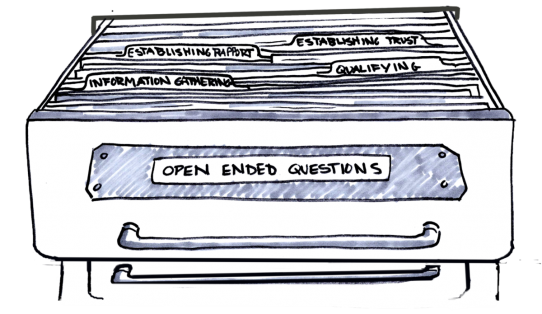 That’s not to say we should just let a customer ramble. We live in stories, but rarely do we tell them with a cohesive plotline that goes beginning->middle->end. It’s okay to let a customer go off on a tangent for a bit, but if it strays too far from the subject matter and is not producing any valuable insight, then the best way to return to a useful interview is to ask them to backtrack to a point where their story showed promise: You said something really interesting a few minutes ago, I’d love to loop back to that point. This is all great for an experienced interviewer who knows how to pivot on the fly, but most interviewers are somewhere between novice and reliably competent. So it helps to have a guideline to get us through the sticking points. A note-taking template — such as a topic map — is a must-have fallback to help us go into an interview prepared with a list of topics to cover and a few sample questions to use as prompts to get our customer to tell us a story. (But keep in mind — this is not a script or a checklist!)
  It also serves as a method of communication within our organization — because we will usually be working in teams, we want to share with our teammates what we’re asking and what our teams are focused on so we can coordinate our efforts. But we can’t let our template constrain our instinct to follow an interesting line of thinking, or prevent the customer from sharing their story. If we think of it as a guideline rather than a script, then we can have a conversation instead of an interrogation.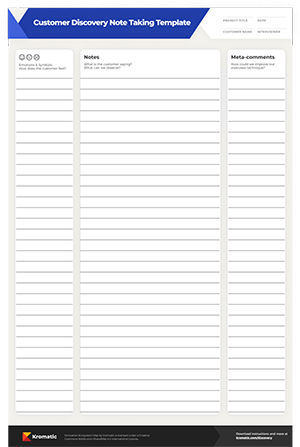
Download our Customer Discovery Notetaking Template
Lessons Learned
- If you want to know what your customer needs, ask them to tell you a story.
- Never ask your customer to predict their future behavior.
- The best way to get your customer’s story is to be genuinely curious about it.
Stay tuned next week for “Customer Discovery Part 2: How a Focus on Storytelling can Solve OUR Pain Points.”
Frequently Asked Questions
What are customer discovery interviews and why do they focus on storytelling?
Customer discovery interviews are conversations designed to uncover real customer needs by asking people to share stories about their past experiences. Storytelling is our natural language, and when we ask customers about the past, they naturally reveal characters, settings, conflicts, and resolutions — the same elements that give us the behavioral data we need to validate whether our product solves a real problem.
Why should you never ask customers to predict their future behavior in a discovery interview?
Humans are notoriously bad at predicting their own behavior. When we ask speculative questions like “Would you use this product?”, customers draw on improvisation rather than memory. As product managers, we need actual behavioral data, not aspirational thinking. Asking about the past — like “When was the last time you did X?” — surfaces real patterns and lived experiences that reflect true behavior.
Should you use a script for customer discovery interviews?
A rigid script can turn a conversation into an interrogation, but having no structure at all risks losing focus. The best approach is to use a note-taking template or topic map as a guideline — not a checklist. This keeps us prepared with key topics and sample prompts while leaving room to follow unexpected but insightful tangents. The most important part of the interview is the part where we’re not talking.
How do you get a customer back on track during a discovery interview without being rude?
If a customer’s tangent strays too far from useful territory, we can gently redirect by referencing something interesting they said earlier: “You mentioned something really interesting a few minutes ago — I’d love to loop back to that.” This validates what they’ve shared while steering the conversation back to a more productive thread of their story.
What’s the best opening question for a customer discovery interview?
Rather than asking speculative or yes/no questions, ask customers about a specific past experience — for example, “When was the last time you planned a vacation?” This kind of open-ended prompt naturally invites storytelling. Customers will volunteer details you didn’t even ask about, revealing the behaviors, frustrations, and patterns that help us identify real needs.

Comments
Loading comments…
Leave a comment