
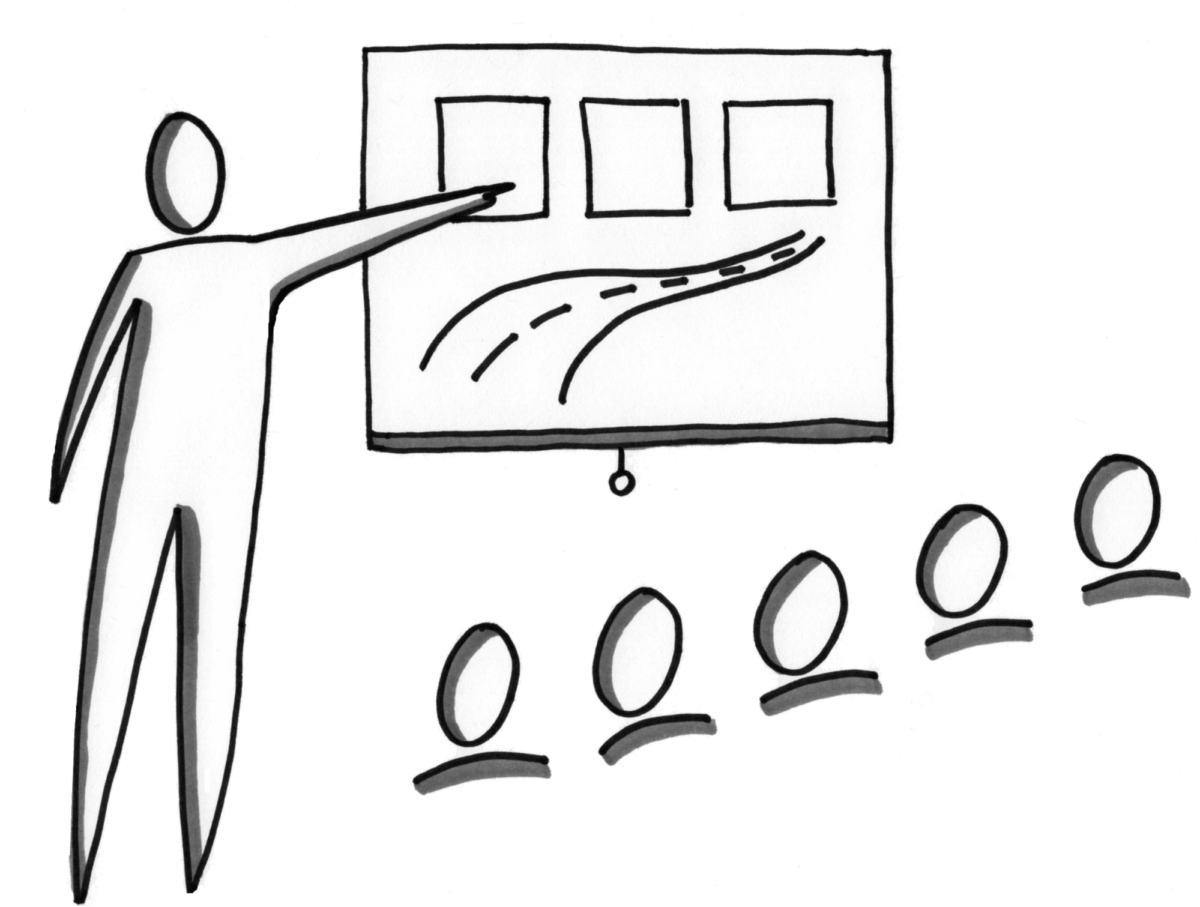
Facilitation Skills Training: 5 Tips for Better Lean Startup Workshops
Because even great content falls flat when you teach it like a college lecture
 By Nick · · 8 min read
 Quick Answer: To run better lean startup workshops, focus on five key facilitation practices: start with empathy by understanding participants’ existing mental models (like common Build-Measure-Learn misconceptions), frame uncomfortable concepts through fun interactive games, give explicit permission to be beginners, leave unstructured time for reflection and open discussion, and continuously practice improving your teaching. As facilitators, we must recognize that even the best content falls flat when delivered through passive lectures — the way we teach matters as much as what we teach.
-Facilitation Skills Training  Author: Nick Noreña[/caption] (Nick Noreña is a coach at Kromatic, and spends most of his time working with teams and organizations to help them implement lean startup techniques in their business. An entrepreneur at heart, he loves working with early stage ideas to see if they could and should be businesses. If he’s not in his office in San Francisco, you can probably find him moderating conversations about technology and ethics, or on Twitter and LinkedIn.) Have you ever been in a workshop and slept more than you learned from facilitation skills training? It happens all the time. A well-meaning individual who has some area of expertise shows up and regurgitates everything they know using wordy slides and long lecture notes. It’s a paradoxically intuitive approach to teaching. In fact, if you’ve ever sat through a university lecture or facilitation skills training in a giant auditorium, you’re quite familiar with these teaching traps. I’ve been delivering workshops (a few per month) for the past few years. In that time, I’ve made lots of mistakes like the ones I refer to above and have come to realize that the content in these workshops means nothing if I don’t practice being a better teacher. Being a lean startup coach, my toolkit prompts me to question my assumptions about the workshops/facilitation skills training I give and explore how I can continuously improve these sessions. Below are a few learnings from my workshops that I want to share with you. You’ll find them relevant if you deliver workshops yourself, and I encourage those who sit through those dull, boring lectures to use these observations to demand more of those sessions!
Start With Empathy
First, let’s talk about cognitive blind spots that prevent us from empathizing with facilitation skills training participants and their progress in their learning journey. It’s easy to assume people have the same prior knowledge as you, and that because you understand concepts in certain ways, that the participants already understand them as well. I’m not suggesting that you take stock of everyone’s learning styles beforehand and teach to that, but being aware that you are in a different phase in your learning journey does wonders. For example, let’s consider the often cited lean startup principle of Build-Measure-Learn. When most people read about B-M-L, they interpret it as “build something first, measure how it does in the real world, and then learn from it so you can build the next thing better.” However when putting this into practice, this interpretation has led many to build an MVP right away, and then “launch” it. Doing B-M-L properly is much more akin to working through the following questions:
- What is the most important question to answer for your business right now?
- What data do you need to collect to answer that question?
- What type of experiment/research can you conduct to get that data?
- Does the data I gathered validate/invalidate my hypotheses or clarify my assumptions?
- What is the next question I need to answer for my business right now?
(By the way, we’re publishing a free e-book that elaborates further on this process if you’re interested) 
In order to be an effective facilitator, I need to understand that many of the participants in my workshops who have heard about lean startup before will understand Build-Measure-Learn in the first way I suggested. I need to first empathize with that in order to effectively convey a new way of thinking about it. Beyond just reminding myself of this, I’ve found that speaking with several of the incoming participants before a workshop for 15 minutes helps me relate to their starting point. 
Frame Through Fun
I like to engage my audiences through interactive games or fun activities throughout my workshops. I consider this the foundation on top of which meaningful learning happens. If folks haven’t bought into why they are there or feel like it isn’t worth their time, then it rarely ends up being worthwhile. I’m not suggesting that we make workshops solely about fun; learning is difficult and uncomfortable, and we should never gloss over that. Instead, I suggest finding creative ways to have fun while landing on uncomfortable concepts. One game I always have ready to go in my toolbox is the Marshmallow Problem. I use it to help entrepreneurs come face-to-face with their bias towards solutionizing (read: everyone’s bias towards solutionizing!). This can be an incredibly uncomfortable topic since solutionizing is often what leads startups to build things that no one wants. The nice thing about this game is that the journey to that uncomfortable learning is usually lots of fun. In this example, we use dry spaghetti, marshmallows, and other arts and crafts tools to build little towers (needless to say most of the folks I conduct workshops for have not spent much time building such towers).  (By the way, we are developing a game to help corporate investors understand innovation accounting)
Play Innovation Management Game
Permission to be a Beginner
Before every workshop, I find ways to give myself and the participants permission. An example of this might be giving the participants permission to be beginners and ask questions. I might give permission by asking individuals seemingly simple questions while we are giving introductions (i.e., “What does that word mean?”) to show that it is ok to not know every answer. I’ll also state that if we have questions or thoughts, we should always speak up, as it will give us either an opportunity to teach or to learn. When I first started giving workshops, this meant giving myself permission to not know the answers to every question. It also meant giving myself permission to speak confidently about my own experience as an entrepreneur and the things that I learned along the way. Nowadays giving myself and workshop participants permission is second nature, not something I have to think about. If you are a facilitator and find this difficult, write down a prompt to remind you to do this on a sticky note and stick it to your computer so only you can read it. Better yet, write that prompt on a board so everyone can see it! If you are someone who has been in workshops before where you felt like you have not received permission, whether it is to be a beginner, question the presenter, or speak up, ask for it early. Be the student in the classroom who raises their hand and asks the question everyone else has but are too embarrassed or shy to ask! 
Leave Time to Reflect
Learning something new takes time and practice. Since I typically have only a few days in the workshops and trainings that I give, it’s critical that I find ways to slow things down and allow new information to sink in. As a facilitator, this means wading into conversations that you might not know the direction of until it starts to pick up, and it also means intentionally putting blank time in your schedule to allow for reflection. One thing I’ve noticed is that on the second day of a multi-day workshop (and sometimes in the afternoons of a one-day workshop), the participants are ready to discuss how the concepts we are learning about apply to their actual jobs/roles/lives. These are good times to leave room for open discussion. Allowing for the challenges that might percolate to the top of mind through open discussion is so important. It gives the facilitator an opportunity to capture new areas of exploration and questioning to share with the participants, and the participants an opportunity to let new concepts sink in. I also will often have my participants stand up together at the end of the workshop and share with one another one thing they took away from the workshop. It may be “I learned ____,” or it may be “I’m worried about ____,” or “I’m excited for ____.” Just giving the participants time to actually voice these reflections is what matters most. 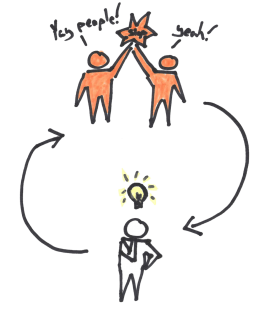
Teaching Lean Means Practicing Teaching
I encourage all workshop facilitators to practice being better teachers, and all workshop participants to demand the best from your facilitators. It’s easy to feel like we’re making progress when all we’re doing is wrestling with more information than we can practically handle. It’s easy to feel the peer pressure of needing to be right all of the time. It’s easy to think that we can learn without having fun and feeling engaged. So choose to do the hard thing: seek and be the best. For any former workshop participants who are reading this:
- I’d love to turn this post into a conversation and hear from you about what works well and what should be avoided in educational settings. What are your reflections and questions about workshops you’ve attended? Please leave comments below.
For the facilitators who are reading this:
- I’d love to hear from you as well. Where are my assumptions incorrect? What has worked/not worked for you? Please leave comments below.
Frequently Asked Questions
What is facilitation skills training and why does it matter for lean startup workshops?
Facilitation skills training focuses on improving how we teach and guide workshop participants through learning experiences. For lean startup contexts, it matters because even the best content — like Build-Measure-Learn or experimentation frameworks — falls flat if delivered through passive lectures. As facilitators, we need to actively practice empathy, engagement, and reflection techniques to make concepts actually stick.
How do I make lean startup workshops more engaging and less boring?
Frame learning through fun, interactive activities rather than relying on slides and lectures. Games like the Marshmallow Problem help participants experience concepts like solutionizing bias firsthand in an enjoyable way. The key isn’t making workshops purely entertaining — learning is inherently uncomfortable — but finding creative ways to land on difficult concepts through hands-on engagement that keeps participants invested.
Why do people misunderstand Build-Measure-Learn and how should facilitators address it?
Most people interpret Build-Measure-Learn as “build something, see how it does, then improve it,” which leads teams to jump straight into building an MVP. The proper approach starts with identifying your most important question, determining what data you need, designing experiments to collect it, and then evaluating results. As facilitators, we need to empathize with this common misunderstanding first before we can effectively reframe it.
How can I create psychological safety in workshops so participants actually ask questions?
Give explicit permission for participants to be beginners. You can model this by asking seemingly simple questions yourself during introductions, showing it’s okay not to know every answer. State clearly that questions are opportunities to teach or learn. If you’re a participant and haven’t been given that permission, ask for it early — be the person who raises the hand everyone else is too shy to raise.
Should I leave unstructured time in a workshop schedule?
Yes — intentionally building blank time into your schedule is critical for reflection and deeper learning. Participants often need the second day (or afternoon of a one-day session) to process how new concepts apply to their actual work. Leave room for open discussion, and close workshops by having participants voice takeaways aloud, whether that’s something they learned, a worry, or an excitement.


Comments
Loading comments…
Leave a comment