

What AI Changed About Finding Product/Market Fit (and What It Didn't)
The second edition of The Real Startup Book is online and free to read.
 By Tristan Kromer·
Quick Answer: The second edition of The Real Startup Book is online and free to read — as a free downloadable PDF, and now also in hardcover and paperback. It carries forward the field-tested experiments for finding product/market fit that the first edition shipped, re-grounded for founders who now draft, code, and synthesize with AI every day — and it adds nearly 30 new methods for the AI era, from disposable MVPs to synthetic persona screening. Sixty-plus methods in all. AI changed how fast you can prototype, summarize interviews, and instrument a landing page. It did not change which experiment to run, what counts as evidence, or how to tell a real signal from a flattering one. This post is the launch note: what is in the second edition, what we changed, what we deliberately left alone, and how to start reading.
Eleven years since the first edition
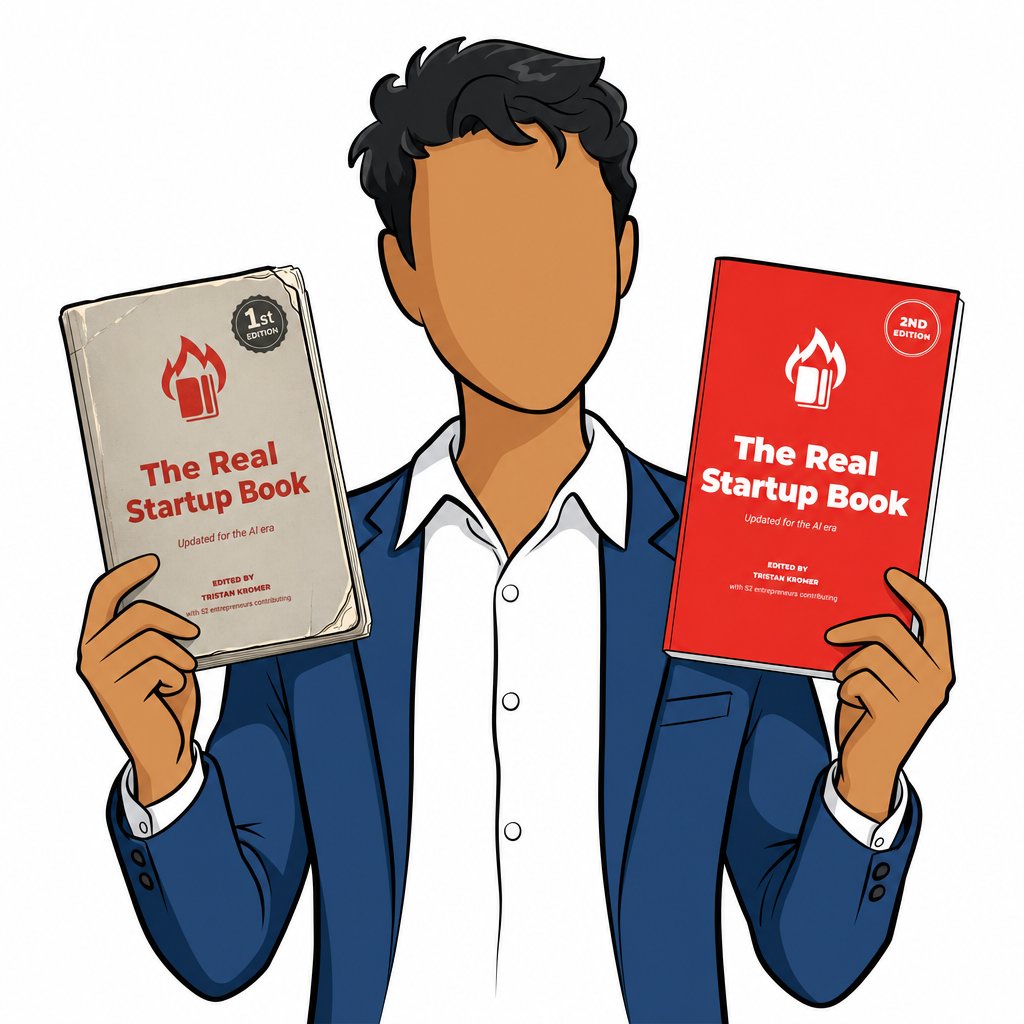
We released the first Real Startup Book in 2015. It was a free, open-source field guide to the lean-startup experiments founders were actually running — customer interviews, smoke tests, concierge tests, Wizard of Oz, pricing probes, product/market fit surveys. The thesis was simple: the methods that actually move a startup forward are known, but they are scattered across blog posts, talks, and the lived experience of the people who run them. Put them in one place. Annotate each method with the questions it can and cannot answer. Let founders and the people who teach them pick the right experiment for the question on the table.
That book got picked up by accelerators, universities, and corporate innovation teams in places we did not expect. Eleven years of open-source contributors kept it current at the margins. But the world it described — pre-LLM, pre-Copilot, pre-an-agent-can-actually-summarize-thirty-interviews — is not the world founders are working in today.
What AI changed
AI changed the cost structure of the work, not the work.
A founder in 2015 needed a week to stand up a fake landing page, write the headline variants, set up the analytics, push traffic to it, and read the result. The same founder in 2026 can do it in an afternoon. AI drafts the copy, scaffolds the page, instruments the events, and writes the read-out. The smoke test is the same experiment. The cost of running it dropped by an order of magnitude.
The same compression is true for customer-interview synthesis (read what we wrote about synthetic personas and the customer-discovery work that still has to happen with real humans), for A/B-test analysis, for contextual inquiry write-ups, for competitive teardowns. The methods are the same. The marginal cost of running them is a fraction of what it was. Which means founders can run more experiments, in parallel, and a sloppy founder can generate ten times as much sloppy work.
The second edition is annotated for that reality. Where AI genuinely makes the work better, we say so and show how. Where AI accelerates the bad version of the work — confident summaries of interviews no human actually ran, synthetic personas that confirm whatever the founder already believed, AI-drafted survey questions that leak their own answer — we say that too.
What AI did not change
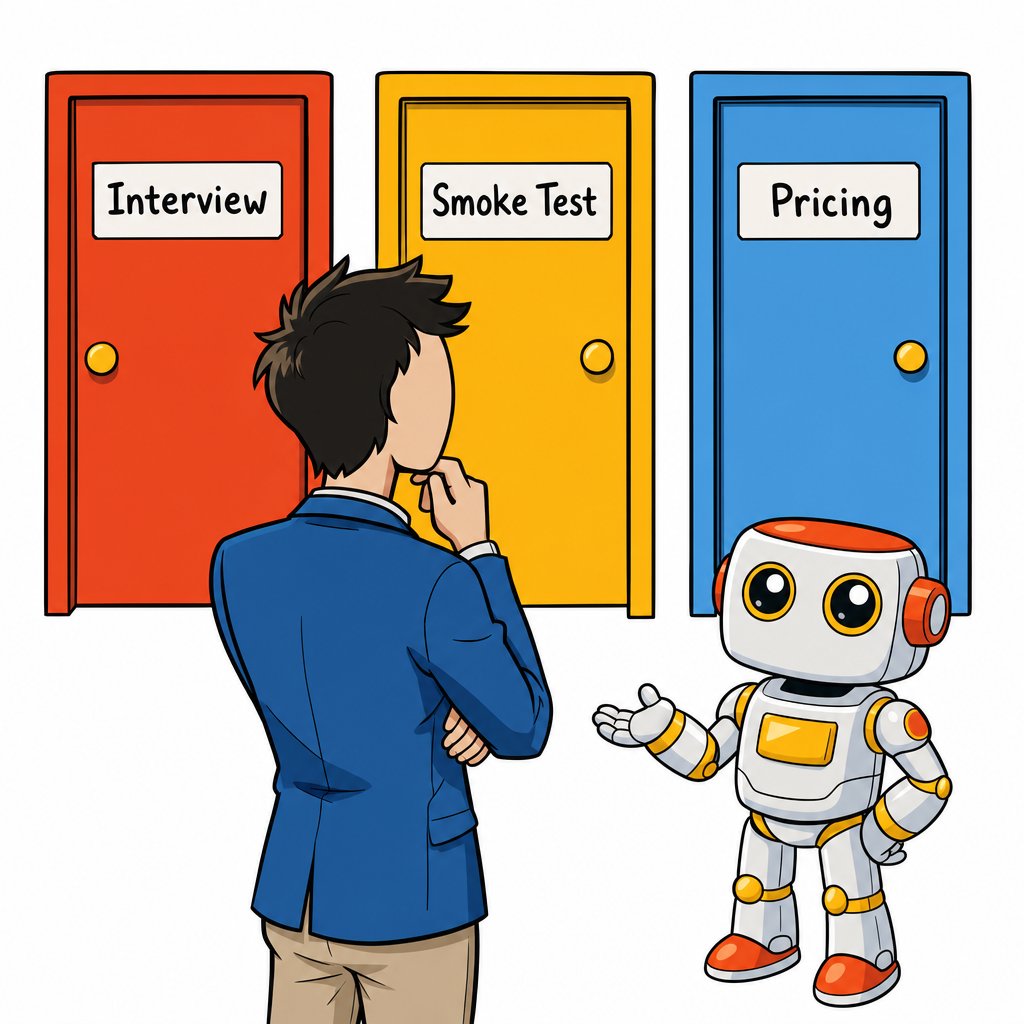
AI did not change which experiment answers which question.
If you do not know whether anyone has the problem you think you are solving, no amount of code-generation will save you — you have to talk to humans. If your conversion problem is a pricing problem, an AI-rewritten landing page will not fix it. If your market is too small, a faster funnel does not enlarge it. The diagnostic step — picking the right experiment for what you are actually uncertain about — is where most founders go wrong, and AI does not help you here. It will cheerfully execute the wrong experiment ten times faster than you could before.
The hypothesis checklist still asks for the same four things — one change, one impact, one metric, one timeframe. The picnic-in-the-graveyard move — going to talk to the founders of failed startups in your space before you build — still works for exactly the same reason it worked in 2015. The product/market fit survey still asks the same question, and “very disappointed if this went away” still means what it always meant.
The second edition treats AI as the angle on the method, not a substitute for it.
What is in the second edition
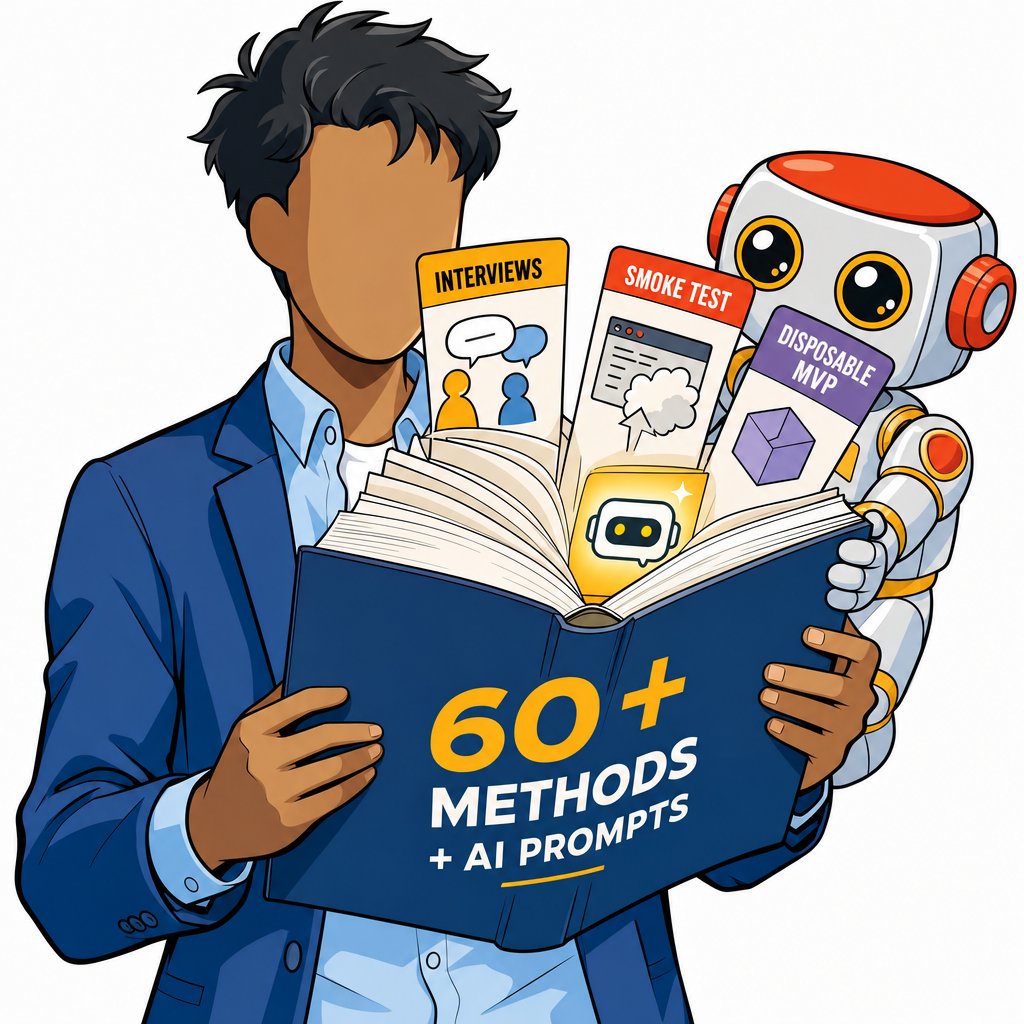
- 60+ methods — nearly 30 of them new, from the field-tested experiments the first edition shipped to AI-era additions like disposable MVPs and synthetic persona screening, each grounded with where AI speeds the work and where it does not.
- Per-method AI prompts embedded inside the chapter, so you can grab the prompt that runs the read-out, scaffolds the landing page, or sets up the interview guide without leaving the method you are reading.
- Updated contributor notes — 51 practitioners, many of them returning from the first edition, several new contributors who have been running this work inside AI-native teams.
- An MCP server for the book’s content, so founders working inside Claude, Cursor, or another agent surface can pull a method into their working context without copy-paste. (More on this in a follow-up post.)
- Updated cross-links between methods, because the most common mistake we saw with the first edition was readers running one experiment in isolation when a different method earlier in the sequence would have saved them the trip.
What we did not add: a “use AI to skip customer discovery” chapter. That chapter does not exist because that approach does not work.
What we deliberately left alone
We resisted the temptation to rewrite the parts that did not need rewriting. The chapter on customer interviews still tells you not to ask leading questions. The chapter on pricing still tells you to test willingness-to-pay before you build. The chapter on dashboards still tells you that a metric you cannot act on is decoration.
Where the 2015 advice was right, the 2026 edition says the same thing. We added an annotation when AI changes the cost of acting on the advice. We did not change the advice.
How to start reading
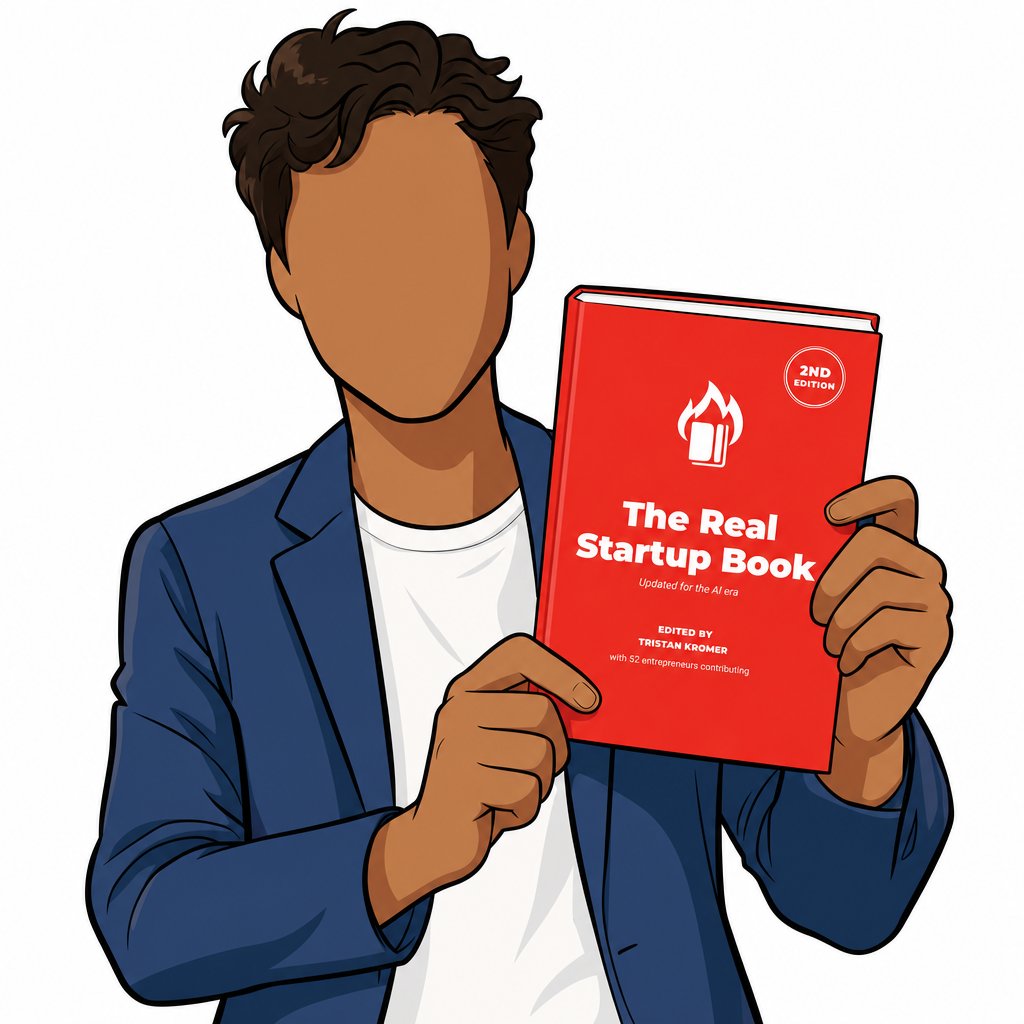
The Real Startup Book second edition is online and free to read. Prefer a copy of your own? It is free to download as a PDF, and also available in hardcover and paperback — all linked from the book page. You can read it cover-to-cover, but most founders pick the experiment they are about to run and jump straight to that chapter. If you are not sure what to run, the preface walks through the diagnostic — what are you actually uncertain about, and which method answers that question.
If you teach this material — to an accelerator cohort, a university class, or a corporate innovation team — the second edition is built to be teachable. Each chapter is self-contained, each method has a worked example, and the cross-links walk students from a fuzzy “I want to test my idea” to a specific experiment with a specific hypothesis.
We will follow this launch with a short teaser series — a few of the chapters we are proudest of in the second edition, with the AI annotation that did not exist eleven years ago. First one lands next week.
Until then: read it, reply with what is broken, and contribute what we missed.
Thanks for eleven years of using this book. Here is the next eleven.
— Tristan
Comments
Loading comments…
Leave a comment