
How DHL's Startup Lab Makes Corporate Innovation Labs Work
Spoiler: teams keep their day jobs and projects need a happy home
 By Tristan Kromer · · 7 min read
 Quick Answer: Corporate innovation labs like DHL’s Startup Lab succeed by combining an independent budget with structured stage gates that evaluate projects on desirability, feasibility, and viability before committing major resources. DHL’s key insight is that teams keep their day jobs while innovating part-time, projects must eventually find a “happy home” in an existing business unit, and a deliberately limited lab budget prevents over-investment in any single idea. As product managers, we should treat other companies’ innovation lab structures as hypotheses to test, not blueprints to copy.
By: Tristan Kromer Corporate innovation labs engage founders and participants across professional boundaries to bring startup innovation techniques into a corporate environment. But providing teams with the time, money, and skills to innovate isn’t easy. Every company’s innovation team faces a unique set of challenges operating in a rigid structure, and DHL is no different. With more than half a million employees, DHL is the largest logistics company in the world. Johannes “Joey” Naumann heads up DHL’s Startup Lab, the company’s internal incubation program at their headquarters in Bonn, Germany. He had to create a structure that gave teams enough flexibility to be creative, while living with corporate constraints.
The Limits of Time and Space
Problem: Remote workers Solution: Virtual meetings and regular retreats Structured like a normal accelerator, DHL’s Startup Lab has its own budget for a small staff of full-time mentors working out of their headquarters. The members of its innovation teams, however, work separate day jobs at DHL. Hovering somewhere between 10 and 20 teams, with 2-5 people per team, the innovation team members are scattered throughout the world. This limits physical interaction to one-week retreats every other month. 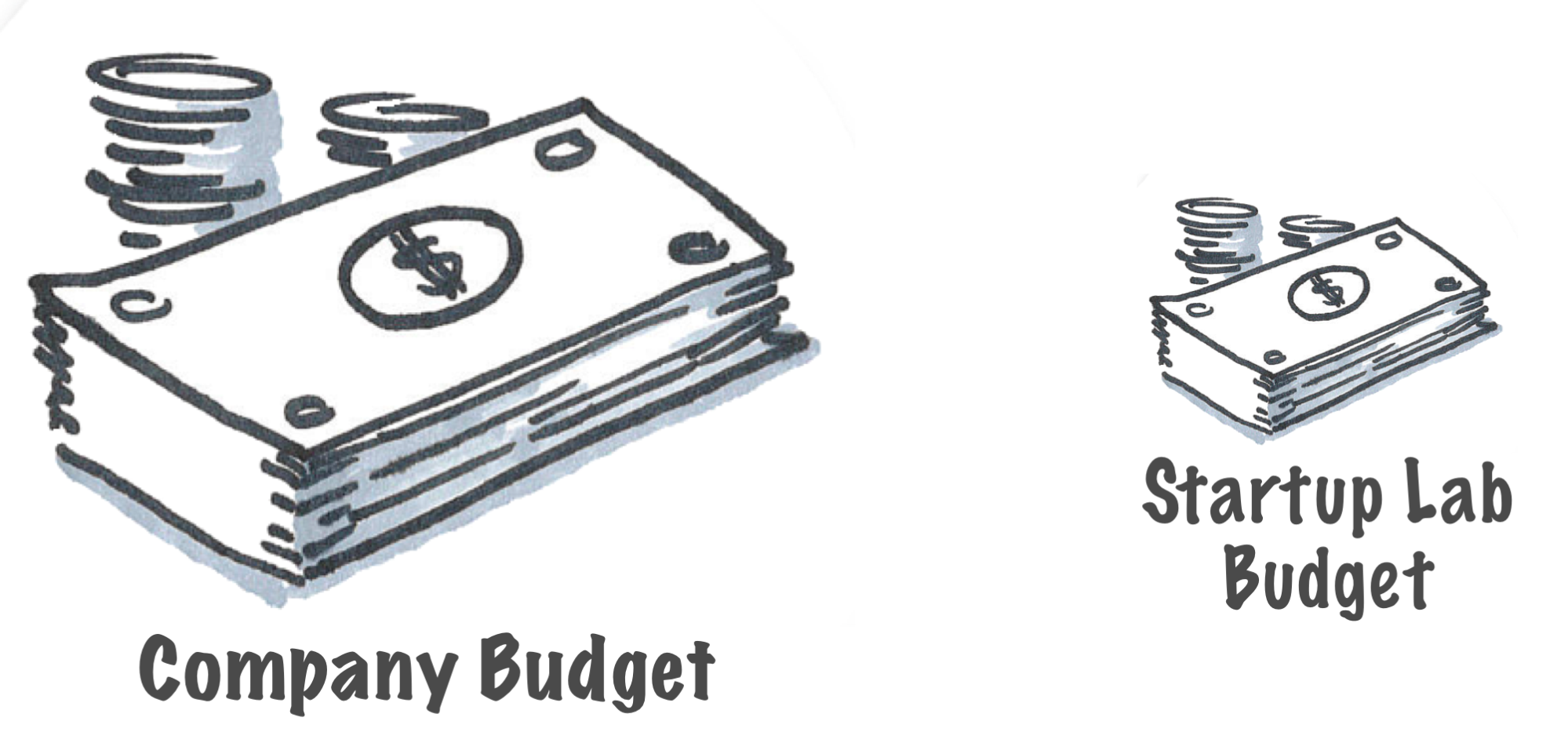 The rest of the work is done through virtual meetings. If a project is showing a great deal of potential, members are allowed to devote more time to its completion. Sometimes they even set aside their day job entirely. This sort of flexibility within a large corporation isn’t an easy sell. There is a learning curve to testing and validating new ideas in a traditional, hierarchical, and execution-focused organization. But Joey’s first job with DHL was with an early innovation program called “R&D and Ideation” that focused on new business and technologies. After helping bring about one of DHL’s first corporate startups — a digital freight forwarder — he got the chance to create the Startup Lab. “On the one hand, I felt I could really contribute with the experience that I had,” Joey tells me. “At the same time I saw how a lot of untapped assets have the potential to really create new, strong market offerings and ventures. So I thought it was a really interesting challenge. It intrigued me to try to do things in a way that hadn’t been done before. And I saw the upside to my own personal development as well. I was sure that I would learn a lot, which is always one of the key things that I look at.”
Fear and Air Support
Problem: Innovating within a corporate structure Solution: Independent budget and working well with other divisions Because the innovation lab has a separate budget, the teams can invest in the early stages of a specific project without first getting permission. Their projects go through a series of stage gates that allow them to test for financial viability along the way. This lets them evaluate the potential for future investment from sponsors and line managers who may see added value to the company. 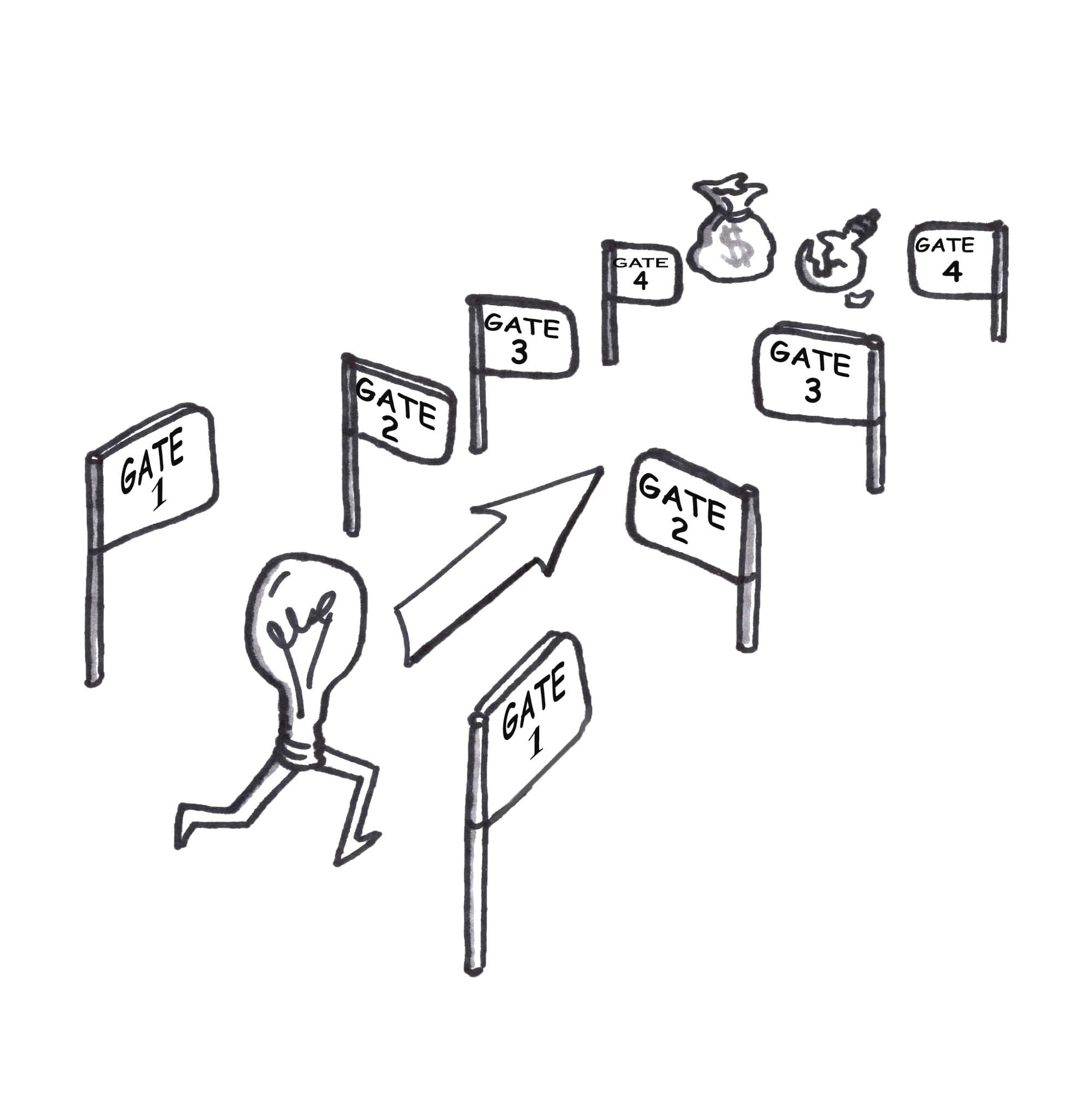 Although the lab reports directly to the board, they have to be careful not to apply pressure to other divisions in the company so as not to burn any bridges. Instead, they seek to find common ground with partners within the organization to earn sponsors and broad support for each project. This process helps reign in the fear of taking an undue project too far without company support. A team member doesn’t want to pin their career on the blind hope for a single project. It’s actually helpful that the Startup Lab does not have the money to provide long-term financing to their projects. This keeps them from over-indulging one idea at the expense of other, potentially more viable projects. Somewhere along the way, every project needs to find a “happy home” in one of the existing business units. This will help it align to the company’s core business model.
Manning the Stage Gates
Problem: Overcommitting to projects with no ROI and displeasing the corporate overlords Solution: Stage gates This is where the stage gates come in. Stage gates reinforce confidence in a project by subjecting it to a series of objective evaluations before it drains more budget than it probably should. In other words, there needs to be some meat on the bone if the lab wants to see the company commit meaningful sponsorship to any one specific project. 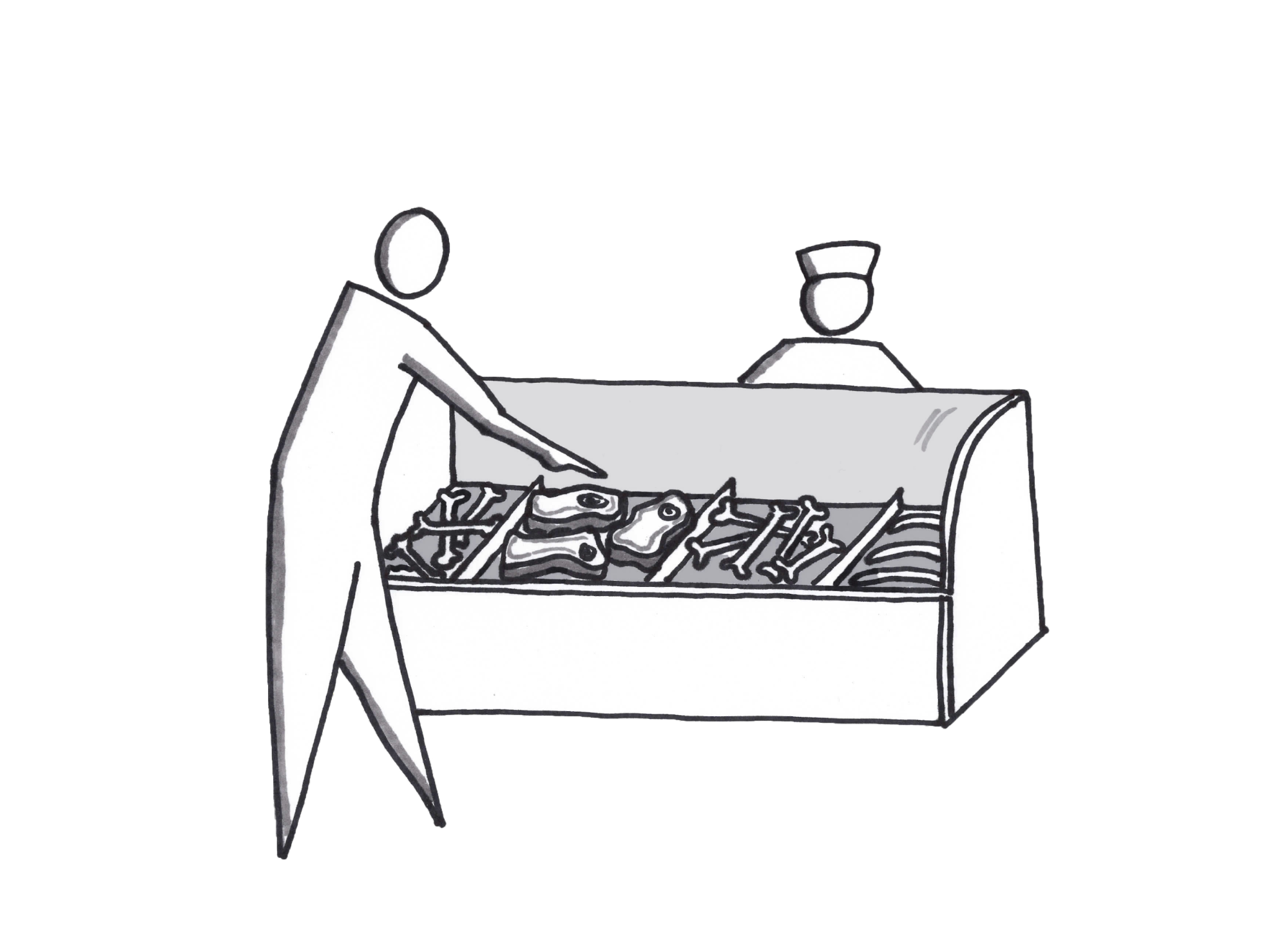 The goal for the Startup Lab is always to have a project investment-ready by the time they reach the limit of what they can do in-house. The first gate focuses on customer desirability — their needs and goals — offering the lab a sense of product validation. The second gate is a move towards understanding the feasibility of producing a solution. Startups are not expected to have a complete solution and achieve perfect Product / Market Fit. But they should be able to demonstrate that DHL is the right company to produce a solution. To get through Gate 3, viability, teams need to demonstrate an overlap between feasibility and desirability. The project can then gain support from someone in the C-suite and additional funding opens up the fourth gate. Here the project is either given an organizational home for development, or it is funded as a spin-off. (The subsidiary may be wholly owned by the company or ownership split between the company and equity for the project founders.) In short, a project passes through the gates through a progression of demonstrations: from an initial promising idea, it must demonstrate desirability, then feasibility, then finally viability.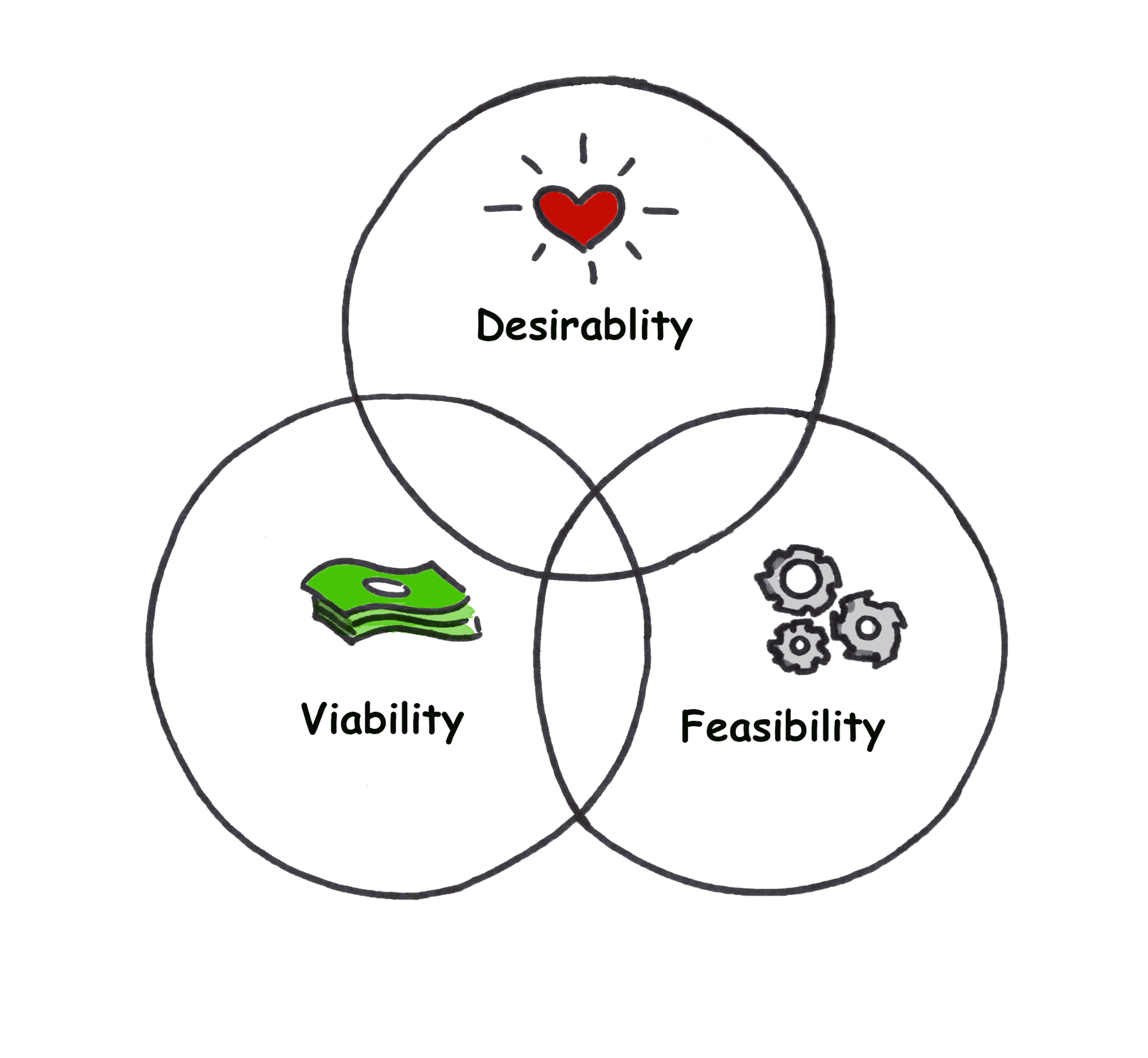
Bringing it Home
Every corporate ecosystem is different, each offering its own challenges. But companies can learn a lot from looking at others trying to overcome similar problems of culture and inertia. Simply cutting and pasting the solution may turn out to be a disaster, but applying a Build-Measure-Learn mentality to the innovation process itself can generate some easy wins. If another company has a similar challenge, take their solution as a hypothesis, establish a metric, and implement their solution in a small, controlled way before scaling up. If it doesn’t work, you’ve learned which way not to go, and you can quickly pivot to another solution.
Lessons Learned for Corporate Innovation Labs
- Corporate Innovation Labs give employees a chance to contribute to the company outside their normal tasks.
- Providing corporate innovation labs with an independent budget allows them to take risks and explore promising ideas that don’t show an immediate ROI.
- A series of evaluative gateways can help executives understand what criteria to apply to promising innovative projects.
P.S. We are beta testing our online interactive game that teaches smart innovation investing.
Play Innovation Management Game
Frequently Asked Questions
How do corporate innovation labs work inside large companies like DHL?
Corporate innovation labs like DHL’s Startup Lab operate as internal incubation programs with their own budget and dedicated mentors. Innovation team members typically keep their regular day jobs while working on projects part-time. Projects pass through stage gates that evaluate desirability, feasibility, and viability before earning larger investment or finding a permanent home within the organization.
What stage gates does DHL’s Startup Lab use to evaluate projects?
DHL’s Startup Lab uses four gates. Gate 1 focuses on customer desirability — validating that a real need exists. Gate 2 assesses feasibility — whether DHL can realistically build the solution. Gate 3 requires demonstrating viability — an overlap between feasibility and desirability. Gate 4 involves securing C-suite sponsorship and either placing the project in a business unit or spinning it off.
Why should corporate innovation labs have an independent budget?
An independent budget lets innovation teams invest in early-stage projects without seeking permission from line managers first. This freedom to take risks is critical because promising ideas rarely show immediate ROI. At the same time, a limited budget actually helps — as DHL found, it prevents over-investing in a single idea at the expense of other potentially more viable projects.
How does DHL manage innovation teams when members are spread across the world?
DHL’s Startup Lab relies on virtual meetings for day-to-day collaboration and brings teams together for one-week retreats every other month. Teams have 2–5 members each, and if a project shows strong potential, members can devote more time to it — sometimes even setting aside their regular day job entirely.
Can you copy another company’s corporate innovation lab structure?
Not directly. As we’ve seen, every corporate ecosystem presents unique challenges of culture and inertia. Instead of cutting and pasting, we should treat another company’s solution as a hypothesis — establish a metric, implement it in a small, controlled way, and measure the results before scaling up. A Build-Measure-Learn approach applied to the innovation process itself is more reliable than blind replication.

Comments
Loading comments…
Leave a comment