
Customer Profile Template: A Step-by-Step Framework Guide
Draw a stick figure. Name it Bob. Build your product around Bob.
 By Kenny ·
 Quick Answer: A customer profile template is a four-quadrant framework that answers “Who is my customer?” by capturing a visual illustration (with name and quote), factual attributes (age, job, location), problem-related behaviors, and needs/goals. As product managers, we use it to consolidate assumptions and learnings about our target early customer into a concrete, shareable reference. The key is being specific — write “Bob is 23,” not “Bob is 20-25” — while keeping goals focused on desired outcomes rather than feature requests.
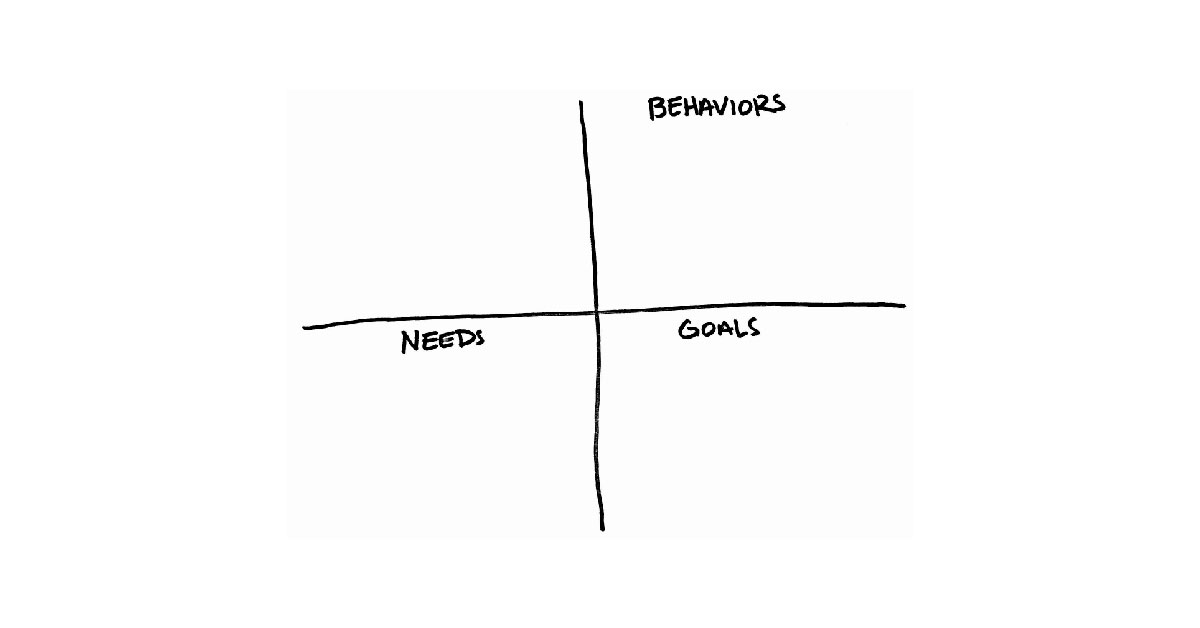
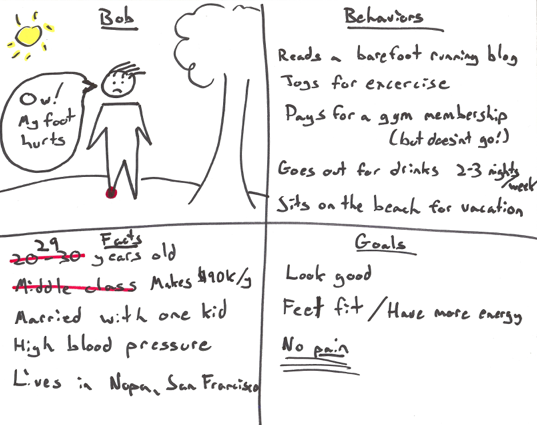
What is a Customer Profile Template? A customer profile template is a detailed visual and written representation of the target early customer segment. When you are building a customer persona, you are creating a human being with actual problems, goals, and behaviors within specific environments. The customer profile template is a useful tool in answering “Who is my customer?” The customer persona does so by acting as a consolidated repository of your assumptions, and newly acquired learnings about the customer. How to Make a Customer Profile Template Grab a sheet of blank paper. Create four boxes by drawing horizontal and vertical lines across your paper. Write “Facts”, “Behaviors”, and “Needs & Goals” illustrated as below. 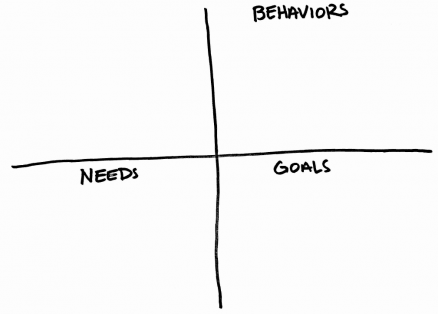 In the upper-left box, draw a picture of the customer. A good illustration should answer: What does the customer look like? How does the customer feel when experiencing the problem that you are trying to build a solution for? Where is the customer when it is experiencing the problem?
 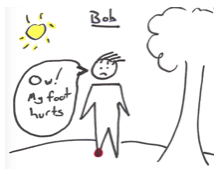 Remember to include the four key element of your visual representation of the customer: the customer’s name, a stick figure or pin figure of the customer, background on where the customer is experiencing its problem, a quote where the customer is stating how it feels when experiencing the problem. This section provides a visual mnemonic. Naming the persona also helps the team communicate in a simple shorthand, e.g. “Sarah will need a simpler visual interface because she’s not comfortable on computers.” On the bottom left, write down typical facts about the customer.
 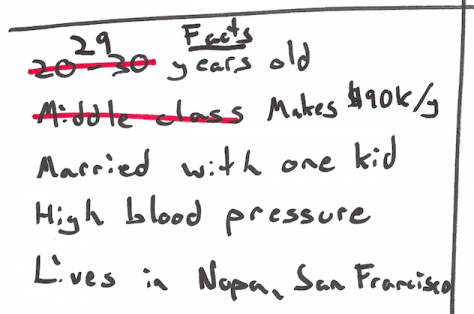 This part of the customer persona is focused capturing key factual attributes of your target early customer. This section should focus on attributes that are relevant to what does this customer looks like, prerequisites for the customer to experience the problem (e.g., owns three smartphones), etc. When in doubt, feel free to typical pieces of information such as age, income, job, location, and marital status. Be specific! Don’t write an age range. Do not write “Bob is 20-25.” Instead, write “Bob is 23.” This section can be very helpful when creating screeners for recruiting customers. In the top right, write down behaviors that the customer will usually exhibit.
 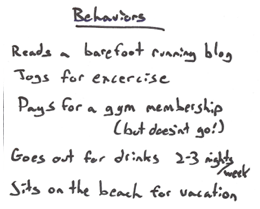 This part of the customer persona is focused on behaviors and activities that are closely tied to the customer problem that you are trying to build a solution for. These behaviors can be anything that leads the customer to experiencing or avoiding the problem or anything that would help you find (and talk to) these customers. This section often provides good suggestions for marketing channels to reach the customer. e.g. “Reads blog posts on cryptography.” In the bottom right, write down the customer’s goals when facing its problem.
 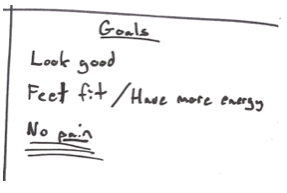 This part of the customer persona is focused on what the customer wants or desires (to happen) when trying to solve its problem. Remember that goals can range from change in emotion, physical state, social status, or some other personal or professional tangible outcome. Try to be specific. “Be happy” is a bit too general. What would make the customer feel happy? But don’t be too specific. “A button the the left side of the screen to filter search results” is just a feature request. Why does the customer want to filter the search results? You now have a customers persona!
  Download Customer Persona Framework Additional Reading Customers and Causality
Frequently Asked Questions
What is a customer profile template and why do I need one?
A customer profile template is a structured visual and written representation of your target early customer segment. It consolidates your assumptions and learnings about a real human being with actual problems, goals, and behaviors. As product managers, we use it to answer the fundamental question “Who is my customer?” and to give our teams a shared reference point for decision-making.
What are the four sections of a customer profile template?
The four sections are: (1) a visual illustration of the customer experiencing their problem, including their name and a quote about how they feel; (2) factual attributes like age, income, job, and location; (3) behaviors and activities tied to the customer’s problem; and (4) the customer’s needs and goals when trying to solve their problem.
How specific should I be when filling out a customer profile template?
Be very specific with facts — write “Bob is 23” instead of “Bob is 20-25.” For goals, aim for a middle ground: “Be happy” is too vague, but “A button on the left side of the screen” is just a feature request. We need to capture what outcome the customer actually wants without jumping to solution details.
How does a customer persona help with marketing and recruiting?
The facts section helps us create screeners for recruiting real customers to interview, since it captures specific demographic and situational attributes. The behaviors section often reveals marketing channels — for example, if your persona “reads blog posts on cryptography,” that tells you exactly where to find and reach similar customers.
Why should I draw a picture and name my customer persona?
Drawing the customer in their environment creates a visual mnemonic that makes the persona memorable and real for the whole team. Naming the persona enables simple shorthand communication — like saying “Sarah will need a simpler interface because she’s not comfortable on computers” — which keeps conversations grounded in actual customer needs rather than abstractions.


Comments
Loading comments…
Leave a comment