
Business Model Canvas Iteration: Why Your Canvas Is Gathering Dust
And what marshmallows have to do with it
 By Tristan Kromer ·
 - Business Model Canvas Iteration and Validation 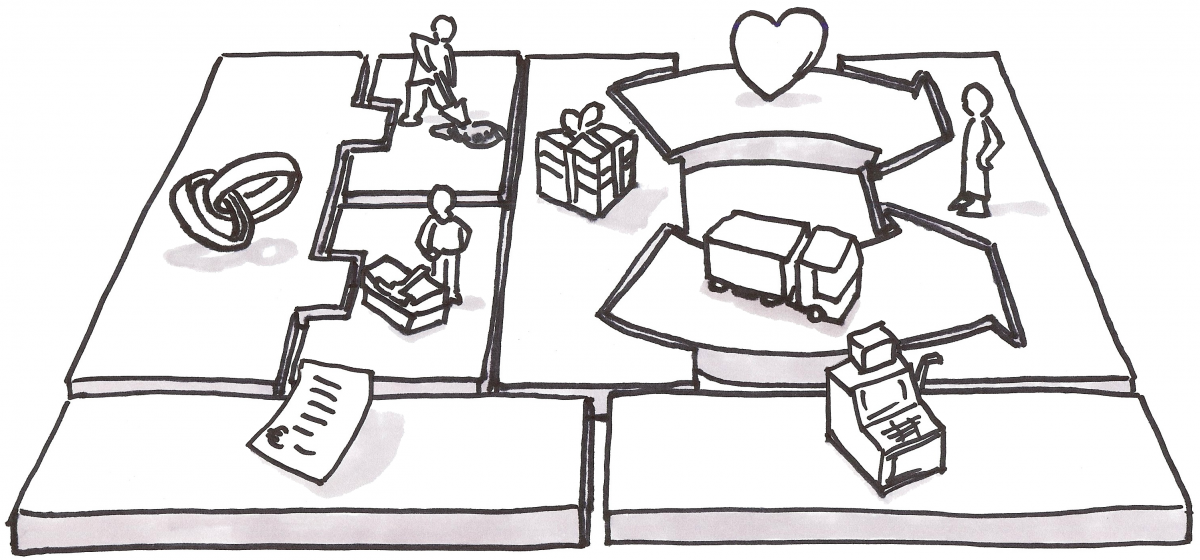 I have a love hate relationship with Alexander Osterwalder’s Business Model Canvas. Steve Blank uses it brilliantly in his Lean Launchpad class, I’ve had less success using it in my own curriculum. Part of this is the format of the canvas itself. There are some small things about the canvas that irk me from a user experience perspective, like the fact the canvas starts (left to right) with Key Partners, but I’ll get into that in another post. tl;dr Skip to the end and start iterating!
Teaching the Business Model Canvas
The other part of my general annoyance has more to do with the structure of courses where it’s taught. The one month program I designed for TechBA was condensed we could only spend a couple days devoted to the Business Model Canvas. We could have put more time on it, but teams wouldn’t have had enough time between sessions to do a reasonable job of customer development. (Especially since many of their customers were not local to the venue.) So despite the excellent job Victor Reyes did teaching it, there was insufficient time to really dig into the nitty gritty of the canvas and iterate on it. The same thing is the case for those who simply read a blog post, fill out the canvas, then bury it in the drawer. So unless you have someone like Steve Blank handy to badger you every week, I’m skeptical this is the universal, off-the-shelf tool it’s cracked up to be. If it’s just another dead piece of paper, you may as well write a business plan. It’s just as valid to take six months to write a business plan and then ignore it, as to take one day to make a Business Model Canvas and then ignore that. Don’t waste your time.
Make Habits, Not Plans
Steve Blank is likely more successful using the canvas for a couple reasons:
- Lots of experience (duh)
- 10 week format
With a 10 week format, entrepreneur teams determine their riskiest hypothesis (with the advice from mentors), get out of the building to gather data, then adjust their business model canvas for the next round of feedback. In this way, The same is true of any User Experience (UX) design artifact or lean startup tactic. Do people change over time? Do we expect more features? A better experience? Yep.
Iteration is a Habit
 Lots of people get by just fine without the Business Model Canvas iteration. At the end of the day, it’s one of many paradigms to view your business through that may help you. If you don’t use it, that’s ok. You can still be a lean startup, Stay Puft Marshmallow Man fat, or whatever you want to be. But if you’re going to use the Business Model Canvas, do it right!|] Every week, block time with your Business Model Canvas. It should be a regular time boxed slot of no more than 30 minutes so you’re not spending endless hours in a terminally dysfunctional meeting filled with ego and false assumptions.
Quick Answer: Business Model Canvas iteration only works if you treat it as a weekly habit, not a one-time exercise. Block 30 minutes each week to discard disproved assumptions, sort new ones, prioritize your riskiest hypothesis, and get out of the building to test it. Without this recurring cycle — like Steve Blank’s 10-week Lean Launchpad format — the canvas is just another dead document, no better than a business plan gathering dust in a drawer.
- Throw away the assumptions you disproved last week
- Dump and sort your new assumptions
- Prioritize the hypothesis you will test this week
- Get out of the building
Frequently Asked Questions
What is Business Model Canvas iteration and why does it matter?
Business Model Canvas iteration is the practice of regularly revisiting and updating your canvas based on real customer data rather than treating it as a one-time exercise. Without iteration, the canvas becomes just another dead document — no better than a traditional business plan collecting dust in a drawer. As product managers, we need to build the habit of weekly review and adjustment.
How often should you update your Business Model Canvas?
Block a regular weekly time slot of no more than 30 minutes to review your Business Model Canvas. During that session, throw away disproved assumptions, dump and sort new assumptions, prioritize the hypothesis you’ll test that week, and then get out of the building to gather data. Keeping it short prevents the process from devolving into endless, unproductive meetings.
Why do people fail when using the Business Model Canvas?
Most failures come from insufficient time for iteration and customer development. Teams fill out the canvas once — in a workshop or after reading a blog post — then never revisit it. Without a structured format like Steve Blank’s 10-week Lean Launchpad cycle, where teams regularly test hypotheses, gather data, and adjust, the canvas stays static and provides no real value.
Can you run a lean startup without the Business Model Canvas?
Absolutely. The Business Model Canvas is just one of many paradigms for viewing your business. Plenty of people succeed without it. What matters more than any specific tool is the habit of iteration — regularly testing assumptions through customer development and adapting based on what you learn. If you do use the canvas, commit to using it actively rather than as a one-time exercise.
What makes Steve Blank’s Lean Launchpad approach to the Business Model Canvas work so well?
Two key factors: extensive experience and a 10-week structured format. The format forces entrepreneur teams to identify their riskiest hypothesis each week, get out of the building to gather real data, then adjust their canvas before the next round of feedback. This creates a recurring habit of Business Model Canvas iteration rather than a one-off planning exercise.

Comments
Loading comments…
Leave a comment