
Grit and Growth Mindset: Lessons from a Dying Office Plant
Sometimes the best ideas come from the leaves you almost threw away.
 By Tristan Kromer ·
 Quick Answer: A grit and growth mindset means believing your talents can be developed through hard work, good strategies, and input from others—not that they’re innate gifts. But as entrepreneurs, we need more than just a growth mindset; we need an entrepreneurial mindset that helps us see promise in discarded ideas, reuse our resources and learnings from failures, and persist through scraggly beginnings. What looks like a bad idea might be the start of a good one—use whatever scrap of dirt you have.
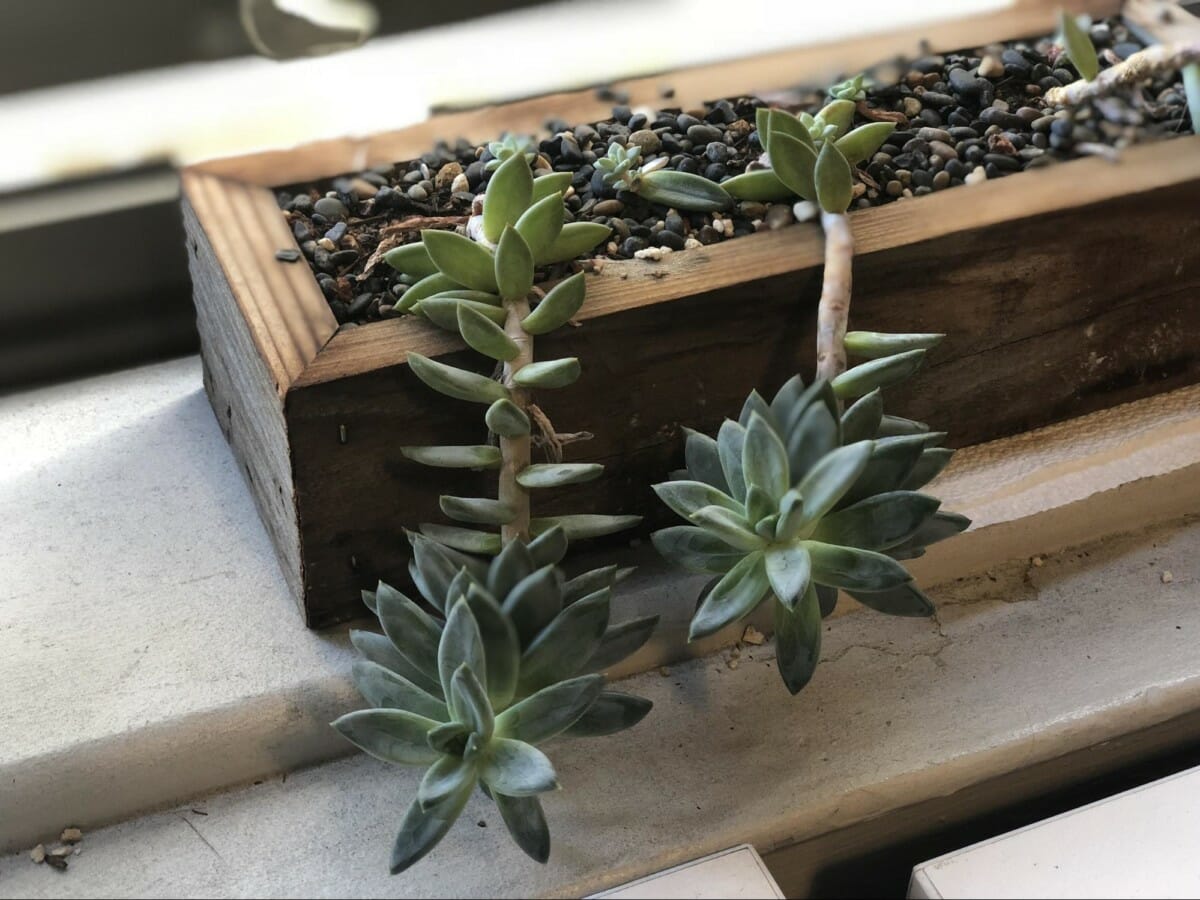
- Grit and growth mindset A couple days ago I took this photo of our “new” office plant. (It’s the one in front.) 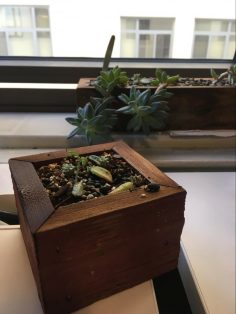 It’s a tiny sprout that grew from some leaves that had fallen off the rather warped succulent behind it. (The one that looks like it’s reaching out to say hello to our new arrival.) It’s laughably small, scraggly and barely clinging to life. But there it is. I immediately put some branding on it and joked on Twitter that it was part of our company’s growth hacking efforts. https://twitter.com/TriKro/status/962030799057924096 It seemed appropriate since after almost a yearlong break from intense marketing we’re back to blogging like crazy, rebranding our company as Kromatic, and even doing a bit of A/B testing. Along came growth marketer Nichole Elizabeth’s tweet: “Marketing friends: I’ve been thinking a lot about what a “grit and growth mindset” is—what does it mean to you?” https://twitter.com/NikkiElizDemere/status/964166431586897922 Sensing the opportunity to reuse a bad joke, I, of course, replied with a picture of our new plant accompanied by this: “Here’s our team grit and growth mindset.” https://twitter.com/TriKro/status/964277716877901824
Growth Hacking ≠ Growth Mindset
I recognize that my tweets don’t really answer Nichole’s question. A grit and growth mindset has nothing to do with horticulture or growth hacking. But I was not alone. Some of the other answers on Twitter were equally wrong, but, nonetheless, nice sentiments: “An open, curious mind.” “Focusing on improving a metric versus just doing a marketing checklist” “Fail quickly. Learn faster. Optimize. Rinse & repeat.” Some were funny, albeit, unnecessarily sarcastic: “Growth mindset” means “I have an ebook or an online course I want you to buy.” So what does it actually mean? Carol Dweck, a psychology professor at Stanford University and the author of the book Mindset, gives us this definition in an article in the Harvard Business Review: “Individuals who believe their talents can be developed (through hard work, good strategies, and input from others) have a growth mindset. They tend to achieve more than those with a more fixed mindset (those who believe their talents are innate gifts).” That’s what we should have tweeted back to Nichole. In the context of marketing, growth mindset means that we never stop testing our methods, iterating and gathering data to inform improvements.
New Beginnings
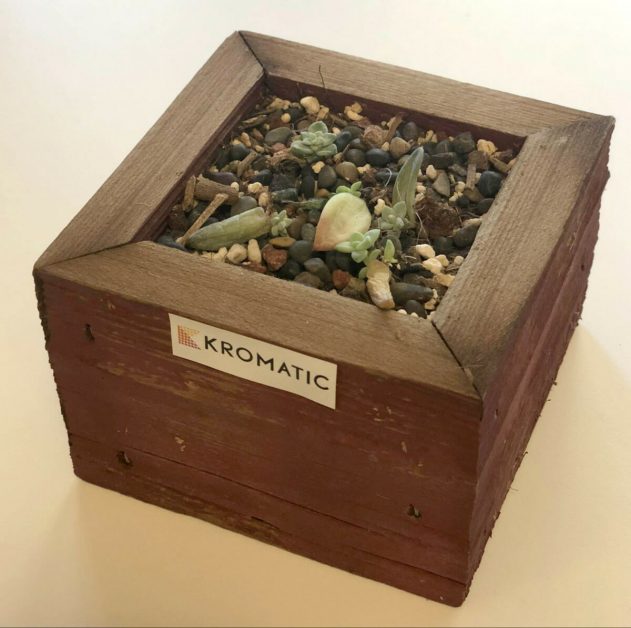
The picture of our little plant may not be relevant to Nichole’s tweet, but it is still profoundly appealing to me, because it encapsulates something important about our company and the work we do as entrepreneurs. Its older progenitor was struggling. It had warped itself into a bizarre shape, having grown too high, too fast, and without enough support from the bottom. It started shedding leaves, and I was about to throw them away when I noticed tiny, red hairs coming out of the bottom. 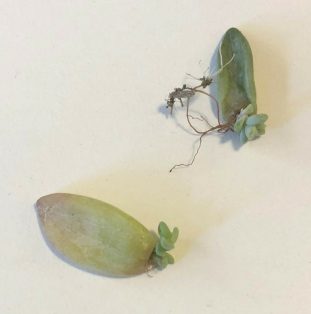 Those “leaves” weren’t leaves at all…they were potential new plants. I remembered I had a similar plant box tucked away in a corner at home that had housed a plant that died a couple years ago. So I brought it into the office, put some of those leaves on top, watered it, and hoped for the best. Now I have a brand new plant starting, grown from the discarded leaves of its parent. It’s laughably small, scraggly and barely clinging to life. But there it is.
The Entrepreneurial Mindset
As an entrepreneur, we start with our fresh idea. We’re full of optimism and hope. As our company grows, we frequently face failure. Our idea may be dying. We question its longevity and lose faith in its sustainability. We don’t know where to put our attention or how much attention to give. At some point, our company may start to thrive. Alternatively, if our idea does not blossom, we shed whatever is not serving the big picture in order to simply survive. Perhaps some small, cast off bits have promise. We must remain open to signs of new life and see the opportunity in front of us. There will be reminders of past failures (that box at home that is no longer in use). But those reminders are useful, because in every failure there is a learning. We take our resources and our learnings, and we reuse. We find a little patch of dirt to grow our scrappy idea. Some ideas die, but one of them takes hold and starts to grow. It may be laughably small, scraggly and barely clinging to life. But there it is.
Lessons Learned
A growth mindset is important, and I’ve seen the difference it can make in a team. At Kromatic, almost everyone is almost annoyingly eager to focus on learning new skills. But in addition to the growth mindset, we need to cultivate and maintain an entrepreneurial mindset as our company grows and changes.
- What looks like a bad idea might be the start of a good one.
- Use whatever scrap of dirt you have.
- Hope!
- Be proud of what you grow, no matter how small.
Our company is focused on teaching entrepreneurship to companies of all sizes, but we have a soft spot for startups. So if you’ve got a small, scraggly idea and you need help, we always reserve a little time for people like you. Update: I’m pretty sure we killed our new plant by leaving it too close to the window…but we still have a box of dirt and lots of leaves to try again!
Frequently Asked Questions
What is a grit and growth mindset and why does it matter for entrepreneurs?
A grit and growth mindset means believing your talents can be developed through hard work, good strategies, and input from others—a definition from Stanford professor Carol Dweck. As entrepreneurs, we achieve more when we embrace this mindset because it keeps us testing, iterating, and improving rather than assuming our abilities or ideas are fixed.
How is a growth mindset different from growth hacking?
Growth hacking focuses on marketing tactics and scaling metrics, while a growth mindset is a fundamental belief that skills and abilities can be developed over time. In marketing specifically, a growth mindset means we never stop testing our methods, iterating, and gathering data to inform improvements—it’s about the underlying attitude, not just the tactics.
How does the entrepreneurial mindset relate to the growth mindset?
The entrepreneurial mindset builds on the growth mindset by adding resilience in the face of failure. As entrepreneurs, we need to remain open to signs of new life in discarded ideas, reuse our resources and learnings, and find opportunity even in small, scraggly beginnings. A growth mindset helps us learn; an entrepreneurial mindset helps us persist and pivot.
What can entrepreneurs learn from failed ideas?
Every failure contains a learning. As the article illustrates, what looks like a dying idea might shed small pieces with unexpected promise. We should use whatever scrap of resources we have, stay open to unexpected opportunities, and be proud of what we grow—no matter how small. Past failures become useful reminders and foundations for new beginnings.
How do you build a grit and growth mindset within a team?
Cultivate a culture where everyone is eager to learn new skills and where testing and iteration are the norm rather than sticking to checklists. At Kromatic, the team maintains an almost relentless focus on learning, which makes a visible difference. Beyond individual growth mindset, we also need to nurture an entrepreneurial mindset as the company evolves and faces new challenges.

Comments
Loading comments…
Leave a comment