
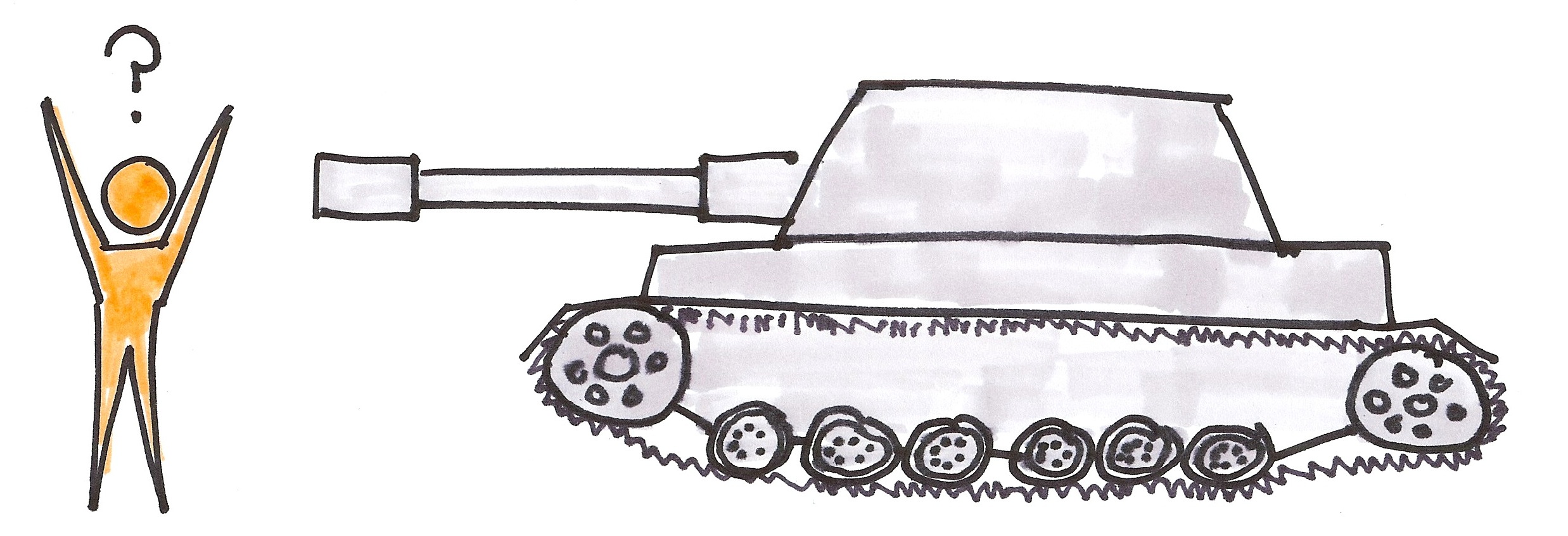
Innovation Culture Dies When You "Shoot" People for Mistakes
Your company is a car, not a war zone. Stop threatening the spark plugs.
 By Tristan Kromer ·
 Quick Answer: Innovation culture dies when mistakes are punished like battlefield failures. The “who gets shot” mentality — where a metaphorical tank points at anyone who misses targets — breeds CYA emails, endless blame-diffusing meetings, and backstabbing instead of learning. As product managers, we should think of our companies like cars, not war zones: when a spark plug fails, you don’t shoot it — you perform maintenance and encourage early warning signals. Blame culture may survive in stable industries, but it’s fatal in environments requiring agility and experimentation.
Innovation Culture- I read a blog post by Lance Weatherby that epitomized everything I think is stereotypically wrong in large organizations and was worth commenting on. Lance opines: 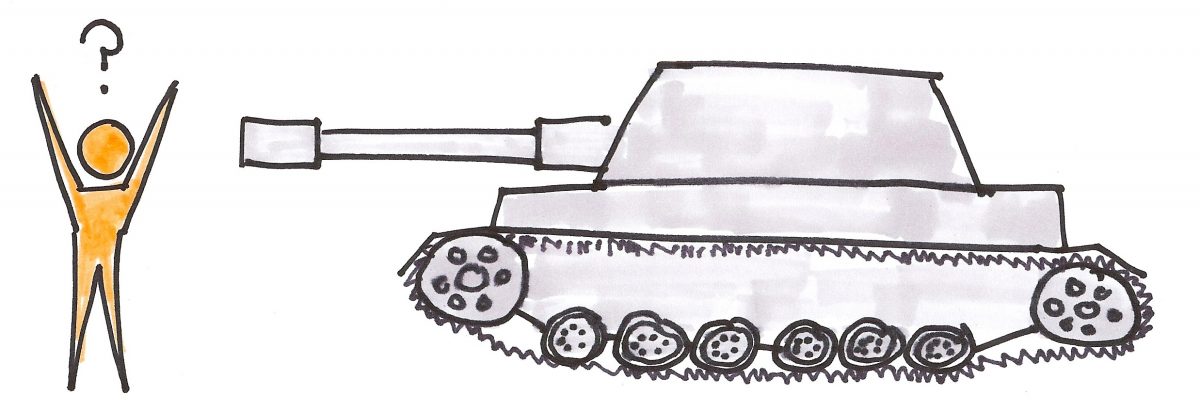
When it comes to roles and responsibilities a way to add a little clarity is to think in terms of who gets in trouble if something goes wrong (which is very different from who gets credit when something goes right). I call this who gets shot… Imagine the team sitting around a big conference table. Imagine a little tank sitting in the middle of that table. The tank turret is always rotating and turning toward someone. The key is to solve the pressure point before the turret stops rotating and the gunner has time to take aim. If we are not moving out product fast enough or the product we have is not functioning properly the turret turns to the CTO. Market managers miss their numbers? Here come the tank. Sales reps don’t generate a certain amount of revenue. Here comes the tank.
As I noted in the comments, I could not disagree more strongly. This analogy has entirely missed the point. But the view of internal office politics (in addition to external competition) as war is quite common. In his defense, Lance also notes:
As a leader it is my role ensure that as many of the troops as possible make it through the battle without taking a bullet. I don’t want anyone to have a gun pointing at them. I used the tank and gun analogy to explain things to my team. Instant clarity. Communication is key to clarity and sometimes little analogies help communication.
Yes, it’s a clear message. Not exactly subtle. The picture of me in a disco jumper is more subtle. The message here is that anyone who makes a mistake will be fired. They won’t have a chance to learn from their mistake. They won’t have an opportunity to fix it.  A tank will blow their head off. And who is driving the tank? It’s not the competition… they’re trying to shell the whole team. The tank driver in this analogy is of course the CEO who is responsible for hiring and firing. Some typical symptoms of this sort of blame culture:
- Ridiculous amounts of CYA cc:s on emails
- Endless meetings to debate decisions and make sure blame is as diffused as possible
- Passing the buck down the line
- Corporate backstabbing
- etc.
Notably it tends to fail when you’re in a rapidly changing environment that necessitates learning. In highly stable industries without impending technological changes, you’re probably fine for quite a while. If that’s the sort of innovation culture you want to live in, great… more power to you. If you want an agile company where people can deal with change, take risks, and take responsibility, this is a poor message. In Lance’s defense again, he notes in the comments:
I did not mean to imply that someone that makes a mistake will be fired, that depends on the type of mistake. I am all about responsibility, measurements, and accountability. I do not encourage blame/innovation culture. I encourage performance cultures. Non performance is unacceptable.
In Western cultures, misunderstanding is the responsibility of the speaker, not the listener. And certainly a tank which is about to “blow your head off” is not a nuanced metaphor carefully aimed at fine tuning a deep understanding of responsibility. If we’re offering up slightly unorthodox analogies, think of your company like a car. If something is wrong with your spark plug, you don’t shoot it. And threatening it with violence isn’t going to prevent it from getting dirty in the first place. Perform regularly scheduled maintenance and encourage various engine parts to make odd clunking noises when something is beginning to go wrong as an early warning system.
Frequently Asked Questions
What is a blame culture and how does it hurt innovation culture?
A blame culture is one where mistakes are punished harshly — metaphorically “shooting” anyone who fails. This kills innovation culture because people stop taking risks, bury mistakes instead of learning from them, and waste energy on CYA emails, endless meetings, and corporate backstabbing rather than experimenting and adapting to change.
Why do war metaphors for business create the wrong incentives?
War metaphors like “who gets shot” frame colleagues as threats rather than collaborators. When the perceived danger comes from your own CEO rather than external competition, teams focus on diffusing blame and protecting themselves instead of solving problems. This is the opposite of the psychological safety needed for risk-taking and learning.
How should companies handle mistakes if they want to build an innovation culture?
Think of your company like a car, not a battlefield. When a spark plug fails, you don’t shoot it — you perform maintenance. As product managers, we should encourage teams to surface problems early, treat failures as learning opportunities, and create systems for regular check-ins rather than threatening consequences for every misstep.
When does a blame culture actually work in business?
A blame-driven approach can survive in highly stable industries without impending technological disruption, where processes are well-established and little adaptation is needed. But in rapidly changing environments that require learning, experimentation, and agility, blame culture actively prevents the organization from responding to new information and evolving.
What are the signs your organization has a blame culture instead of a learning culture?
Common symptoms include excessive CYA email cc’s, endless meetings designed to diffuse responsibility rather than make decisions, chronic buck-passing down the chain of command, and corporate backstabbing. If people spend more energy protecting themselves than solving customer problems, blame culture has taken root.


Comments
Loading comments…
Leave a comment